
 (originally aired May 10, 2009)
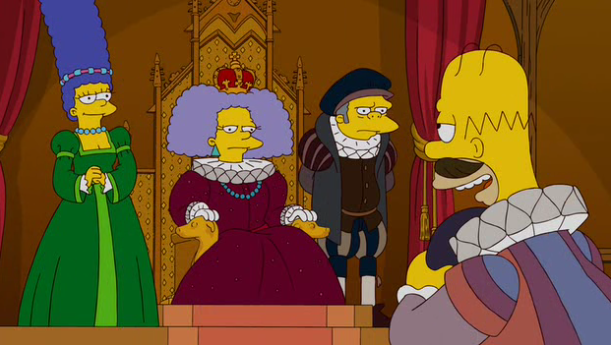
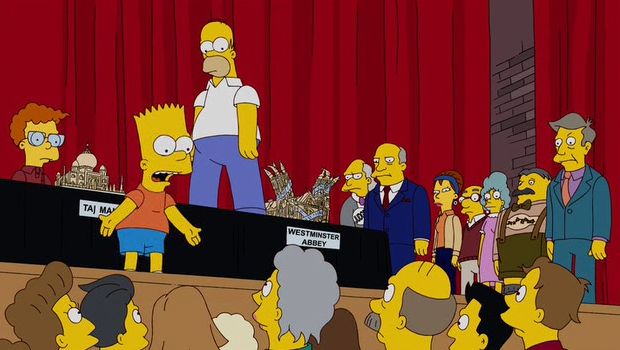
I thought I was done with these three-story episodes… and I guess I was right. Now I’m stuck with one last four story episode, and it’s just as boring and lazy as anything else we’ve seen before it. It retells (sort of) the stories of four great women throughout history, both historical and fictional. First, Queen Elizabeth I (Selma) and her quest to find a suitable husband. Second is Snow White (Lisa) and the Seven Dwarfs, hilariously renamed to avoid a lawsuit from the Blue-Haired Lawyer. This follows along the lines of Disney style parodies we’ve seen in the past, where the only difference is the backgrounds and some characters have colored outlines. The third story takes place in the “real world” where Homer is stuck playing a tree in a company theater version of MacBeth, and Marge, channeling the frustrated Lady MacBeth, urges her husband to murder his way to the top in the starring role, in a segment that feels like it would be more at home in a Treehouse of Horror. Lastly, Maggie portrays free-thinking architect Howard Roark (not a woman) from Ayn Rand’s The Fountainhead. She’s voiced by Jodie Foster, and gives an eloquent speech about individualism, which I guess is supposed to be funny. It’s not. None of this is funny. And these stories feel even more rushed and fractured because there’s less time to tell them. But at least this is the last one of these episodes I’ll ever have to watch, ever.
Tidbits and Quotes
– The wrap-around, as the title suggests, features Marge taking Lisa to get her first manicure. Lisa is as radically feminist as ever, staunchly against getting made up, and how a woman don’t need no man! Her telling the Snow White story ends with her being saved… by a lady doctor. Ugh.
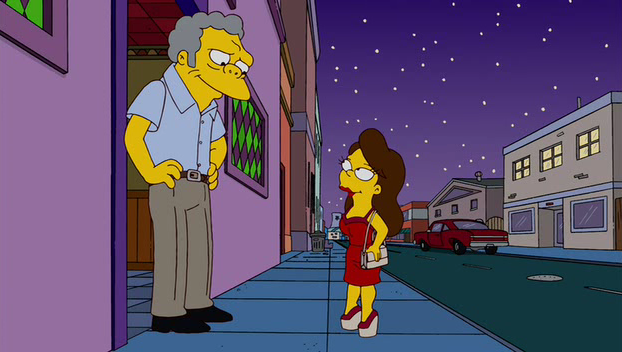
– I’m usually not fond of when the exaggeratedly stereotypical Julio makes an appearance, but I did get a bit laugh out of Hank Azaria’s performance of his final line (“Normally I love to see flaming dreamboats heading my way, but not like this, baby! Not like this!!”)
– Lots of “jokes” about bisexuality, with Selma remaining unclear of who she is professing her love to, Homer or Marge (!), and then the end with the dwarfs singing that they’re gonna make out with each other (“We’re bi, we’re bi, we’re bi!”) Because bisexuality is weird and we should make fun of it.
– Dwarf Moe steps forward to give a sleeping Lisa the kiss of life, and I’m very much creeped out.
– The third segment is incredibly uncomfortable, nothing in it makes sense at all. Why Marge would be so insane about Homer committing multiple homicides, and why would offing Mel would immediately give him the starring role, when everyone else in the play is a better actor than him. They even lampshade one of the dozens of logic lapses, where Homer questions why there’s a new review of the play printed every day listing the latest outstanding actors. Homer is apprehensive and reluctant about all of the killings, yet when he’s brutally doing so, he seems vicious and content about it. And the whole thing ends with him committing suicide rather than having to read. Great punchline.
– I guess if I had to pick, the fourth story is the best. It’s so hamfisted with the instructor (“Mediocrity rules!”) but the idea of this guy cutting Maggie down to the level of the other babies is kind of amusing (“Let’s see what your children have done, shall we? Don’t brace yourselves, you will believe your eyes.”)


 Me Blog Write Good