614. A Father’s Watch

Original airdate: March 19, 2017

The premise:
The mush-headed parents of Springfield are easily swayed by “experts” advice on how to build their kids’ self-esteem. Bart’s is lifted thanks to Abe handing down a precious family heirloom, one that Homer’s had his eyes on for years.

The reaction: Once again I find myself truly bewildered at the level of writing on display in these episodes. For years now, the plots, and conceits for said plots, have been pretty razor thin, but more egregiously, with poor motivation for the characters, to the point where it seems they’ll just start and stop doing and feeling things just because. As such, it’d be up to the viewer to better connect that dots, ie: do the writer’s job for them, but it’s becoming harder to actually do that and make sense of all of this. This episode features Bart having trouble at school, being in need of an ego boost. Homer and Marge’s solution is to shower him with meaningless trophies to raise his spirits, which the former turns into a business for gullible parents. Past being given the first trophy, we see Bart in the back room helping Homer make the trophies he’s selling. So why does he feel better now? Because he feels like he’s working hard? Does he see through the empty charade he’s participating in? Why is he helping Homer with this? It seems like it doesn’t matter, it’s like he’s a blank slate character. He overhears Homer explicitly saying how much of a useless dumb-dumb he is, which leaves Bart crestfallen. He visits Abe, who bestows him with a pocket watch, a prized family possession (since 1982). Upon receiving it, Bart gets a sense of pride which makes him do better at school and be a better person. Meanwhile, Homer is extremely jealous of his son, having wanted the watch from his father for his whole life. I feel like I can feebly make out what they’re trying to get at here: the Simpson family is just a chain of fathers abusing their sons (as we saw in a sepia tone memory of Abe’s father), but a simple kindness can change one’s outlook. But they don’t really set that up with Homer and Bart early on (except for Homer’s expository outburst) to contrast with Abe. Bart randomly loses the watch at the end of a montage, and then Homer comes into possession of it. On his way to gloat, he sees Bart sobbing in his room (“Grampa was the only person who believed in me! But when he finds out I lost the watch, even he’ll give up!”) I guess Bart is as pathetic as Burns now. Who is this wussie? Like Burns, Bart crying used to hold a lot of weight, but this feels completely unearned. And boy oh boy, what a great ending, a sweet photo of Bart on his grandfather’s knee holding the watch for a magazine. Where’s the asshole Eurotrash guy to drive by and call them gay when you need him?

Three items of note:
– The opening features a look at Frog Heaven, where one frog is telling another that his death was meaningful if it meant a budding young scientific mind could learn something from his dissection. Cut to Bart messing around in science class, not taking the assignment seriously at all. If this was a quick punchline and they moved on, it might have actually worked, it’s a funny concept. But instead, we cut back and forth to the frogs like four more times, milking this shit for all it’s worth. We gotta get to that running time! Draaaaaaaaag it out! What are we gonna do, write more material? Actually develop the story and character motivations? Forget that. What show do you think we’re working on here?
– The plot kicks in when Marge brings in a speaker to talk about positive reinforcement, which gives her the idea of pushing participation trophies. As mentioned above, Homer turns this into a business venture, converting his garage into a one-stop trophy shop. Later in the episode, another speaker shows up preaching the exact opposite, how tough love will make your kids stronger. There’s really no point to it other than it puts Homer out of business, which doesn’t really mean anything to the main story. All of this reminded me of “Bart’s Inner Child” and how easily Brad Goodman played the gullible suckers of Springfield. But all the nuance has long departed; at both seminars, parents gasp, cheer, or scream out their feelings in the audience after every line the speaker says (“Trophies! So that’s the easy answer!” “He’s got a word made out of other words!”) But really, this whole participation trophy “satire” feels so poorly executed, especially in how it ties into Bart’s story. I could complain more about how terrible it is, or I could talk about a wonderful moment from a classic episode it reminded me of. “Dead Putting Society” features a moment of Bart staring at his shelf of “accomplishments,” filled with participant and runner-up awards, including an “Everybody Gets a Trophy” trophy. He groans in sorrow. That four-second moment right there says more about this subject matter and Bart’s viewpoint on it than twenty minutes of this episode twenty-six years later. Bart’s a smart kid, he knows what those trophies mean. But, I’ll say again, I’m not entirely sure what Bart thinks of them in this episode, as they don’t even really address it. Again, it’s up to the viewer to make sense of this shit.
– I know the timeline thing doesn’t matter, but it still gets me thinking either way. Abe mentions he’s had the watch since 1982, and Homer claims he’s been yearning for it all his life. Homer’s 38 (sometimes), so in 2017, so that would make him born in 1979. So forget the “Goodbye, Yellow Brick Road” prom, he wasn’t even alive when that happened. I really don’t care about that kind of continuity, but when it comes to showing Abe as a WWII vet, and Skinner having fought in Vietnam, that’s when things start to get hazy. When did Seymour serve, as an infant?

One good line/moment: BLANK.
613. 22 for 30

Original airdate: March 12, 2017

The premise:
In a mock sports documentary, we see Bart’s meteoric rise as star of the school basketball team, but troubles arise when he butts heads with new coach Homer, and he strikes a deal with Fat Tony to get back at him.

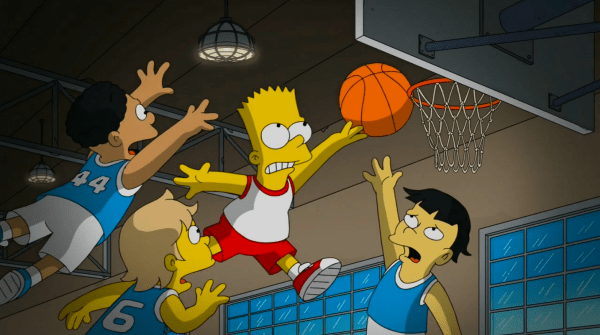
The reaction: Well color me shocked, this episode was actually okay. The biggest thing going for it was its format, as being framed as a documentary meant it didn’t need to take itself too seriously and it could be more focus more on its gags than its story. A plot like Fat Tony cleaning up with bets made on grade school sports feels like something I’d be annoyed with in a regular episode, but in this framework that’s already a big joke, it’s fine by me. Also, with a narrator explaining what’s going on every step of the ways, that means the characters don’t have to exposit and re-explain everything every thirty seconds, so they can actually deliver, y’know, dialogue. The plot is simple enough, to start: Bart joins the basketball team, quickly becoming the star player, and he lets fame go to his head. Homer becomes the new coach and the two get cross with each other thanks to Bart’s ego. It felt like a weaker version of the Homer-Lisa conflict from “Marge Gamer,” but I still bought it. After that, Fat Tony cuts a deal with Bart that he near-wins each game so he can rake in a lot of bets by ruining the spread. It’s called point shaving or something… I’m not a sports guy, nor have I ever seen 30 For 30, so I don’t really have any concept of what this is about. But later, Bart finds that Fat Tony is making a lot more off his back betting against him, he requests him to throw a game for some reason, and Bart defies him by winning. I’m not quite clear if this story makes sense or not, but it’s not like it matters much. In the latter half, unfortunately, the expository dialogue returns (“Dad, this is supposed to be about us getting together.”) Not to say the Homer-Bart stuff was expertly done, but what was there was serviceable enough. I don’t know if you can tell, but it’s kind of difficult writing about this one. The format gives it a different feel that’s hard to surmise, and also it’s not a typical huge dumpster fire for me to rant and rave over. I could mostly follow the story, the characters were bearable, and there were a handful of jokes I actually thought worked. This is like this season’s “Friend With Benefit,” I can’t say I love it, but I certainly don’t viciously hate it like its brethren.

Three items of note:
– We start with another guest couch gag from Bill Plympton. What is this, his fifth one? They’re getting less and less unique, going from that one where Homer fucks the couch and gets it pregnant, to now where a squiggle version family sits on the couch, and we pan up to a chain of each family member drawing each other. We also hear each Simpson humming to themselves as we pan by, which kind of steps on the nice score that’s playing. That’s something I’ve noticed, that for some reason, they’ve been cramming couch gags full of unnecessary ADR of characters just umming and aahhing for no reason. The segment ends with Homer stabbing himself in the eye with his pencil, because 85% of couch gags now have to involve Homer getting injured or killed. These guest segments used to be the only creative bright spot in this entire series, I hope this isn’t a sign that they’re gonna ruin these too.
– The episode opens with what I assume is a recreation masked as a parody of the 30 For 30 opening, which features a flurry of videos from past sports episodes playing in the background. Seeing the likes of “Homer at the Bat,” “Lisa on Ice,” and even the clip of the footballer’s leg flying off from “Faith Off,” as dumb as that was, that at least had some genuine shock value to it. After all this, I bet if I go back and watch season 11 or 12, it would be like reaching an oasis after being stranded in a desert.
– The ending reveals the narrator as being Nelson’s dad, which was sort of set up earlier in the episode. Nelson and his mom show up in the recording booth for a tearful reunion, where Dad bestows upon his son the best gift of all: sleeves for his ripped vest (“You look just like a parole officer!”) It was actually surprisingly sweet, which is a term I don’t think I’ve used on this show for years. But status quo is God, so they of course end with mentioning how Dad left again. I guess the writers love those sad Nelson jokes. I’d much rather see the return of Mr. Muntz we saw in “Bart Star.” I’d also much rather see this series get cancelled.

One good line/moment: There are some pretty solid gags peppered throughout, some of which probably won’t translate writing them out and describing them, since they’re made funny because of how they’re edited. The one bit that actually made me audibly laugh was a funny drawing of Homer nervously watching the game, sweating profusely with a towel shoved in his mouth. This by itself is amusing, but the joke is added onto with two quick talking heads by Marge and Homer (“I don’t know how, but Homer gained twelve pounds chewing towels.” “I put jelly on ’em.”)

612. Kamp Krustier

Original airdate: March 5, 2017

The premise:
In a direct sequel to “Kamp Krusty,” Bart and Lisa are scarred from their traumatic camp experience and seek to face their demons. Meanwhile, Homer becomes a more productive worker with the kids back, leaving Marge sexually pent up.

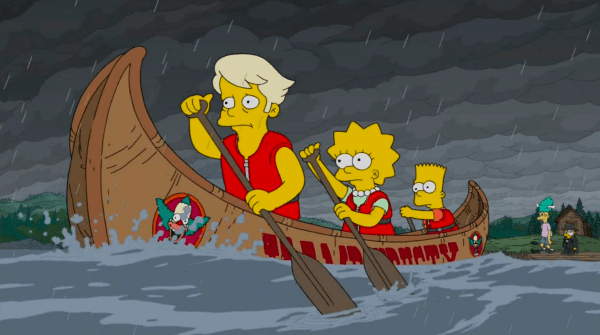
The reaction: This show has mined nostalgia from the classic era for brownie points for years now, but this episode is on a different level: a sequel twenty-four years after the fact. That’s nearly a quarter of a century, how crazy is that? Watching this, it’s just impossible to not think about “Kamp Krusty” and foolish to even try not to, so it’s really weird the writers felt confident enough to do an episode like this. The kids return home from camp visibly shaken up and are all sent to counseling, while Homer, Marge and everyone else appear unclear about what exactly happened there. Marge in particular seems very aggressive in wanting to sweep her children’s trauma under the rug, believing them to be exaggerating and that they should just move on so she can continue getting her mack on (wonderful, more Marge being uncaring to her kids.) So I guess we’re retconning Kent Brockman’s report from Kamp Krusty, since no one seems to really care that much about what happened at camp, and Krusty gets off completely scot-free. Bart exaggerates his trauma to get out of school, but then he starts getting actual memories of a horrible incident he and Lisa were a part of, and the two return to camp to try and figure out what happened. The whole thing is treated like a serious mystery as they finally recall that a kid they were kayaking with seemingly drowned. “Kamp Krusty” was one of the show’s goofier episodes, back in the day when they could make anything funny and entertaining, even abusing children, so I don’t understand who this follow-up is supposed to appeal to, being so wildly different in tone. Who is this fan service aimed at? How can anyone who enjoyed “Kamp Krusty” and understood in even the slightest sense what made that show great, then watch this episode and not clearly notice the tremendous plummet in quality? Checking No Homers, it appears that even those folks weren’t impressed, with their lowest ratings ever: 2/5. I guess that counts for something.

Three items of note:
– Marge is pretty awful in this episode. At first, she’s sympathetic of Bart’s crocodile tears and lets him take Homer’s place in bed (which I believe has happened before in a recent episode. Is this not weird to anybody?) This prompts Homer to go to work early, and ultimately leads him to being a model employee and husband, getting a big raise and tending to the house. The trade-off is that his hyper-efficient lifestyle leaves him uninterested in sex, which gets Marge frustrated (“First the kids are screwed up, now our marriage? We need therapy.”) They go to couples counseling, and now Marge seems to care less about her kids’ problems (which she never seemed all that concerned with to begin with, especially Lisa’s actual trauma) than her own selfish needs. It’d be a stretch for her character, but if that were kind of the point of the whole episode, I could buy it, but as usual, these episodes have no mission statement or overall theme or anything like that. It’s just a bunch of nonsense stitched together by a threadbare premise. The therapist recommends they all go back to camp so the kids confront their demons. While driving, we get this inner monologue from Marge to recap everything for the third time (“My kids are a mess. Homer’s turned into the man I’ve always wanted, which I don’t really want. And for some reason, we’re going back to Kamp Krusty.”) “For some reason”? Did she black out when the therapist was talking? Once at camp, which is now an adult pleasure resort “Klub Krusty” (don’t ask), the kids run free to solve their mystery, and meanwhile, Marge repeatedly tries to seduce and fondle Homer until eventually he just gives in and they have outdoor sex. She could care less where the hell her children have run off to. As long as she gets fucked, who cares? Just incredible.
– When Homer and Marge are at therapy, Moe shows up as the next appointment with some kind of robotic monstrosity. It’s like a woman’s head on a central vac with a bunch of bells and whistles on it (and wings?) Anyway, from behind the door, he causes it to make a whole bunch of noises until it finally dings, at which point Moe utters, “Alright, I just finished. Deviant out.” What, did they just have a mutual climax? This has got to be a new low.
– The ending is just horrid, one of the worst I’ve ever seen. So we surmise that the sole cause of Bart & Lisa’s trauma is their kayak flipping and the kid they were with supposedly drowning. Also, they were rowing in escape of Sideshow Mel’s performance of Phantom of the Opera. So are they making like Kamp Krusty was a joke, or are they treating it like they were actually abused, like what actually happened? Do they even care about the original episode at all? Well, they dragged “Kamp Krusty” writer David M. Stern in to do this one, but like Jeff Martin and David Mirkin before him, I’m sure they ripped apart his draft like every other episode to create this mess. So the Simpsons arrive to find the camp has been turned into some kind of posh swingers club. I’m not quite sure how much time has passed for that to have happened, but whatever. Security guard Raphael somehow knows about the missing kid, which makes no sense given I assume he was hired to work this new club. But he takes him to see “Charlie,” who is now working at the new massage parlor. Turns out he’s a little person, and a spy for Departures magazine (isn’t that for rich people travel and getaways? Why would they want to cover a shitty kids summer camp?) The explanation of what happened is not only brief, but also aggressively snarky (“But you didn’t have your life vest!” “I’m a grown-up, I can swim!”) It’s like the writers saying, yeah, this is our ending, you think we give a flying shit? And clearly, they don’t, since at the end, we get a final joke promoting “Kamp Krustiest” coming in season 52. I’ll say it again, and again, and again and again and again, the writers all know how poor this show is, and they just don’t care. No one can be this level of deluded to believe otherwise, not even in Hollywood.

One good line/moment: FUCKING BLANK.

611. The Cad and the Hat

Original airdate: February 19, 2017

The premise: 
When Bart throws away Lisa’s new beloved hat, a physical manifestation of guilt begins to eat away at him. Meanwhile, Homer is revealed to be an idiot savant at chess, having played with his father as a kid.

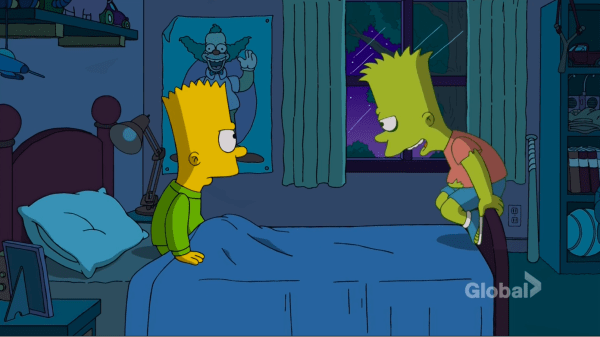
The reaction: How to even begin with a plot that’s razor thin? Bart slights Lisa in the worst possible way that leaves her extremely depressed and him wracked with guilt. So what happened? We start at the beach, where Bart sees a totally badass temporary “Bad to the Bone” tattoo, but is saddened to find it immediately washes off in the water. This causes him to cry. Yep, that’s right. The very first episode of the series featured Bart yearning for a real tattoo, and now, almost thirty years later, he bawls like a baby when his temp tatt goes bye bye. Embittered, Bart takes his anger out on Lisa, tossing her beloved new sun hat out the car window. We’re told how much Lisa loves that hat because a Beach Boys song plays every time she thinks of it, and she’s absolutely devastated when she finds it missing, so much so that Bart starts hallucinating a gremlin version of himself to represent his guilt. All over a hat. This might have worked if this was like a last straw kind of deal on Lisa’s part, or was part of a larger story, but no, it’s just all about a stupid hat. The conflict reminded me of “Bart vs. Thanksgiving,” but I won’t even scratch the surface of that, because it’s not even worth comparing the two. Two thirds in, Bart comes clean, but nothing he can say or do will get him back into Lisa’s good graces, despite getting her multiple gifts. What, was that the only sun hat in existence? He can’t find another one? Lisa meanwhile is so unbelievably melodramatic (“I’m truly sorry, Bart, but it’s a wound nothing can heal.”) Even when Bart manages to retrieve the hat, it’s not enough (“Your best bet is to forget me and start fresh with Maggie.”) But then she reconsiders and everything’s fine. I just don’t get what I’m supposed to feel in this episode. How much can I possibly give a shit about a fractured relationship born from a missing hat?

Three items of note:
– We get our second couch gag from Robot Chicken. While their first wasn’t exactly transcendent, it definitely feels it compared to this. Homer leaves “set” looking for the sailboat painting above the couch, walking in live-action space onto the sets of a South Park knock-off, a California Raisins knock-off, and finally into the room of the Seth Green Robot Chicken nerd who has taken the painting. It all feels extremely pointless. Why, in the year 2017, do we have “parodies” of a two-decade-year-old series and pop culture mascots that have been dormant for twenty-five years? I just didn’t see the point of the segment, other than to kill precious, precious seconds, of course.
– The B-plot takes up about half the episode, and I really don’t give a shit about it. Homer played chess with his dad after Mona left. Abe the gruff, uncaring working stiff interested in chess? Please. But they’re softened his younger character so much over the years, this is no different. At least here it’s implied that he only did it because he liked to beat Homer. I think. Whatever. This culminates in Homer having a rematch with his father, but in the end, he throws the game to spare his father’s feelings. The ending was clear as day when the game began, and in case you couldn’t tell by the visuals of Abe looking defeated and Homer appearing conflicted, Homer’s brain tells you so (“Isn’t a father more important than a victory? I’ve never really known either.”) There’s a shit ton of exposition lines this episode, but it’d be redundant to bitch more about that than I already have.
– Storytelling is not just in the toilet, it’s clogged deep within the pipes of said toilet, but there are certain moments that just astonish me. We’ve established that Lisa is completely over the moon about this dumb sun hat, and that she’ll be crushed to discover it missing. Bart throws it out the car window on the way home from the beach, then we cut to nighttime where he already feels guilty about it and the guilt monster appears. Then we cut to Lisa dreaming about the hat, feeling at her head and discovering the hat isn’t there. She then frantically runs to the car to search for it. So, she loves this hat so dearly, but upon returning home, she didn’t think twice about it being nowhere to be found before she went to bed? Maybe we could have seen Homer carrying her to bed still asleep or something, I dunno. But why do I have to fill in these narrative gaps? Stuff like this might seem small, but it’s glaring to me how little care goes into these stories, which gets more surprising that the bar for content just gets lower and lower.

One good line/moment: BLANK.

610. Fatzcarraldo

Original airdate: February 12, 2017

The premise:
In a new healthy food landscape, Homer finds solace in a humble chili dog roadside caboose. He later realizes this establishment was a huge part of his childhood, but sadly, the owner doesn’t remember him.

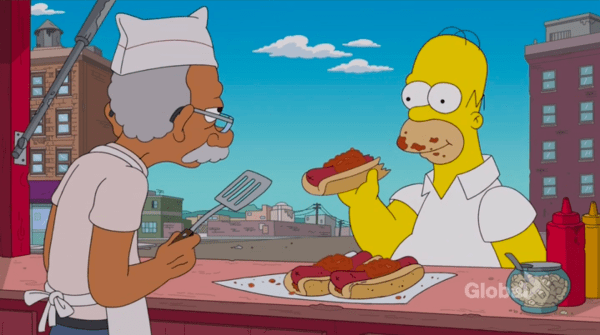
The reaction: Episodes like these are the most baffling to me: seemingly innocent premises, but ones that I ultimately can’t figure out what the hell the story is or what the writers are trying to say with it. Homer is disillusioned by his usual fast food haunts going “healthy” and multi-cultural, but way outside of town, he discovers a roadside chili dog stand, which he stays at all night. The next morning, Abe magically materializes in the house to tell Homer that he’s been eating those dogs since he was a young lad, as it was right next to his parents’ court-appointed therapist (Glenn Close returning yet again…) Homer then surmises he’s been eating (and drinking) to shut out his negative emotions for years, but that he’s a-OK with that. The “healthy” fast food and Homer’s damaged psyche are two plot threads that are immediately dismissed once they’re introduced. The main conflict, I think, is that the man running the stand (I don’t think he had a name) doesn’t recognize Homer all grown up. Forget that Homer didn’t remember the guy despite having gone there all through his childhood, but he’s apparently really hurt about the vice versa. So the caboose gets super popular, so much so that Krusty ends up buying it. One would think this would tie into to the reformatted Krusty Burger and they were going to completely change the menu, but that’s not even mentioned. Incensed, Homer impulsively chains the caboose to his car and drives off with it, prompting a police chase. His crusade creates a stir with Springfield’s most obese residents, who help him out when he runs out of gas. So is this a fat pride show? We have the right to our fattening, but tasty cheat foods? I understand the attempted satire, but it’s not like all fast food has completely changed its stripes. They even comment on it itself with a sign “Healthy-Sounding Food and Beverage Concepts” at Krusty Burger, touting a brand new menu with seemingly “good” food that’s pretty much just a smokescreen. But whatever. Homer smashes through a barricade, gets the caboose teetering off a bridge, then the owner saves him and admits he knows who he is. But it’s not like he just remembered, he says, “I never forgot you! How could I?” So was he just lying? Does he have dementia? Homer proclaims him a surrogate father, which is a whole new can of worms that it doesn’t bother going into, mostly because the episode is over. I feel like this episode was broaching three ideas at once (plus an extremely brief and meaningless Lisa B-plot), but never got around to fleshing out any of them, so we’re left with an episode that is pretending to be about something, but ends up just being rambling and incoherent. You know, like every other episode.

Three items of note:
– The reason I’m not 100% sure the Homer-hot dog guy relationship isn’t supposed to be the primary plot is because how horribly undeveloped it is. Hot dog guy repeatedly tells Homer he doesn’t know who he is, then at the end, he says he does. Not only that, but he considers him family? Or something? But then he disappears with no real conclusion to that at all. Instead of developing this relationship at all, we get scenes like this: Homer arrives at the stand and the two of them sing a song, of which over half of the lyrics are just “Hot dog!” Hot dog guy ends the scene by repeating that he still doesn’t recognize Homer. What a pointless waste of time.
– Comic Book Guy and Springfield’s fellow fatties show up to support Homer’s insane quest to save the hot dog caboose, just because. I don’t want to go into how little sense so much of this makes, but when Homer’s car runs out of gas, they help him push up a steep hill, then when the reach the top, they help him again up a steeper hill. Hill #2 is fifteen seconds of a still shot of them pushing, it’s a clear example of just time filler. Also, where are all the squad cars and the chopper that were chasing them immediately preceding this sequence? Out of sight, out of mind, I guess.
– By the episode’s conclusion, Homer has stolen private property, led a huge police chase, smashed several vehicles, damaged a bridge, and ultimately destroyed aforementioned private property. It felt like Captain Wacky Homer behavior from the Mike Scully/early Al Jean years, so I once again found myself wondering why in the hell Homer was going to walk away from yet another escapade and not get himself arrested or sued. Once hot dog guy saves Homer, Marge and Bart drive up, with Marge just Stepford smiling as always, and Bart saying, “You’re a hero, Dad! They’re calling you ‘Public Elephant #1’!” Is he making fun of him, or is he really in awe? It seems like it’s supposed to be the latter, which makes no sense. Then they drive away. Just as I think about why the fuck Homer could just leave when the police were right there, Lou asks Wiggum the same thing (“He just committed a series of crimes!”) Wiggum responds with a Chinatown reference, so incredibly timely (and one the show already made sixteen years ago.) This has happened many a time, where Wiggum makes some kind of excuse why people can just easily get away with shit, but this felt like the most egregious example. It also shows how the bullshit lampshading doesn’t work. The fact that Lou acknowledged what I was thinking made me even more incensed, not less.

One good line/moment: Krusty’s clown music plays as his management team and lawyers all exit his clown car. Then the music plays quickly in reverse as they all get back in. I thought they semi-effectively pulled this gag off.