677. Screenless

Original airdate: March 8, 2020

The premise: Marge enforces harsher restrictions on screen time for the family, but when she’s outed as being the most addicted of all, the Simpsons decide to go to rehab to get their habit under control.

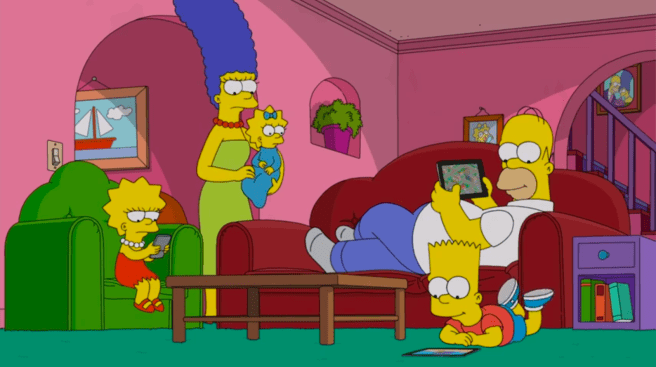
The reaction: Full disclosure, I was quite tired when I watched this, but this still felt like one of the dullest episodes I’ve seen in a while. A modern family trying to curb their screen time feels like a premise that a lot of family sitcoms must have tackled before, so I guess it’s this show’s turn to give its enlightening social commentary on how addicted we are to our phones and shit. Of course everyone’s lives are more fulfilling without phones: Bart discovers how much he enjoyed playing with real toys, Lisa falls in love with the library’s old card catalog, and Homer get invested in doing the daily jumble. Riveting content. But the struggle is too great for Marge, and the family ends up going to “Messages,” an extremely elaborate and expensive rehab center. I was all set to complain about how the hell they could afford to stay at such a place, but the head doctor explains their services are all paid for, thanks to tech billionaires feeling guilty for the negative ramifications of their products. Therapy introduces possibly intriguing ideas, like Bart replacing wielding weaponry in a video game with using guns in real life at a shooting range, but nothing really interesting comes out of it. The “twist” reveals that the rehab staff are assuming the online identities of their patients in order to spam them with ads and scams. The Simpsons escape, the head doctor is arrested, and the episode is over. The impetus of the episode featured Marge being excited she taught sign language to Maggie, yet none of the family gave a shit, as pictured above. Does that premise get wrapped up in the end? Nah. Honestly, I don’t have much else to say on this one. A show like South Park has done much better episodes regarding phone addiction and screen time, while an entry like this feels like it barely has anything to add that hasn’t been in an editorial cartoon by a 55-year-old artist complaining about those damned young whippersnappers on their phones.

Three items of note:
– Guest star round-up: Dr. Drew Pinsky appears at rehab, which I guess makes sense, until he turns into a Hulk because he’s mad at a phone game. He literally hulks out, and I don’t understand why. Is this a reference to something? Former show writer and current podcaster Dana Gould voices himself as a calming resource for rehab patients, and the head doctor is voiced by acclaimed documentarian Werner Herzog. A recent film of his actually was centered around humanity’s current obsession with technology (Lo and Behold, Reveries of the Connected World), presumably that’s why he was cast in this role. It goes without saying that I am sure that film is more insightful about its subject matter than this episode.
– There’s a scene where Marge and Maggie visit Patty and Selma, but Marge is so off-put by her sisters’ constant texting that she leaves early. Meanwhile, Maggie is so overcome by all the cigarette smoke that she passes out. Marge sits blank-faced as Selma says her joke line, “She always sleeps so good when she’s here!” Outside the bizarre fact that Marge seems to not give a shit her one-year-old just went unconscious due to smoke inhalation, they don’t even try to make any sort of comment about smoking being an addiction too? Why would you include Patty and Selma in an episode about addiction and not even breech that subject?
– Whenever the show makes jokes about video games, it feels like their only joke is that they’re cartoonishly violent. In this show, we get two: we see Bart watching a streamer go through all the different ways he can kill other players, then later Bart regales his rehab group with how he danced upon the digital grave of his opponents. It just feels very played out and limited, since there’s lots of other things you can parody about modern video games.

One good line/moment: Probably nothing.

Bonus review: In case you didn’t know, playing in front of the new Disney-Pixar film Onward is a brand new short starring Maggie, “Playdate with Destiny.” The short opens with the Mickey Mouse ears silhouette revealed to be Homer holding up two donuts above his head, followed by a card reading “DISNEY WELCOMES THE SIMPSONS.” It was maybe the most uncomfortable I’ve felt in a movie theater since I saw Sacha Baron Cohen’s Bruno with my parents. Anyway, the short itself is pretty simple: Maggie meets another baby at the park and falls in love, and then it’s just six minutes of the same joke where it’s like she’s going through the ups and downs of an adult relationship, but she’s a baby.  Using baby powder to freshen up, getting milk drunk in despair after not seeing her date, that sort of stuff. It’s cute, I guess, but pretty unremarkable on the whole. I wasn’t crazy about “The Longest Daycare,” but it’s much more clever and interesting than this saccharine affair. I would have to assume this short was in development before the Disney-Fox deal was in full swing, so I suppose I can’t blame Disney for this. I don’t know if I’ll ever get used to The Simpsons being a Disney property now. Seeing billboards of Bart spray-painting on a Disney+ advertisement would always force me to do a double take. But anyway, yeah, the short is pretty dull. But good news, Onward actually exceeded my expectations. It follows the Pixar formula, in some cases a little too much, but the core emotional story is solid, the performances are great, there’s a lot of fun moments and small details, and it’s got the biggest Pixar cry moment since Coco. So big recommend from me. And don’t worry about showing up late. If you miss the Simpsons short, you’re not missing much.
676. Bart the Bad Guy

Original airdate: March 1, 2020

The premise: After seeing an advance copy of the latest blockbuster “Vindicators” sequel, Bart abuses his nerd privilege by getting people to do his bidding lest he spoil the movie for them. The other Simpsons worry about Bart taking this too far, while Hollywood takes their own steps to ensure Bart’s silence.

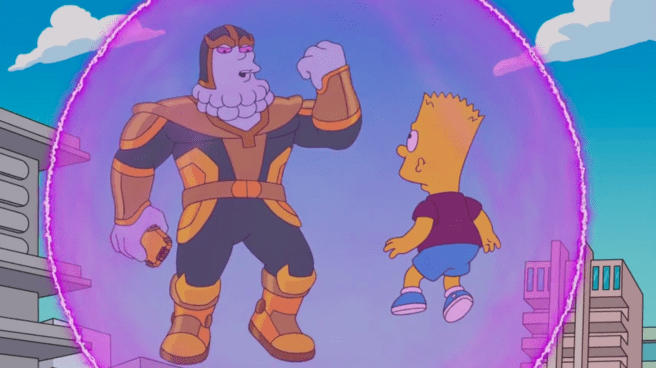
The reaction: Making specific pop culture references basically means you’re dooming your show to be dated within a few years. This isn’t to say that you should never do it, but I consider something like a MAD Magazine-level “parody” like the Vindicators to be very dull and uninspired, rather than something a little broader and more substantial. None of the Vindicators stuff in this episode is really saying anything about blockbuster movies, it’s just about people being emotionally moved by the tragic ending of Avengers: Infinity War, and then being bummed they have to wait a whole year for the conclusion in the sequel. So they’re literally just doing their satirical take on the last two Avengers movies… but then where’s the satire? There’s plenty of criticisms one could make about the films of the MCU, both creatively as movies themselves, and the big business media juggernaut behind them. They approach a bit of the latter with the two movie executives (voiced by the Russo brothers) talking about how imperative the box office of their movie is to the global economy, but by that point, the episode is basically over. So all the Vindicators stuff is mostly just empty referencing and meaningless filler. What are we left with? A story where Bart acts like a dick, only to mend his ways thanks to manipulation. By means I won’t bother explaining here, Bart watches an advance copy of the new Vindicators movie, and uses his spoiler knowledge to get people to do anything he wants, which we see as him taking everything from Comic Book Guy’s store, and ultimately forcing the entire town to build him a giant treehouse. I know the episode is called “Bart the Bad Guy,” but Bart’s not just a little scamp pulling pranks because it’s funny, he’s actively abusing people to do his bidding for no real reason other than he’s just a shit. I guess the episode is about the crisis of Bart’s morality, as clearly spelled out by Marge toward the end (“Bart’s soul is at stake!”) The ending involves the Vindicators executives kidnapping Bart and trapping him in a VR simulation where he discovers his actions have caused his beloved Vindicators to be in danger of being defeated by the sinister villain Chinnos (get it, because Thanos has a big chin? BRILLIANT WRITING YOU GUYS.) Rather than team up with him, Bart chooses to defeat the evil villain, and everything is all good. So he learns the errors of his ways via a massive hallucination and manipulation by a huge corporation? That feels like an ending that shouldn’t be played so straight. We end on the executives, satisfied Bart won’t blab spoilers anymore, disarming the explosive device under Homer and Marge’s bed, in a knee-slapping jab at their new Disney overlords. Any sort of bite-the-hand humor the show used to excel at goes right out the freaking window after this embarrassing mess. After this episode-length Avengers commercial, I can’t wait to see what new synergistic effort Disney’s got cooked up next.

…I guess I didn’t have to wait long.

Three items of note:
– “Vindicators: Crystal War” is a Marble Studios film, but when characters are talking about “Marble movies,” it just sounds like Marvel, which makes me wonder what the fuck is even the point of doing the whole legally distinguishable charade. Disney owns this shit, why not have it actually just be Marvel Studios and the Avengers? Who gives a crap?
– Embracing his spoiler powers, Bart arrives at school acting cool as the other kids are terror stricken, set to the music used in Spider-Man 3 when Venom-infected Peter Parker is strutting his stuff down the New York City streets. My knee jerk reaction is to complain about such a dated reference (we are thirteen years out from Spider-Man 3 at this point, just in case you wanted to feel old today), but considering Avengers: Infinity War and Endgame are more contemporary and those references also suck, it’s basically a no-win scenario. But this is all stuff I’ve talked about numerous times: this is literally as fast as their production cycle can go in terms of contemporary references, and in the age of memes and satire on the Internet, you’re inevitably going to miss the boat bagging on the hot new movie or cultural moment if you wait more than a week. But also, as the show in its prime knew well, a reference doesn’t mean shit unless it’s funny outside of its context, or is adding or subverting something from the source material. What’s the point of using the Spider-Man 3 music? I haven’t a clue, other than please laugh at reference.
– One of Bart’s spoiler victims is Principal Skinner, who gets robbed of his hairpiece. I remember on an early DVD commentary, Matt Groening talking about how he was adamant against the idea of Skinner wearing a toupee, because he felt it was a very cliche trope for a humorless principal character. The only time I recall a mention of this was in one of the very first Simpsons comics, where we see Skinner gluing his hair on his head to ensure the toupee doesn’t budge. But here we are nearly thirty years later, and we finally circled back to this idea, and I guess Groening didn’t give a shit anymore, or was too busy relaxing in his solid gold mansion with his rocket car to notice. Not that I really care either, it’s just an interesting thing I noticed.

One good line/moment: Nothing to be had here. Man, this one was an absolute dud. It was aggressively boring more than anything, maybe second worst of the year after the Todd Flanders episode.

675. Frinkcoin

Original airdate: February 23, 2020

The premise: Professor Frink enters the cryptocurrency space with “Frinkcoin,” making him a billionaire overnight. Aghast that he is no longer Springfield’s richest man, Mr. Burns seeks to overtake Frink’s wealth, while Frink tries to determine if his newfound friends aren’t just there to mooch off his fortune.

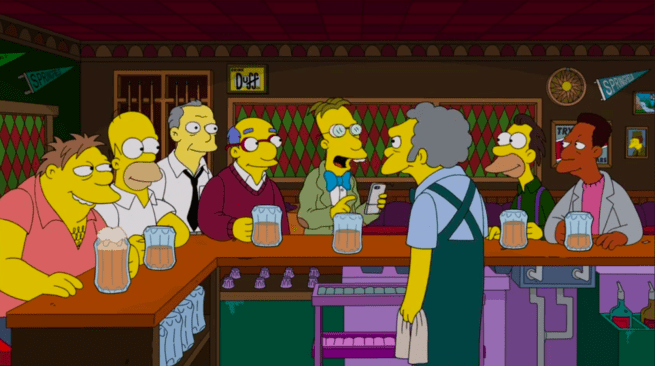
The reaction: Yet another episode that seemingly acts like they’re shining a light on a secondary character, but reveals absolutely nothing new about them and barely even feels interested in doing so. An entire Frink episode could actually be something worthwhile, if it actually had something to say. But we know what show we’re talking about, right? Frink tells Lisa he’s developing Frinkcoin, then we cut to Kent Brockman reporting on what looks like a press conference of Frink announcing the cryptocurrency, but I guess it’s not that, because Brockman then talks about how Frink’s a billionaire now. I know I’ve talked a lot about the Simpson-becomes-an-instant-success trope, but this is a new one: a character becoming a billionaire out of nowhere by the six minute mark. The main “emotional” thrust of the story is that money does not bring Frink happiness. Lisa urges him to indulge in the creature comforts he’d always dreamed of as a poorer man, but he’s still sad after doing that. Surmising companionship might raise his spirits, Homer is corralled into bringing Frink to Moe’s, leading to the barflies and other schlubs like Kirk and Gil to become Frink’s little posee. But Frink has no connection to these idiots. The point isn’t even that he’s enjoying being social despite the company he’s keeping, it all feels completely meaningless. When Mr. Burns tries to sew discord by telling Frink his new friends only hang out with him for his wealth, Frink replies, “Those guys are my best buddies! Fatso and Drunkie and the evil bartender!” And yeah, the others are quickly revealed to be moochers, but then we’re still supposed to care about Frink being sad and betrayed after the show expressly tells us he doesn’t care enough to remember their names? The ending revolves around a ridiculous conceit of Burns discovering an equation that will render all cryptocurrency worthless, and he leaves the dry erase board of it in the town square to wait for someone to solve it. The equation is finally solved by Frink himself, wanting to rid himself of his fortune, but his reasons for doing so are all explained by Lisa. That’s the whole episode, characters like Lisa, Homer and Mr. Burns maneuver Frink through the plot, pulling information out of him or summarizing the current situation and what he’s feeling on their own. Episodes highlighting Springfield’s less-covered citizens usually get ruined by the Simpson family shoving them out of the way and hogs the spotlight, but here, the episode is all about Frink, yet he barely seems to be in control at all. It’s weird. Like, there’s a way this could have been rewritten that it maybe… maybe could have worked with all the same plot beats, but I dunno. Rewriting season 31 Simpsons scripts? What a thankless job that would be.

Three items of note:
– Now, I’m a big dumb dummy, but I feel like I know the basic gist of what cryptocurrency is and how it works. But a quick info dump feels necessary for a show covering a topic like this. Frink helpfully shows a video hosted by “TV’s most beloved scientist” Jim Parsons, as he explains how the process works, combined with Schoolhouse Rock-esque animation to a parody of Frank Sinatra’s “That’s Life.” It feels like way too much information you don’t need to follow the simple plot, and of course none of it is funny. Parsons attempts to look cool by “jumping” a bike over multiple buses and dancing, holding up a sign reading “NOT A NERD.” Awful.
– Frink shares his office at Springfield University with a humanities professor who can’t stand him (hey, speaking of, this is the first we’ve seen Frink as an actual college professor, isn’t it? Maybe we can introduce that into the plot somehow? His love of education? What his students think about his class? Anything? No?) But his presence annoys the piss out of her, and after Frink strikes it rich, we see he’s cleared out his side of the room and he’s gone, but she can still hear his nasal whistling (“I can still hear it! He’s in Chicago, for God’s sake!”) Later we see Frink has moved into a giant new mansion, which I assumed was in Chicago. Lisa stops by to see that he’s still sad, which I guess is weird, but we’ve seen characters just appear in random places with no explanation, so I didn’t give it much thought. But as the episode goes on, characters still refer to Frink as “the richest man in town,” and now that I look back through the episode, in the establishing shot of Frink’s new mansion, we can see Burns Manor in the background. So what the fuck was that lady on about saying Frink was in Chicago? I don’t understand it.
– The wraparound device of sorts is Lisa writing her report about the man who she admires most: Professor Frink. Over the episode, they seemingly bond over not having friends, which I guess is supposed to set up the emotional payoff of Frink declaring Lisa his best friend. But it never, ever feels like it develops into anything even close to being emotionally resonant. It doesn’t help that the episode also gets slightly meta in Lisa feeling jaded about thirty years worth of stories about her where she faces inevitable crushing disappointment by the end of each twenty minutes (“Every time I get a pony or make a friend, they get the hell out of town.”) Why not write this as simple as possible: Lisa and Frink bond over being social outcasts and lovers of science, Frink gets rich, starts living a lavish, superficial life, shutting Lisa out, until he realizes he’s hurt her, and gives up his life of luxury for the sake of her happiness. Cliche? Of course. But at least it’s actually about two characters and their connection to each other.

One good line/moment: Per usual, if I wait more than a couple hours between watching the episode and writing a post about it, I have to struggle pinpointing anything I can recall liking. And that’s not a good sign. So let’s leave it at that.

674. The Miseducation of Lisa Simpson

Original airdate: February 16, 2020

The premise: A new financial windfall in Springfield’s economy leads to the opening of a brand new STEM Academy. Lisa is initially thrilled to receive an accelerated education in the gifted class, but soon grows suspicious to the true motives behind the school’s operation.

The reaction: It feels like it’s been a while since we’ve had a “big topic” episode this vacuous. For a plot that’s ostensibly supposed to be satirizing STEM education, job automation, the future job market, and so forth, there’s very, very little in the way of actual commentary here. Springfield’s new STEM Academy is a technological wonderland where Bart is thrilled to indulge in VR simulations for the cosmetic rewards and achievements, while Lisa revels in being singled out for the gifted class, where she learns about… stuff. We’re never really shown what exactly her education is, save one mention of her at the dinner table talking about computer science. Things start to unravel when Lisa discovers the rest of the children at the school are being trained to perform menial tasks for side hustles like ride sharing and food delivery. The big reveal is that the school is only gearing these kids up to get ready for a world of minimum wage, low-level jobs? That’s basically all that Springfield Elementary has been doing for over thirty years, so no new satire there. And at this point we’re almost to the end of the episode, and this is all we’ve gained so far. So much of the episode is just repeating the same bullet points and throwing around buzz phrases like “gig economy” rather than actually build a purpose around them. Ultimately, the head of the academy consults the almighty algorithm regarding what viable careers the future holds, and they are shocked to find there’s only one job left that hasn’t been assumed by machines: elder care. And that’s the big punchline, I guess. Funny? The school is quickly destroyed, and the episode ends with Bart and Lisa feeling crestfallen by their hopeless future prospects. Actually, it really ends with future Bart and Lisa being abused by robot drink machines forcing them to pour their own sodas. What an absolutely pointless exercise.

Three items of note:
– The opening features an extended look at the life of Springfield’s resident grizzled old sea captain, Captain McAllister, starting with his past, discovering a Springfield treasure map with his future wife, transitioning forward forty years and his fruitless attempts to unearth the booty. This show has previously seen surprisingly success in highlighting the never-before-seen private life of secondary and tertiary characters in recent past, particularly Mr. Largo on more than one occasion. I wish I could say this was a similar situation, but the glimpses at McAllister as a character we get are either too fleeting (apologizing to his wife for not having children) or too meta (admitting he pretended to be a “flimsy, one-note character” to keep people off the scent of the treasure) to really be satisfying. Also they repeatedly use the Pirates of the Caribbean score, which gets annoying real fast, and distracts from any attempts to humanize this goofy side character. In the end, McAllister’s wife betrays him by tipping off Quimby about their find, and altering the border of the town so that he can claim the treasure. What is she getting out of this? Just a big fuck you to her awful husband? Whatever. Outside the Town Hall meeting to discuss what to do with the town’s new ill-gotten gains, we see McAllister passed out drunk in a ditch. Might as well leave him there to die if this is the best they got for him.
– Marge is the one who proposes a new STEM school (I don’t mean to repeat this point so often, but Julie Kavner’s voice just sounds so, so tired here) and to drive her point home, she’s invited her friend John Legend to sing a not-funny song about it! And his wife Chrissy Teigen is here too, and they talk about her Instagram and stuff! I know it’s pointless to complain about random celebrity appearances at this stage, but it feels like it’s been a while since we’ve seen one this egregious, that Marge just randomly got two mega celebrities to come to Springfield on a whim to help her out. And what great jokes they have for them, talking about the launch party for their couple’s perfume and how Teigen posts pictures of her kids every fucking day. I don’t even follow her on Twitter and I see her posts all the time, how is that possible? Just completely awful and pointless. One of the worst instances of stunt-casting this show has done in a while.
– There’s a kind of B-plot where Homer is terrified that his and everyone else’s jobs at the power plant are going to be taken over by robots. But I seem to remember an episode where that did happen. Season 23’s “Them, Robot” featured the entire staff getting replaced by automatons, leaving Homer the sole human employee left. I know it was eight years ago, but did everyone on staff just forget that this thing that Homer’s paranoid about happening and no one believes him… already happened? Homer’s main target of scorn is the break room’s new automated soda machine, and he tries to one-up it by pouring soda himself, and fuck, it’s so boring and stupid. Even though he passes out in his attempts, he’s quickly revived and announces that everyone’s jobs are safe, and everyone cheers for some reason. Then we pan over and see Burns is unleashing new robot workers into the plant. And that’s the end. What the hell is this? Again, we already did that episode, and it was a piece of shit.

One good line/moment: Nothing to speak of here. Total snooze fest, this one.

673. Hail To The Teeth

Original airdate: January 5, 2020

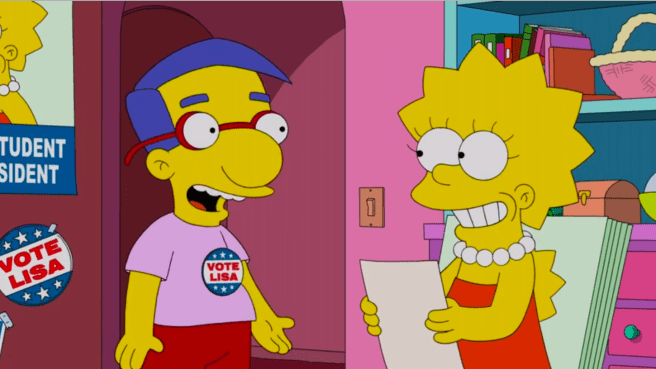
The premise: Lisa’s new braces leave her with a permanent grin, making her instantly more palatable to her fellow students. She decides to use this to her advantage by running for student body president. Meanwhile, Homer and Marge get invited to Artie Ziff’s wedding, and are shocked to find his bride-to-be is an exact copy of Marge.

The reaction: Things get off to a painful start when Lisa bumps into an old man on the street (“Hey, little lady. You’d be a lot prettier if you smile!” “What? Who are you?” “I’m a man, so I know what I’m talking about!”) Awesome writing right there. So I guess this is their feminist episode? I guess? When Lisa gets the top half of her new braces installed, she’s left with an unflinching smile, making her instantly popular at school, where no one really cares what she’s saying as long as she looks nice doing it. It’s an idea we’ve seen in many other movies and shows, including this one, all the way back to the ending of “Moaning Lisa” where Lisa takes her mother’s advice to bury her feelings and just smile, making her a more amiable presence to be taken advantage of (“Why don’t you come over my house after practice? You can do my homework!”) Here, when it’s this simple idea stretched across to an entire plot, where Lisa’s entire class is enraptured by her book report of Charlotte’s Web, it feels more of a stretch, but thankfully some tell-not-show inner monologue from Lisa helps us out (“Can it really be people are this shallow? And am I shallow enough to enjoy this?”) But we pivot from that to Lisa finding that since she can control the mushy minds of her classmates with her new grin, she can run for student office and use her powers for good. But there’s no specific problem she wants to solve, it’s just stuff we see in Lisa’s quick fantasy, like a unicorn sorting a recycling bin and the bullies as reformed bookish types in a nice new library. The social aspect of Lisa embracing her new shallow popularity feels like it would be a richer vein to tap, but I guess not. Lisa is seemingly a shoe-in to win, but when she gets her bottom half of her braces done, she now has a locked grimace, costing her the election. It would be an unsatisfying ending if I actually cared about what was happening. If only the episode were about something specific Lisa really wanted to change, then we could be along on her crusade and understand it. Or if she found herself really caring about being popular, as fleeting or superficial as it were, and we can feel what she lost. But I guess Lisa was just after power for its own sake, and ended up losing big time. Who does she think she is, Hillary Clinton? (laugh track) This episode was written by Elisabeth Kiernan Averick, a new young writer who previously wrote for Crazy Ex-Girlfriend. It reminded me of Megan Amram, who wrote the feminist-themed “Bart vs. Itchy & Scratchy,” which I enjoyed for the most part, and I theorized maybe some fresh new blood in the writer’s room could potentially shake things up on the show. But then Amram was credited on the awful “Crystal Blue-Haired Persuasion,” and now we have this garbage mess. The actually good “Thanksgiving of Horror” must have slipped through the cracks, but thankfully, the writer’s room hive mind turning scripts into bland, homogeneous goop is still in full force. So much for that incredibly brief hope spot, I guess.

Three items of note:
– The B-plot is truly bizarre and unsettling. Artie Ziff as a character has never worked beyond “The Way We Was.” The idea of him being incredibly successful but still lamenting his past mistake of letting his high school crush get away is kind of interesting, but the problem is is that’s all there is to his character. He’s a rich jerk who still wants to fuck Marge, and that wears thinner and thinner with each ensuing appearance. Here, it’s ramped to absolutely psychotic territory when it’s revealed Ziff’s bride is actually a robot he built. He then reveals his secret laboratory with his dozens of failed Marge robots, telling the real Marge that the expensive wedding and bachelor party was all just an elaborate ruse to win her over. Instead of running away screaming from this deranged, obsessive lunatic, Marge wastes her breath trying to cheer Artie up (“I think this crazy project actually had some brilliance in it!”) Artie is pleased by this (“I finally give up! …or do I?”) Pretty good summation of this show’s dogged refusal to advance any of these characters forward one single inch. Just like we just saw with Sideshow Bob, these tertiary guest characters are stuck doing the same song and dance every couple years or so, with no new ideas or innovative concepts allowed. The episode ends with Marge trying to cheer Lisa up how things are slowly getting better for women, which I guess is trying to tie the two stories together thematically? But it’s revealed that that was just one of Artie’s Marge robots, who flies off with the old man who kept telling Lisa to smile, prompting Lisa to cheer, rather than scream “HOLY FUCK MY MOM’S A FUCKING FLYING ROBOT.” The last scene is Artie dining with his Marge robots, hoping to have sex with them, so that’s a wonderful mental image to close out on. I can’t wait for Artie’s next episode, where he traps Marge in a VR simulation to trick her into loving him or some other bullshit nonsense.
– The video tape Lisa finds in the library, “A Gal’s Guide to Wowing the Workplace,” feels like a film strip the show would have absolutely killed in the past. But here, the jokes just feel so obvious and on-the-nose (“Let me touch your body and show you the problem!” “No need to ask!”) Also Lisa being mortified that this sexist notion of women being accepted solely for their appearance actually seeming to be accurate is a humorous idea. It’s like something South Park would take and run with, that the “wrong” lesson is learned and how the characters deal with it. But that concept is dropped almost immediately, so don’t think about that anymore.
– Over the end credits, we get a montage of pictures over Lisa’s life of her not smiling, from being on a roller coaster, going to prom with Milhouse, to appearing on not-Oprah’s show to hawk a book about how smiling sucks. But we also get random shots of eight-year-old Lisa randomly inserted between adult Lisa, so it all feels weird and messy. I guess this is all connected to Marge saying how things will get better for women, and showing how Lisa is successful in her life without smiling? It just feels strange and sad, seeing snapshots of her whole life looking miserable and not giving a shit. Episodes like this make me miss classic Lisa so much. Socially conscious, wise-beyond-her-years, but above all else, still a little girl, prone to naivety and childish behavior.

One good line/moment: Nothing. This one blew big time.