277. Sweets and Sour Marge

(originally aired January 20, 2002)
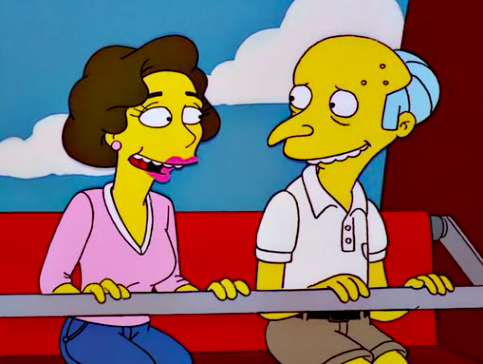
I think I need some medication or something, every episode this season so far has infuriated me in some way. I’ve got to calm down if I’m going to make it through eight (!) more of these. These few Al Jean episodes are just as bad as Scully’s, if not worse in some respects, but I can’t entirely place why. Maybe because it feels like they’re trying harder to be meaningful episodes with a point, but couldn’t fail harder at it. Despite having a consistent plot, this episode felt like an endless string of sketches that happened to have a story around it. By the end, I felt like I had watched nothing at all. We start at a library book sale where Homer comes upon the Duff Book of World Records. After exhausting everyone with reading off different records, he decides he want to make his own, but finds out the World Records council will only accept those done as a group. So Homer gets the entire town of Springfield together, somehow, to participate in the world’s largest human pyramid. Okay, sure, it’s a bit of a stretch, but Springfield is filled with a bunch of rubes like Homer that would love to have a record to their name, so I get it. Then the pyramid collapses, and the entire town forms a gigantic rolling ball that careens down the street. Honestly, how can I comment about this? I already had my aneurysm for the day, I’m not going to trigger it again.

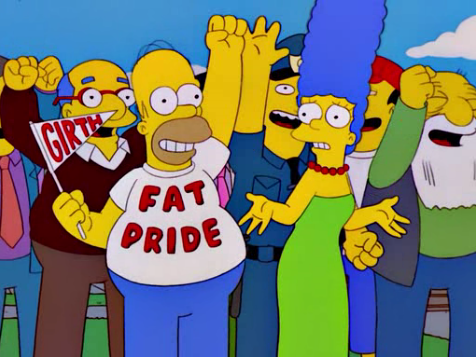
The human ball lands on a truck weigh station scale, where the people of Springfield earn their record after all, as the World’s Fattest Town. Everyone is pretty psyched about this, save Marge, who is upset about the state of the townspeople’s health. She pays a visit to Garth Motherloving, owner of the local sugar manufacturer, to plead with him to rethink his business, but he’ll have none of it. Garth is voiced by Ben Stiller, and I’m glad they gave him an interesting comic character to play. Oh wait, never mind, he’s just a generic evil corporate head who does things because he’s evil. Another celebrity wasted. So Marge gathers signatures in order to file a class action suit against the company. Things appear to maybe get interesting when Professor Frink gives Marge a tip-off, and then testifies in court about the addictiveness of his top-secret sugar plan for Motherloving… but then that’s it. No interesting twist. I would’ve even gone for something stupid at this point. In the end, Judge Snyder rules in favor of Marge, and has all sugar products banned from the town.

It doesn’t take long before the entire town goes through sugar withdrawal, one of the worst being Homer. Eventually he falls into a secret group consisting of Mr. Burns, Motherloving, Apu and Count Fudgula, scheming to get sugar back to Springfield. Even though they could easily smuggle it from across the town borders, instead they have to go off shore to the island of San Glucose. Maybe it’s because they got it free of charge (“Okay, man, here’s the sugar. Now you give us the money.” “That wasn’t part of the deal!” “…he’s right. Who wrote this thing?”) Then it becomes wacky Homer antics as he goes with them on the boat, falling back off the boat and completing the deal. Why did they need him for this? Couldn’t Apu have done this? Or maybe Count Fudgula could have bitten them, because apparently he’s a real vampire. Or at least a deranged man who thinks he is. I want to see an episode about him. But, not really. Anyway, this whole third act is essentially Homer going behind Marge’s back and breaking the law to pull this con, but it’s never addressed. He ends up dumping the sugar to appease her, but the fact that he betrayed her in the first place is never brought up. He just reassures her with a paltry line, they kiss, Snyder shows up to revert things back to the status quo, and that’s the end. It just all felt so empty and meaningless, traits that would carry through the Jean years for many seasons. At least the Scully episodes evoked some kind of response.

Tidbits and Quotes
– Some of the library stuff is alright: Comic Book Guy buys Leonard Nimoy’s books, Dr. Nick’s complete shock at a real medical journal, and Cletus feeding his pigs torn up, unsold books. Then Marge shows Homer the Duff record book. When Bart asks why Duff would put out a book at all, Lisa pipes in, “It was originally published to settle arguments in taverns.” Now, why would she know that? How could she know that? It’s a small line, but feels telling to me, that now Lisa is just the know-it-all, and any time we need something explained or narrated, they’ll have her say it, regardless if it makes sense.
– Seeing Homer do a wacky dance before the Duff judges is absolutely painful. Then he grabs a banjo and cobra that he’s seemingly brought with him. He couldn’t be more removed from reality at this point. He is Captain Wacky now.
– I like Homer’s blueprints for the human pyramid: just a big triangle.
– The various products at the Kwik-E-Mart are great: Sugar, Free Donuts, Honey-Glazed Cauliflower, and Choco-Blasted Baby Aspirin.
– “Why don’t you file a class-action suit?” “Oh, yeah, like Erin Brockovich.” “The prostitute with a heart of gold.” Similar to the Lisa thing earlier, how would Bart know who Erin Brockovich is? I don’t buy it.
– There’s some nice bits of Marge going door-to-door, best of all being Disco Stu, who proceeds to do lines of sugar before boogie-ing down to “More More More” on a sugar high. It would have been funnier if he actually inhaled the stuff, but no way they could get away with that.
– Garth snapping in court and claiming he’ll kill everybody feels like such a hollow imitation of Freddy Quimby doing the same in “The Boy Who Knew Too Much.”
– After the sugar ban, the police burn all the sweets in town. They try to throw in some Butterfingers, but they’re not even singed (“Even the fire doesn’t want them.”) Butterfinger ended their contract with the show in 2001, so I guess this was their shot back at them. This show has always bit the hand that feeds, but this kind of felt really petty. Plus Butterfingers are delicious, fuck all y’all.
– Act three really is just a tour-de-force of stupid Homer shit: consciously licking a puddle of blood and Vapo-Rub, landing backwards on the lower deck, then on a whale, trying to use reverse-psychology on a bird, and “marking” his share of the sugar. Then he has a high-speed boat chase with the police, which is not tense at all or funny. Oh yeah, and Bart’s there too for some reason. Not really sure why.
– “Now that I think of it, I wildly exceeded my authority, and I declare the sugar ban over.” That’s how we resolve the story. That little thought was put into it. It’s the writers basically saying, “Oops,” and throwing that line in to fix the problem.

276. Brawl in the Family

(originally aired January 6, 2002)
We’re two episodes in and I’ve already given up hope of anything improving under the Jean era. Even as an indiscriminate teen who gave most episodes a pass, I remember not liking this one, mostly for its third act. But there’s a big fundamental issue here, one I hope I can articulate into words, something that really rubs me the wrong way, and seems incredibly telling of the show’s new sensibilities. As the first episode produced in this production season, if this episode is who they think the Simpson family is, we’re in for a long, long road ahead… We start with our tangential opening where the Republican party repeals all environmental laws. The headquarters is in the same spooky castle as “Sideshow Bob Roberts,” but any shred of subtlety that was once there is gone, with Burns directly asking what evil schemes the Republicans have up their sleeves. No real motives, just good old fashioned evil-doings. And Smithers is there, despite what we saw in “Roberts.” And how could they push these laws with the Democratic Quimby in office? We’re two minutes in and I’m already exhausted.

Hazardous smoke levels create a downpour of acid rain. With a dramatic swell of music, we think that this may be important. But nope, it’s just the catalyst for the Simpsons to stay inside and play Monopoly. How do we make this leap? The environmental story is ten times more interesting than what plays out, and it’s dropped completely. A petty squabble over the board game turns into a huge fight with the family, for some reason. A fight that seemingly is continuous for a good hour or so before the police arrive and use their negotiator robot to trap them in a giant wad of taffy. I don’t even need to comment on some of this stuff anymore; writing out the summary just highlights the shittiness by itself. A social worker, Gabriel, is assigned to help the Simpsons be a family again. But here’s the problem: the Simpsons have always been a loving family. Despite their squabbles and tiffs, they’ve always appreciated one another and been rather close-knit. Seeing them pushed to the point where they seem like a broken family feels disheartening and weird. The problems that are illuminated are ever present, but are played in an incredibly sad, unfunny light. So when Gabriel has them do their outdoor exercise, I believe the family would be able to figure it out. Instead, we have Homer acting like a wild man and bashing a tree over with his car. It just doesn’t work.

Anyway, here’s the horrible third act. Just as the family seems to have been repaired, who should reappear but Amber and Ginger, the two cocktail waitresses Homer and Ned married in “Viva Ned Flanders.” Now, there’s so many problems with this, starting with the fact that I never wanted to see these characters ever again. Second, it’s so out of left field, and especially so to those who haven’t seen that episode. Then it suddenly becomes a whole new story where Homer must deal with having two wives, it has nothing to do with the family working through a problem since this incident was all Homer’s fault. The ending of “Viva” was so sloppy and preposterous, like a terrible gag extended five minutes, but at least it was treated as such. Here, the idea of Homer’s second wife is almost given some seriousness, with Lisa and Bart talking to their “Vegas Mom” and Ned embracing his new wife because that’s what God would have wanted. Then apropos of nothing, Marge not only forgives Homer, but concocts an elaborate scheme with him: get Amber drunk and have her marry Abe. So they basically pull the same dirty trick the waitresses did to Homer and Ned, but doing it back to them is okay. And the Simpsons did it as a family, so yay, togetherness! The others turn on a dime in favor of the lecherous monster Homer, and everything turns out fine. Disjointed, unfunny, outlandish and crude, this episode is many things, but most egregious of all is its handling the Simpson family. We’ve seen many characters be pushed in awful directions over the last few seasons, but this is the first we’ve seen where the whole family, the crux of the entire series, be pushed and pulled with no regard for who these characters are or how they interact. Our once loving family has been reduced to ruin, then put back into place within the last two minutes for no particular reason. I actually find that more offensive than any of the Mike Scully stuff. Could this be the worst episode ever? I dunno, maybe.

Tidbits and Quotes
– How could they go so far as showing a catastrophic storm of acid rain and never mention it ever again? All we get out of it is this “hysterical” sequence: the rain melts the TV antenna, thus killing the reception. Homer screams bloody murder, then runs outside, and screams again upon feeling the acid rain. Runs back inside, sees the TV, screams. Runs back outside… and so on. Dan Castallenata’s vocal cords gets another workout.
– One of the only good bits from the episode is hearing the different types of Monopoly, including Rasta-Mon-opoly and Edna Krabapp-oly. Marge decides to stick with the original version (“The game’s crazy enough as it is. How can an iron be a landlord?”)
– The dialogue during the Monopoly game feels weird to me (“I’d like to trust you, Homer, but you’ve been in jail three times.” “They told me it would be like this on the outside.”) Homer’s not play-acting, so is the gag that he thinks it’s real? I don’t know. Plus how could Bart have put down fake hotels without anyone noticing? Although it looks like he’s the banker. I don’t know, I just think they could have had a better instigator for this story than this… Or not do it at all. That would also have worked.
– Homer joins his son in childishly taunting his daughter about not getting into an Ivy league school. He basically becomes Bart Sr. if the scene or joke warrants it.
– How fucking dumb is Homer that he thinks Gabriel is an actual angel? He’s stupid, but this is just too much.
– During the family exercise, Homer snaps and backs his car into the giant tree repeatedly, which falls forward towards him. Very slowly. We see Gabriel under it, who just stands there and doesn’t move. He gets caught in the branches, then the tree falls down a slope we never saw before into a chasm. Okay. Then the family comes up with a plan. Someone will go down to the tree and secure Gabriel in a harness to pull him up, and someone else drives the car to pull them to safety. Let’s have Homer do the complicated part, his extra hundred pounds won’t be a hindrance at all. And because Marge twists her “driving ankle,” Bart has to drive. She couldn’t have used her other foot? So really, only Homer and Bart saved the day, the Simpson women did nothing. Brilliant.
– “You know, we’ve been through some 280 adventures together, but our bond has never been stronger.” “Yep, our family is as functional as all get-out.” “Could this be the end of our series… of events?” Why must you tease me like this…
– Judge Harm reappears, which is annoying. Then we have discussion of “mouth-whoopie,” Homer’s lust-filled string of double entendres while Amber makes him a sandwich… so disgusting and wrong. With no home to go to, Homer crawls into the doghouse, gets it stuck on his head, and runs around like a maniac. Marge looks out the window at this and smiles admirably. This surely is one of the most pathetic things she’s ever seen, and this is why she forgives her husband. What?!

275. She of Little Faith

(originally aired December 16, 2001)
So here it is. Having run seasons 3 and 4 with Mike Reiss, and been a core member since the show’s beginning, Al Jean takes over as show runner. He’s remained in the position to this day, over ten seasons now, whereas all previous show runners had two, and Mike Scully having four. Now, a changing of the guard really does a series good; a Dave Mirkin show has a different feel than a Bill Oakley & Josh Weinstein one, each run having a different strike at a tone. Hell, even Mike Scully shows have a distinct feel to them. What I get on the whole from Jean’s run is a general airless quality, a stagnation, if you will. There will be some alright episodes, and some terrible ones, but many of them will fall in the painfully average territory. This first outing definitely qualifies, though there are more specific things I dislike than like here. We start with Homer helping Bart build a model rocket, which ends up careening off course and crashing into the church. Are there any repercussions to this? Is Homer held responsible to pay off the massive amount of damage? Nope! We’re at the end of act one and my hope for change from Jean is fading already.

Who will step up and save the church? Why, Mr. Burns… of course? He intends to run the house of worship like a business, with Lindsay Naegle assisting, selling ad space and product placement in the church. Why the hell is Burns involved in this? I have absolutely no clue. It would work so much better to just have it be Naegle alone representing some conglomerate company, then the church can be like a subsidiary of Big Business, Inc. or something. All the Burns stuff is painful here. As I mentioned in “A Hunka Hunka Burns in Love,” when they’re not writing Burns as pathetically limp and feeble, he’s cartoonishly evil Burns, who does despicable, undermining things simply because he’s eeeeeeeviiilll. The new sensationalized church couldn’t be more sacrilegious, and it’s enough to cause Lisa to break down and leave in a huff, vowing never to return. She goes on a spiritual quest to find a new faith, finally landing upon Buddhism, with thanks to Lenny, Carl, and special guest star Richard Gere, who is looked upon in the holiest of lights. I guess at this point I really need to stop complaining about celebrities continuously showing up in Springfield to be fawned over for no reason, since it will never, ever stop. Ever.

What pulls this episode below being just average is the bitterness of the third act. Marge is concerned for her daughter’s soul, and enlists the help of the church to get her back to Christianity. I get where Marge is coming from to some degree, but in a lot of scenes she just comes off petty, almost cruel to her poor daughter. Eavesdropping on her prayers, insisting it’s just a phase, tossing out freshly made Christmas cookies in the garbage in front of her face, it all feels very mean spirited, and very un-Marge behavior. Then in the end, it’s not Marge who learns a lesson, but Lisa, who tells the family that she can still worship with them, but in her own way. If that’s what you were going for, what not make the episode more like “Lisa the Vegetarian” and have Lisa be more militant with her new faith? Instead Marge is clearly in the wrong, and remains stubborn and closed-minded until the very end. It kind of bummed me out, which is definitely not a good thing for your Christmas episode.

Tidbits and Quotes
– Homer enlists the college nerds to help assemble the working rocket. Then he proceeds to force them, and Milhouse, to leave during the launch, which really rubbed me the wrong way. He’s supposed to be friends with them, but now he’s a big jerkass, get those fucking nerds out of here after I’ve exploited their hard work.
– Nibbles the hamster from “Skinner’s Sense of Snow” makes a triumphant re-appearance. And his “wife” is dressed like Jackie O. Whatever.
– Nice bit between Lindsay Naegle and Lisa (“The old church was skewing pious. We prefer a faith-based emporium teeming with impulse buy items.” “I feel like I want to throw up.” “Then my work is done.”)
– Why is Burns wasting his time monitoring Lovejoy’s sermon? Doesn’t he have a nuclear fucking power plant to run? I honestly just don’t understand why he’s in this episode at all.
– I like the dramatic nature of this heated exchange between Lovejoy and Lisa (“Lisa, it’s still the same basic message, we’ve just dressed it up a little.” “Like the Whore of Babylon?” “That is a false analogy.” “No, it’s not. It’s apt. Apt!”)
– As a cartoon villain, Burns announces he’s keeping all the church profits for himself, laughs manically and attempts to disappear in a puff of smoke. When he doesn’t disappear as he intended, he just tosses the stack of money on the table and leaves. Would Burns ever do something like that?
– The fact that Marge and the other churchgoers are so petty in their attempts to win Lisa back really puts a sour spin on the ending. Lovejoy outside the window waiting for Lisa to take the candy cane comes off as creepy, and meanwhile Lisa is the one who makes a realization at the end, not anyone else. It’s the complete opposite of where it feels like they should have been going.
– All the Lenny/Carl/Gere stuff is pretty limp. We also get what I believe is the first Moe committing suicide “gag” of the series. He had his head in an oven at the end of “Grift of the Magi,” but that was for the purposes of the It’s a Wonderful Life parody, but this episode started this hilarious new character trait of Moe wanting to kill himself. Comedy gold! Now, even suicide can be made funny (I can think of several examples from “South Park”), but this show just doesn’t have it in it.

274. The Blunder Years

(originally aired December 9, 2001)
So here we have the last Mike Scully produced episode, and thank God. These last few episodes have been staggering, it’s like he saved the worst for last. This episode is no exception, as it attempts to craft a foreshadowed and meaningful mystery, but fails miserably. But first, our completely unrelated opening: Marge develops a fascination with the strapping lumberjack mascot for Burly paper towels. And by fascination, I mean sick obsession. I get that she’s a sad, lonely housewife and that’s the joke, but when she builds a pyramid of paper towel rolls and writes a letter to “Burly” like he’s a real person, it just seems too far. Homer plays a prank on Marge, making her think “Burly” is coming to dinner, then to make it up to her when she gets upset, he takes her to dinner and a show. At said show is magician Mesmerino, who hypnotizes Homer, triggering a repressed traumatic memory that leaves him unable to stop screaming. Dan Castallenta sure earned his check this week.

Through a series of flashbacks, we find out what really happened to Homer in his youth. We see that he, Lenny, Carl and Moe were best buddies, hiking and camping out in the woods. I’m immediately put off by this. I hate in cartoons when they look back at their youth, everybody knows each other and acts exactly the same. Homer and Barney were high school chums, but there’s no reason why he should know the others. And then Fat Tony, Legs and Louie are there too. What? It’s just so uninteresting, why bother having a flashback at all when the character dynamics are exactly the same? It’s lazy more than anything. So what’s the big reveal? Homer unclogs the piping in the drained quarry, letting loose what was blocking it: a human corpse. That’s a fair enough resolution. Then the episode becomes the Simpson Family Mysteries, where apropos of nothing, the family is all on board with going out to the quarry and figuring out what happened. Stilted dialogue abound! (“This sounds like a case that only the Simpson family can solve!”)

With assistance from Chief Wiggum, the Simpsons travel through the pipe in question until they reach the end of the line: a hatch that leads directly to Mr. Burns’s office. Which is multiple stories off the ground. Whatever. Then we get our explanation: the corpse was of Waylon Smithers, Sr. He worked for Burns many years ago, and managed to keep the volatile reactor core from exploding, but at the cost of his own life. In the flashback, we see that Smithers is caring for little baby Waylon, Jr., who is given off to Burns when he goes into the core. I have the same problem with this as the other flashback stuff: Smithers’s father worked for Burns? Burns knew Smithers as a baby? That just makes his infatuation with Burns weird and creepy. Why do all these characters need to be connected throughout their entire histories? I get that Springfield is a jerkwater burg where people tend to stay put for generations, but there’s bound to be change over the years of who you associate with. That the writers seem to not understand this or care to come up with new angles to present our characters in is very disheartening.

Tidbits and Quotes
– The only thing I like from the Burly “plot” is Homer’s fake name for the model portraying him: Chad Sexington.
– In the same vein as Hank Azaria’s then-girlfriend Helen Hunt having a guest role, here we have Harry Shearer’s wife Judith Owens make an appearance. Though basically all they did was play one of her songs. They could have just ripped a CD. But what the fuck is Judith Owens doing performing in Springfield? And why is she the opening act for a hack like Mesmerino? Whatever.
– They try to lay groundwork at the live show by having Smithers mention that his father died, but it’s completely unneeded and worthless. Before this, Mesmerino is incessantly heckling Mr. Burns and he just sits there and takes it. More neutered Burns! Did they just forget who this character is? The real Burns would have this man executed.
– Homer gets a flood of memories coming back, starting with the much repeated clip of him jump over Springfield Gorge. Lisa cuts in, “No, Dad, everyone’s sick of that memory.” Speak for yourself. I’d much rather be watching that episode than this slop.
– I’m not a stickler for continuity, but this bugged me a bit: young Carl mentions that the power plant has just opened, but in “The Way We Was,” the guidance counselor tells teenage Homer that the plant isn’t even open yet. I know we see the plant and the cooling towers ejecting fire, which is revealed later as Smithers, Sr.’s doing, but it kind of bothered me for some reason.
– The whole third act is so alien to me, it really feels like a completely different show. And hey, we have a Burly callback, where a few rolls of paper towels drain a fucking quarry. Cool!
– As if the creepy Burns-Smithers back story wasn’t enough, we have another tired Smithers gay joke, where Burns says he told Smithers his father was killed by a tribe of savage Amazon women (“I hope it didn’t affect you in any way.” “We’ll never know, sir.”) At this point, why not just say he’s gay? It’d be a lot more honest and open the door for some interesting stories. But no, let’s just beat this horse until it’s a bloody corpse.
– Homer saves Smithers Sr.’s skull in a box, which is not creepy at all, and then we have Hank Azaria fumbling through an ad-lib as Moe over the credits. I couldn’t turn the episode off fast enough.

Quick announcement: after half a year, I’ve finally managed to start my DreamWorks blog, Desperately Dissecting Dreamworks, where I’ll be reviewing all of the films of the DreamWorks canon, similar to what I did in the past with the Disney films. I’ll be updating every week or so with a new movie. The link’s on the right if you care to check it out.

273. A Hunka Hunka Burns in Love

(originally aired December 2, 2001)
I guess the writers just love neutered Burns. It’s astounding how he barely even resembles his former self anymore: whimpering like a puppy, completely out of sorts with everything, and without any contempt for the common man. And any episode featuring Burns smiling more than he scowls is of no interest to me. This episode is garbage like the last two, but a few isolated great lines kind of elevate it, but saying this is the best of the three is not high praise at all. Following a completely disposable opening involving Homer writing fortune cookies, Mr. Burns seeks out true love. Why’s that? Because his fortune said so. Burns is a stubborn, joyless old codger who I’m sure decided a long time ago that he was better off alone. But now he’s off to find the woman of his dreams! Weeeeeee! More lazy, lazy writing. There could have been a more streamlined and sensible reason for Burns to want to settle down with someone, but fuck that, we’ll just slap on this tangential beginning and have Burns act completely out of character. That works.

Burns finds his lady love Gloria, a meter maid voiced by Julia Louis-Dreyfus, a woman who cannot be any older than forty. So, what is the love connection here? Why on Earth would Gloria go out with a man over sixty years her senior? I wish I could have an answer for you, but it’s never addressed. I can’t even discern any personality traits for Gloria. Who is this woman and why does she love Mr. Burns? When the big climax happens and Burns is passionate enough to burst through a cabin up in flames to save her, there’s a giant lingering “WHY,” since we know absolutely nothing about Gloria and don’t care about her. This episode is actually strangely reminiscent of “Dumbbell Indemnity” with Moe: a blank slate of a character falls for one of our less desirable regulars, Homer assists in their love life in some capacity, the police get involved and both finales revolve around a burning building. It’s worse here though, as it’s an even bigger stretch for a woman to be involved with Mr. Burns. The only explanation that would make sense is if she were a gold digger. That would work. You could even have it be a big Smithers story, where he sees her for who she is, and maybe he has to acknowledge that Burns is happy with her regardless and not expose her true intentions. Something more interesting than whatever the fuck we’ve got going on here.

So it turns out Gloria’s ex-boyfriend is the lowlife criminal Snake, which totally makes sense given that we saw she was a cop earlier. Not to say this can’t happen, but there’s absolutely zero dialogue addressing this fact. It’s as if the writers just forgot, or just didn’t give a shit. Snake ends up kidnapping Gloria and Homer, and Burns has to save the day. When we get to the point where Burns is talking about how much he loves Gloria and that nothing is stronger than the human heart, I realize that Mr. Burns is basically dead. Honestly, this is it, how much more could you betray this once fascinating and hilarious character than this? The episode ends with he and the Simpsons walking into the sunset. That should not happen. EVER. The man who once vowed to spend every waking moment to make Homer’s wishes go unfulfilled has now enlisted him to help with his social life twice now. This isn’t Burns. In “Homer vs. Dignity,” he wasn’t a softie, but he was like some kind of cartoon villain, gleefully pranking people and being generically evil. So this is Burns now: either a clueless old pushover, or Snidely Whiplash. Might as well kill him off at this point.

Tidbits and Quotes
– George Takei returns as the waiter at the Chinatown restaurant, and is completely wasted with maybe thirty seconds of screen time. Why didn’t they have him be the manager? He had more lines. Or why not both? In fact, have him voice every character in the episode. I’d love to have seen that.
– The fortune cookie plot really makes no sense to me, I can’t even be bothered to pick it apart to analyze it. The only bit I like is that faux Woody Allen has a tiny wastebasket to match the tiny paper he’s using.
– The split-second we see of Smithers’s complete lack of interest in Burns’ “womanizing” just makes me wish this episode was more about he and Burns’s relationship. He basically disappears in the second act for no reason at all, why not focus on him more? But no, we’ll just have him moan in terror at the sight of tits and asses and get him out of the episode.
– The interplay between Gloria and Burns is painful, every line feels so forced and unnatural. I don’t get any sense of why these characters like each other at all, let alone are in love. The only bit I like on their date is when Gloria comments, “I really feel safe with you. It’s like going out with my brother.” Burns immediately thinks, “Yes! It’s going great!”
– We need Homer in the scene as Gloria is dropping off Burns at night. But how do we get him there? “Stop that dog! It has my gum!” Well done, raises all around!
– Nice exchange after Gloria and Burns bust a rug on the dance floor (“I gotta admit, you can really shake it.” “Oh, yes, it’s totally voluntary.”)
– “Put my hand on her knee. …I said ‘her.’ And I said ‘knee.'” So Homer put Burns’s hand on his genitals. What’s with all the Homer gay jokes?
– The bit in the montage of Burns and Gloria sucking face at the movies is disgusting. Honestly, this story makes absolutely no sense. The whole age issue is completely swept under the rug. If it had been more of a focus, and treated in a slightly more serious light, I could maybe buy this, but this episode could care less about being anything but completely bargain basement.
– My favorite line in the episode? “Can I have some ice cream? I finished my pizza.” Homer’s been dragged around by Burns the entire episode, so in that shot, he’s like a kid, looking around aimlessly, not caring about what’s going on. I don’t know why, but I laugh. I also love Burns announcing he’s about to “expel some urine.” I used to announce it that way myself for a while.
– The Pistol Whip dream of Homer’s is pretty good, as is this line from Burns (“I don’t understand. She was my sexy young fiancée, he was my sexually virile best friend, and they just drove off in my Bugatti Sexarossa. How could this ever have happened?”) And Wiggum commenting on Lou setting his sniper sights on Homer (“That’s a sweet shot, he’s tied to a chair!”) See, there are some good jokes here. It’s just everything else that’s absolute shit.
– The ending with Gloria going back to Snake makes no sense. I guess that’s one character trait I can give her: fickle. Oddly enough Gloria would reappear every now and then, still with Snake. Like, she’d just randomly show up for a line every couple of seasons. Why bother? Why pay Louis-Dreyfus to come in for one line of a character nobody cares about?