701. Uncut Femmes

Original airdate: March 28, 2021

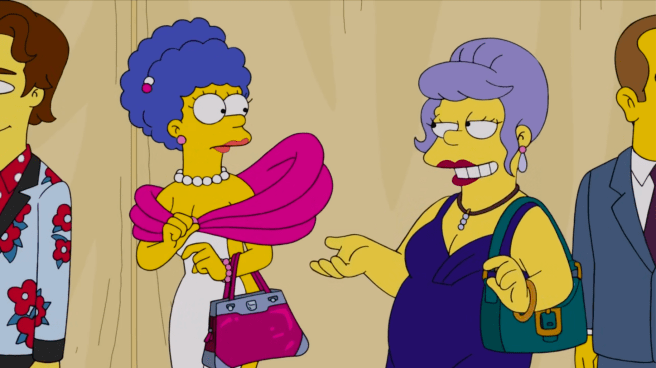
The premise: On an overnight field trip aboard a battleship, Marge gets stuck with Sarah Wiggum, who turns out to be more of a kindred spirit than she expected. But it turns out Sarah has a secret past, as two of her former partners-in-crime come back to get their due, throwing Marge into an elaborate jewelry heist at the lavish Gen Gala.

The reaction: Sarah Wiggum is a non-character. Like a lot of the wives on this show, she was born in the grand cartoon tradition of men being paired up with female doppelgängers of themselves (as well as the grand cartoon tradition of largely male writing staffs being largely uninterested in writing female characters.) Like Minnie Mouse and Daisy Duck before her, Sarah was Chief Wiggum’s portly, dutiful wife, with Pamela Hayden doing her best Wiggum impression for the few instances they gave her dialogue. There are some secondary characters I can see potential in getting their own episode, but this was certainly an out-of-left-field choice. The episode certainly acknowledges it, as it’s revealed that soft-spoken Sarah is actually a lively charmer (now voiced by Megan Mullally) with a secret past, running with a girl gang of thieves in Shelbyville before her partners got arrested. Both Marge and Chief Wiggum incredulously ask, “Sarah Wiggum, who are you?” just to drill that point home. Sarah has basically no characteristics to build off of, so she’s effectively a brand new character, and then when her two former partners kidnap her and Marge, it becomes a series of dialogues and backstories between these three new characters and their past lives of crime and their new plan to get revenge on their fourth partner who double crossed them, who is revealed to be Lindsay Naegle. It reminded me a little of the Hallmark Christmas episode this season, where the lead character was Ellie Kemper and how weird that felt since we had no emotional investment in her. Here, there’s some thread of Marge relating to Sarah as an overlooked housewife, but that angle is underplayed against all of the elaborate heist planning, complete with on-screen graphics and energetic music. The final act called to mind “The Book Job,” the episode where Homer, Bart and others planned an Ocean’s 11 style heist to get their YA novel back from some evil publishing guy or something (in an episode also show-run by Matt Selman, so the man’s already repeating himself ten years later.) Here, influence is clearly taken from the all-female Ocean’s 8, which also involved a heist at a museum gala, but this episode makes the same fumbling as “The Book Job,” in that it recreates the tone and feel of those movies without subverting them at all or having any fun with the tropes and trappings. There’s barely any jokes to be had during the heist, nor do I really give a shit about what’s going on. How can I? Why should I care at all about this reinvented Sarah Wiggum or her betrayal by Lindsay Naegle, who is a gag character at best? I guess there are some that just find an Oceans heist to be interesting by itself? I mean, I believe “The Book Job” was looked on favorably by a decent number of current fans, so maybe they’ll view this episode with a similar fondness. For me, I just could not give a shit. We get a few sidebars of Homer and Clancy frantically searching for their wives, nailing down the point over and over that they don’t know anything about them. Half the episode was either an exposition dump or planning and executing the heist flawlessly, it didn’t even feel like I was watching a Simpsons episode at all. What is this show trying to be anymore?

Three items of note:
– Guest star round-up, I guess: it certainly would have been nice to give Pamela Hayden a starring role in an episode, but why do that when you can stunt-cast? Megan Mullally sounds like a less shrill, breathier Gayle from Bob’s Burgers, not really attempting to emulate Hayden’s Sarah voice at all. Nick Offerman makes a brief appearance (I guess they figured since they got Mullally, they’d bring her husband in too) to reprise his beloved character, that captain guy from that episode where Homer and Bart got in a right? “The Wreck of the Relationship,” it was called? It sucked ass, that’s all I remember. Bob Seger voices himself at the concert Homer and Chief Wiggum go to after saddling their wives with field trip duty. When they go backstage, Seger browbeats them, telling them they need to be good marital partners, and the joke is that he’s inserting his song titles into his dialogue. Hysterical. In re-casting news, gay stereotype Julio is now voiced by Tony Rodriguez, who does a podcast or something. He already had a new voice a couple episodes ago, why did they change it? And why didn’t they just throw away that fucking awful character and be done with it? At the start of the episode, Marge is excited to watch the Gen Gala and make catty remarks at the outfits (“I have firm commitments from several A-level gays!”) We see the grouping later and it’s all the usual suspects: Patty and Selma, Smithers, Julio and his partner, Patty’s ex-girlfriend… All our gay characters hang out together because they’re gay, and gay people are all friends because they’re gay.
– They attempt to do some continuity building with a flashback showing Sarah distracting a young security guard Clancy to perform a heist, but she ends up sleeping with him. Her friends end up arrested, and since she was the getaway driver, Sarah blames herself for the whole thing. But it turns out it wasn’t her fault, Lindsay Naegle betrayed them, but if Sarah held onto so much guilt because of this, would she really have wanted to see Clancy again? She believes she ruined her friends’ lives because of this man, but she then married him and lived life as an obedient housewife for fifteen-plus years? Oh, whatever. I recall an early Al Jean episode where Clancy and Sarah are slow dancing, and he comments, “You look as pretty as the day I arrested you!” to which Sarah blushes. That moment is more charming and cute than anything we see in this entire episode.
– Marge saves the day at the end by pulling some fabric to cause Lindsay Naegle to trip at the top of the gala stairs. She elaborately tumbles down the stairs, flopping comically from left to right, bouncing over a dozen times as she plummets to the bottom. I really don’t know why it was done so excessively, but it felt strange and weirdly uncomfortable. It would be overkill if it were Homer, but this is just watching some poor woman flail around in incredible pain for twenty seconds. Are we supposed to feel vindicated that she’s getting her just desserts? Why should I care that Naegle betrayed three characters we literally just met and don’t care that much about? She ends up being framed for a bunch of other thefts, and we get on-screen text reading “The Double Revenge That You Didn’t See Coming But Now You’re Like What!?!?” Again, it feels like they’re banking hard on us giving a shit about this story. Or is the joke that they’re observing that twists happen in movies?
700. Manger Things

Original airdate: March 21, 2021

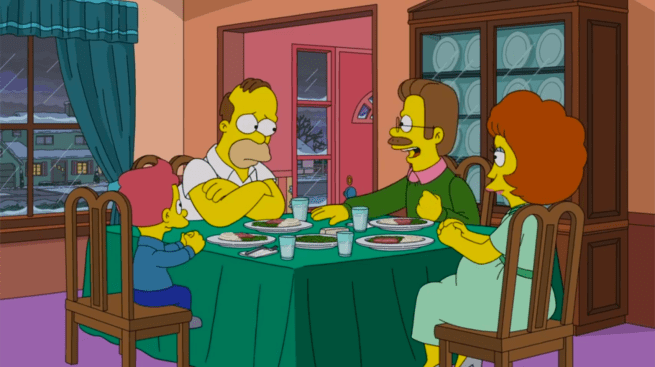
The premise: Six years ago before Christmas, Marge throws Homer out of the house after accidentally getting drunk at the power plant holiday party. Staying with the Flanderses and desperate to be home before the holidays, Homer must figure out what grand selfless gesture will get him back into Marge’s good graces this time.

The reaction: Another milestone has come and gone. Thankfully, the self-congratulation didn’t extend any further than a chyron “700th Episode” below the main title. And wow, two flashback episodes in a row, what a treat! I seem to recall another episode where Marge threw Homer out on Christmas for not coming home, but it turned out he was staying with Moe who was borderline suicidal. This time, Homer promises not to drink at the Christmas party, but Lenny spikes his soda and Homer makes an ass out of himself. “I don’t want you coming home until I know you’ve changed!” Marge weeps as she leaves Homer behind. As the episode continues, 4-year-old Bart and 2-year-old Lisa repeatedly will ask their mother that they miss their dad and why won’t he be home for Christmas. This is really uplifting stuff! Homer’s been thrown out many a time over thirty years (to the point that it’s deflated any sort of drama or realism), but the best storylines to use that card wait until the final act because of how sad the situation is (utilized to heartbreaking effect in “Homer’s Night Out,” when Lisa asks her brother, “I wonder when Dad’s coming home,” at an incredibly awkward family dinner.) Here, Homer’s gone for almost the entire episode, made even more devastating since Bart and Lisa are just little tots. It’s an incredibly sad scenario, leaving little room for any actual fun to do jokes. On top of this, what Homer must do to prove he’s “changed” is not only totally nebulous, but even more pointless than normal given this is a flashback episode, and we know all of the fucked up crazy shit Homer will do over hundreds of ensuing “present day” episodes. Considering this exact plot has already been done in the aforementioned “I Won’t Be Home for Christmas,” there’s no real reason this needed to be a flashback episode, except for our grand, continuity-building finale. Homer stays with the Flanderses, with an irritable and pregnant Maude, and of course, on Christmas Eve, Maude goes into labor with Ned out of the house helping the homeless, so it’s Homer to the rescue! No mention of them calling Ned, who presumably would not have gone far, but it’s dawn when he finally returns, so who knows where the fuck he was. Marge seemingly breaks into the Flanders house because she just shows up at the doorway of the rumpus room as Homer comforts Maude before the birth, and all is forgiven. So all Homer had to do was deliver a child to prove he was a good guy? Why didn’t she say so? To express his gratitude, Ned names his newborn son Todd Homer Flanders, so there’s another worthless piece of canon to add to the fan wiki. We also learn about “a never-before-seen room in the Simpson home,” as teased by the promotional blurb for this episode: the small storage space above the garage that Homer camps out in as he ponders his next big move to win Marge back. Cool! With these “revelations” and the upcoming episode shining a spotlight on Sarah Wiggum, this almost feels like a new tactic for the series, solving unanswered questions about different characters and locations in Springfield, because I guess hardcore fans might care about that stuff. Too bad this fan cares about engaging stories with characters we care about, and that ship sailed about 500 episodes ago. Happy 700th, one and all!

Three items of note:
– The couch gag is yet another Bill Plympton animation. This is, what, his sixth? As usual with this show, anything that’s special once must be repeated as much as possible until it becomes bland and unremarkable. One of his earliest couch gags was like Homer fucking the couch and it got pregnant. Is that right, or did I imagine that? Now it’s just this simple, cute little animation that does nothing but eat up time so the writers can get away with writing a few less pages.
– Maude Flanders has made sporadic appearances in dreams or flashbacks over the last fifteen years or so since Maggie Roswell returned, but this is her meatiest role yet. She’s definitely much gruffer and ornery here, which at least makes sense given that she’s nine month pregnant and about to burst. But outside of demeanor, her voice definitely sounds different, and it’s not a matter of Roswell losing her step or anything, it’s just that we’re twenty years out from episodes where Maude was alive, and she definitely sounds two decades older. Likewise, Mr. Burns sounded considerably tired in his brief appearance, the 77-year-old Harry Shearer still trying his best. And, of course, there’s Marge. Part of me feels like a piece of shit mentioning this over and over… this is, what, my third or fourth time this season? But honest and truly, during her opening monologue setting up the flashback, I genuinely was having trouble understanding her gravelly, weakened voice. This became even more pronounced in the flashback, given Marge is supposed to be 30-ish, but sounds like an elderly woman. All of this is a problem with no answer, but it’s a pretty glaring sign that maybe your show shouldn’t last over thirty years on the air.
– It’s never been established (I think?) exactly how old Rod and Todd Flanders are, but I always assumed they were always in-between Bart and Lisa since they’re not in either of their classes, making them 11 and 9 respectively. Rod is taller than both Bart and Lisa, so I figure he’s older. But now, I guess Todd is 6 in this new timeline? I don’t really give a shit about them breaking continuity, but this seems like a big oversight. I know no one really remembers or cares much for the Flanders kids (to the point that even the Simpsons wiki lists Todd as the older brother in the first sentence, and says he’s the youngest member of the Flanders family in the second) but come on.

699. Do PizzaBots Dream of Electric Guitars?

Original airdate: March 14, 2021

The premise: Through flashback, we see 90s teenage Homer’s dreams of being DJ to a Showbiz Pizza-esque robot band fall apart. In the present, the Simpson family’s efforts to recover the old robots to lift Homer’s spirits are dashed when they fall into the hands of J.J. Abrams, looking to reboot the property into a film series. Homer now has a new life’s purpose: to troll the movie online in efforts to stop it from being made.

The reaction: Holy shit, this episode was all over the fucking map. By the midpoint, I was just staring in confusion as to where the hell it was going and what the point of it all was. Can you even understand that premise I wrote up there? I watched the damn episode and I barely understand it. Act one is almost all flashback, as we see teenage Homer, now living in the 1990s, working as DJ at a Showbiz Pizza-type restaurant with an animatronic band. When he gets the chance to perform his own remixes with the characters, it becomes a true dream come true for him, until the establishment is shut down. In present-day, Homer is devastated when this memory gets triggered, causing the other Simpsons to try and track down the four robots to cheer Homer up. The episode presents this idea that this memory of Homer’s is so foundational that it causes him to have this severe emotional breakdown, but it’s just so incredibly stupid, and feels so far removed from what we know about Homer that it’s impossible to have any kind of investment. In fairness, Homer was in the Be Sharps, but being creative in any way is not really a big part of his character. You’d think being in a world famous music group in your 20s would be more important that dicking around with some pizza robots, but who knows where that shit lines up the timeline anymore, if at all. The final robot is absconded by J.J. Abrams’ people, and after hearing Homer’s sob story, he takes them all away to create a CG animated reboot. Now we’re into act three and I’m struggling to figure out just what the fuck is happening. Homer spends almost all of the following year becoming an obese slob obsessing over his Reddit board trashing Abrams’ upcoming movie, spurned on by Comic Book Guy, teaching him the ways of being an over-critical fan shitting on Hollywood reboot culture. So now it’s about Homer’s obsession about the creative integrity of the pizza robots? He himself was “rebooting” the characters as a teenager by making them contemporary to the 90s, having them sing “Whoomp! There It Is” in new hip-hop outfits, so how is this any different? It’s the sacred memory in his mind that’s most important to him, and Abrams’ new movie is an excuse for him to lash out to him for “ruining” it. But what the fuck does any of this matter? Why does he give a shit? In the end, Marge gets Abe to apologize for being a shitty dad, and Homer realizes that’s where his trauma came from all along. Oh fuck, whatever. Boy oh boy was this a huge turd. It’s for sure one of the worst of the season, though I don’t really hate it too much since it was just more baffling than anything. It was just a big confusing mess.

Three items of note:
– So I guess we have to talk about the floating timeline again. Some fans will complain about showing Homer as a teenager in the 90s as a contradiction, but it really isn’t. If Homer is 36 (or 38?) now in present day, then he was born in the 1980s, that’s just how it has to work. I don’t care about any of that as a concept (repeated references to Abe and Skinner still having served in WWII and Vietnam despite the increasingly illogical time difference is a different story.) My problem is what is the point of showing teen Homer in the 90s? The show already ran through the 90s, satirizing current day culture along the way. Perhaps looking back at the decade with a 2021 lens could make it different, but the first act is content enough to settle with namedropping Crystal Pepsi and Digital Underground and calling it a day. It’s the same problem with “That 90s Show” back in the day, it was just an exercise to see how many 90s references they could make in a story where Homer invents grunge music for some reason. I wonder why The Simpsons wasn’t doing on-the-nose reference humor in its early years? I guess they were too busy actually writing stories. For those keeping score at home, “That 90s Show” was written by Matt Selman, and now over a decade later, this episode was executive produced by him, so I guess he didn’t really progress much. Also, the fucking pizza robot band not only feels like material that’s been played on so many other shows from years and years ago (Dexter’s Lab’s “Chubby Cheese” comes to mind), but on this very show too. The Wall E. Weasel set piece in the first act of “Radio Bart” has dozens of jokes, and the robot band’s birthday song has been etched into my brain for life. To contrast, the pizza band here sings “Rock Around the Clock” with “pizza” replacing every third word. Solid writing.
– Act two starts with a seemingly normal Homer leaving the breakfast table for work. Marge nearly breaks down into tears, knowing that he’s devastated inside. Then we see little memories of all the fun things Homer used to do that he’s not doing, and then Moe randomly appears at the Simpson house and gives more memories. “He’s missing his youthful spirit! That spark that makes him who he is!” Marge croaks. This has to be the most egregious example of “tell, not show” this show has done in a while. This whole episode is basically about Homer’s obsessive emotional attachment to these pizza robots, and here we just have Marge and Moe explain how Homer is feeling, rather than actually see it from Homer in any way. After contently leaving for work, we don’t see Homer again for six more minutes.
If you want to see a story about people who truly, deeply care about their cherished memories of watching pizza robots, check out the documentary about the Rockafire Explosion, the Showbiz Pizza robot band. It’s a truly fascinating look at these people who revel in the nostalgia of their youth, and the lengths they’ve gone to to hold onto those good feelings. It really feels like this episode was directly inspired by the documentary, except they did an absolute shit job “adapting” it. Do yourself a favor and give it a watch, it’s really engaging and has a lot of charm, even as someone who’s never stepped foot in a Showbiz Pizza or a Chuck E. Cheese.
– I feel like it’s been a while since we’ve had a mega celebrity voice themselves in an episode that is just a sickening, fawning love letter to how great they are. John Legend and Crissy Teigan from a few seasons ago comes close, but they were more or less a cameo, while J.J. Abrams is pivotal to the plot of the latter half of the episode. There’s some gentle ribbing with  the introduction of Abrams’ underlings, scouring Springfield for nostalgic kitsch to fuel Abrams’ creative vision, but their worshipful reverence of their boss don’t really feel like jokes to me (“Master of story!” “He’s the ultimate architect of cinematic universes!”)  He sets up shop in Springfield in a huge warehouse with a loving staff, instantaneously buys the IP rights to the pizza robots and gets to make his “Agents of P.I.Z.Z.A.” movie without a hitch, winning over Homer in the end. Abrams’ pursuit in making a soulless piece of colorful cinematic tripe designed to deceptively pull at nostalgic heartstrings, and yet the third act paints Homer as the villain, aligning him with Comic Book Guy as an irritable Internet nerd never satisfied with any big budget Hollywood adaptation. It’s almost like the show is running damage control for Abrams and his critics, it’s really pathetic. One of the worst “jokes” is where Abrams lists off the gag names of all the digital effects studios who toiled away on his movie (Dream Prison, Indentured Servi-Dudes, Mr. No-Health-Care’s Wonder Emporium, “and too many others to count… or pay.” A guy in the audience shouts, “Yeah!”) It’s paying lip service to how VFX artists work horrible hours and get paid shit for it, but it’s coming out of the mouth of J.J. Abrams, big time Hollywood director/producer, who has serious industry pull to actually do something about this problem with the movies he produces, and instead, he just makes a joke about it. I speak as someone who used to work in VFX (and funnily enough, actually worked on one of Abrams’ movies) and has experienced firsthand the grueling hours and stressful work environment. I hold no grudge against Abrams, but it would be like if the producers of Sausage Party showed up in “Itchy & Scratchy: The Movie,” touring the Korean animation sweatshop instead of Kent Brockman. Like, ha ha, let’s laugh at these poor digital effects artists and how miserable their lives are because the major movie studios underbid for contracts the VFX houses need to stay in business, but those GODDAMN INTERNET TROLLS, they’re the real problem! Just terrible.

698. Yokel Hero

Original airdate: March 7, 2021

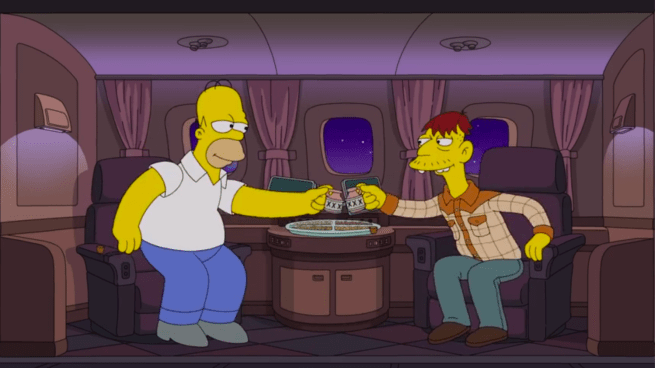
The premise: After being incredibly moved by a jail cell serenade by Cletus, Homer vows to make him a music superstar, which he succeeds at. However, he must pull Cletus back down to Earth when he hires a new manager after fame goes to his head.

The reaction: I’ve long spoken of my desire for this show to flesh out its secondary cast in the pursuit of new and different stories to tell, but I don’t think every denizen of Springfield deserves to be put under the characterization microscope. Case in point: an episode about everybody’s favorite slack-jawed yokel Cletus. He’s played a part in a couple plot lines over the last decade or so, but this feels like his meatiest role yet. I guess you could make a substantial episode all about Cletus, but man, I am perfectly fine with keeping him a goofy side character, because I did not give a flying fuck about him at all in this story. It also doesn’t help that the premise is obviously lifted from “Colonel Homer” (they even directly reference it), and it’s not even worth comparing the two. Homer gets tossed in the drunk tank, missing yet another family dinner, and Cletus’ heartfelt song about family or something motivates him to be a better family man, which we know because he goes home and tells the family that directly. And like all good family men, he then proceeds to spend all his time managing a hillbilly’s singing career. Cletus sings about how he doesn’t need the finer things and loves his country life, but none of the songs are funny or catchy, or honestly, even intelligible, as I had trouble hearing his low singing voice over the music at points. He has no motivation to want to be famous, nor does Homer to actually give a shit about making him famous. His jail cell song didn’t move him in a profound way like Lurleen Lumpkin back in the day, at least it didn’t feel like it at all. When Cletus hits it big and he and Homer are on a private jet for some reason, he fires Homer, gets a new agent and moves to a fancy Shelbyville loft, content to shill low-grade moonshine on TV with tee-vee actors playing his kids. I’m finding it difficult to really parse through the plot, because I honestly and truly did not give a shit. Cletus abandons his family through one quick line to Homer at the agent’s office that it doesn’t even register, so Homer and Marge end up confronting him with his wife and kids, and Cletus makes good with them, and then that’s the end. But the episode was short, so we end on Albert Brooks’ agent character talking with an unnamed client for two minutes. Boy, maybe you could have used those extra minutes to flesh out the story some more? No matter, it would have been wasted anyway. But like I said, some characters like Cletus, or Miss Hoover earlier this season, you can leave well enough alone in the background, and they’re much better for it. Later this season, we’re going to get an episode spotlighting Sarah Wiggum. I think I’d put her right below Cletus on a list of characters I want to learn more about.

Three items of note:
– Homer’s desire to be a better family man ultimately translates into him being the good guy not wanting Cletus to abandon his family for his career. But he’s basically abandoned his own family to manage Cletus. It’s unclear exactly how much time elapses between the first montage and when they’re on the private jet before Cletus fires Homer. We see a bunch of magazine covers with Cletus’ face on it, and it’s implied they’ve been touring and working a lot, presumably with Marge and the kids stuck at home. In the third act, when Homer is finally back, rather than be pissed at all about this, Marge insists they both go get Cletus back with his family? Why? What loyalty does Marge have to this random hillbilly who lives in her town? It’s a big leap for me in certain episodes where she supposedly cares about Moe, but he at least has some connection to the family, but fucking Cletus? Ridiculous.
– The only scene devoted to actually showing Cletus’s success is her appearing on the Ellen Show, or “Elin Degenerous” as she’s called here. They attempt to do material about the recent stories about the toxic work environment on Ellen’s actual show by having her trapdoor the audience for not applauding enough, and her billboard shooting lasers out its eyes, but it all just falls flat. First, why the hell don’t they just make it Ellen? I hate this change-one-letter bullshit when it comes to referencing real people. But beyond that, I remember a decade or so ago in that fucking terrible American Idol episode, they had Ellen on as a guest, because that was the one season she was an Idol judge for some reason, and they made fun of her by having her dance, because that’s the thing she does in real life. And what does “Elin” do when we first see her? She’s dancing in her office. Eleven fucking years and they can still only do the same fucking “joke” about Ellen. A good show would have fucking ripped her apart, not this softball nonsense.
– The unnamed agent is voiced by Albert Brooks, having last appeared six seasons ago as an anger management counselor (I think?) in the brilliantly named “Bull-E.” I remember not being too taken by his character then, and I feel about the same here. It hurts him that he’s showing up thirteen minutes into a story that nobody could possibly care about, but none of his lines are really very funny, which makes it more baffling that they give him two whole minutes at the end to just ad-lib and fill up time. I guess his material is a lot funnier in isolation, and I imagine it was very funny to hear him in the booth just riffing and they laughed so much they decided to keep it all in, but none of any of that humor translated onto the screen.

697. Wad Goals

Original airdate: February 28, 2021

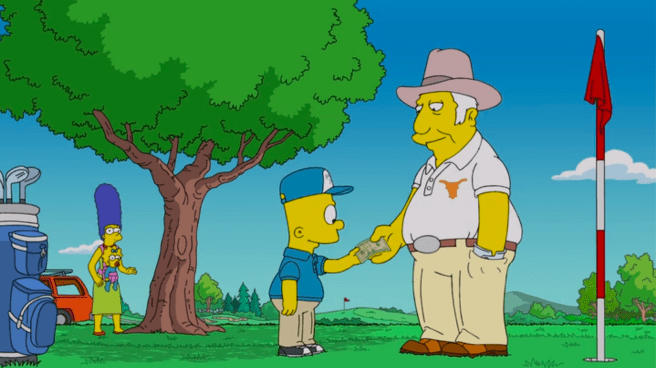
The premise: Bart gets a summer job at the country club as a caddy, finding that sucking up to the rich players earns him big tips, building up his “wad” of cash. However, Marge worries the job is changing Bart, leading her to rally to get the whole golf course shut down.

The reaction: Sometimes an episode will just lose me in exactly what the point of the story is and what’s motivating characters through it, like there’s script pages missing and I have to piece it together myself. Act one culminates in Bart thriving as a caddy once he learns that the golfers tip big if you stroke their egos enough. Initially thrilled about her son’s new job, Marge’s tune changes when she sees Bart’s behavior close-up (“I’ve never seen my son suck up before!”) “Sucking up” is a phrase that she repeats throughout the show, and that’s basically the extent of her complaints with Bart’s job. When she fails in enlisting Homer to get him to quit, she teams up with Lisa to try and shut the whole club down. But what exactly is the problem? Bart’s a ten-year-old kid scoring some extra cash off rich people as a summer job. It would be one thing if we saw Bart “sucking up” off the job, at home or at school, like his new mentality was warping his mind in a more negative fashion. But no, Bart’s aware that it’s all a schtick he does to get more money, directly telling Marge this information. So, really, what is the big deal? The fact that Marge never gives any further explanation of her feelings until the very end doesn’t help matter (it’s almost like it’s kept a secret on purpose, as she says to Homer, “I know it’s not logical, but when I saw Bart on that golf course, my mothering spirit just wanted to hurl!”) When her anger expands into wanting to get the entire grounds shut down, a clever idea Bart gives to the club owner has playing golf declared a protected religion, saving the greens. Act three has Marge pleading with representatives from other congregates to join her in rallying against the golf course… but the conflict has gotten so macro beyond Bart, I don’t even know what’s driving her anymore, as she gives some complaints about rich people and golfers. If she was upset about rich entitled people taking advantage of sweet common folk like her son, that’d be one thing, but it’s never framed that way. At long last, at minute sixteen, Marge admits to Bart why she’s upset, that she thinks the job is robbing him of his natural instinct to speak his mind. Bart assures it won’t (“I’m not gonna suck up forever! Just until I’m rich. Then other people will suck up to me!”) It feels like the point is that Bart wanted to make this into his career and is wholly focused on being a subordinate for hire, but again, this feels like another episode where I’m desperately trying to connect dots that the writers should have done while writing the script. Things all wrap up in the most formulaic ending I’ve seen in a while (more details below.) The meat of this story, Marge worrying a job is changing Bart, is a good one, but as usual, it doesn’t feel like enough work was put in to really develop that emotional through-line, and as a result, I just didn’t care.

Three items of note:
– Last week I wondered why Harry Shearer was still voicing Dr. Hibbert, and it’s almost like the show heard my question, because a news article came out about it a few days later, and now in this episode, we see that Kevin Michael Richardson is the new voice of Dr. Hibbert. It’s only one line, so there’s not much to gauge in comparing, but it definitely sounds much lower register, since that’s Richardson’s signature. But I wonder why it took longer recasting Hibbert than any other character. I know Harry Shearer wasn’t pleased with the recasting in general, but I’d also read rumors he was quitting the show because of it, but that isn’t true. Whatever.  Speaking of voices, I’ve noticed in these last two episodes, Bart started to sound a little funky too, like he was skewing closer to Nancy Cartwright’s actual voice. I guess it’s just been a while since he’s had a ton of dialogue, but I can’t say it wasn’t distracting to hear.
– Marge finds a partner in Lisa in hating the golf course, who immediately says that they’re evil. When Marge asks why, Lisa immediately consults “The Woke-ster’s Encyclopedia of Outrages” to formulate her opinion for her. Okay, so they’re making fun of people who claim to care about causes but have no actual information. They’ve done this with Lisa a lot, but do they not realize how unlikable this kind of stuff makes her? Because this episode is about Marge and the local country club/golf course, I resisted comparing it to “Scenes from the Class Struggle in Springfield,” but as we saw there, Lisa hated the country club too for roughly the reasons she reads off her phone here, but she was an actual character who cared about things, and on top of that, she was also an eight-year-old girl who put her grievances aside to go ride a pony (“I found something more fun than complaining!”) Anyway, Lisa tells Marge she should start an online petition to get the club shut down. In writing the title, Marge discovers it’s too long, and abbreviates it to “Stop Coddling the Springfield Juniper’s Wealthy” to “Stop Coddling the S.J.W.s.” Yep. The petition gets a million signatures overnight, as Lisa explains to her mother (and the audience) what an SJW is and why this is bad. Except it’s just a throwaway joke, it doesn’t really go anywhere. If Marge found herself aligned with a bunch of alt-right psychos, that would be an interesting turn-of-events, but it just ended up feeling like a stretch.
– This is a Matt Selman-produced episode, and as such, you can expect some incredibly generic and trite teevee, and the ending is exactly that. Club owner Bildorf (voiced by Stephen Root, doing the best he can with a nothing role) makes it clear to Bart he’ll never be more than he is, causing him to run off in shame. Meanwhile, Marge seems defeated as she goes to leave the golf course, when Bart returns on an ATV he was eyeing with Milhouse, Nelson and company in an earlier scene (he was aiming to buy one, and when the others asked if they could ride it, he told them to fuck off.) Bart then gives the killer line (“You forgot about the wad! It can buy a pretty nice ATV, or rent a whole bunch of them!”) Cue the other kids riding in on their ATVs as they proceed to wreak havoc on the greens, as fun, family movie-esque music plays and the club owner and his new rich boy caddy are aghast. Just absolute garbage. I guess this is supposed to be their tribute to Caddyshack, but since it’s a bunch of kids doing it, it’s like a scene straight out of a fucking Nickelodeon movie or something, with a bunch of kids getting even with the snooty rich people. Milhouse yells “Kid power!” for God’s sake. It reminded me of the conclusion of last year’s finale “The Way of the Dog,” where it felt the farthest removed from The Simpsons than anything I’ve seen in its thirty-two seasons. I’ve complained a million times about how this show once bucked the conventional, whereas now it warmly embraces it, but this and “Dog” feel like the greatest offenders of that. And in the end, when the club owner gloats that Bart has affected nothing, the police arrive to arrest him because his new golf religion has become a sex cult? Again, this show used to be very reflective of reality, and if there’s one social group that was completely above punishment, it’s rich capitalists. They could have done some schmaltzy ending where the club owner gloats but Bart and Marge unite in talking back to him and leave triumphantly, that would have probably sucked too, but it would have been more honest.