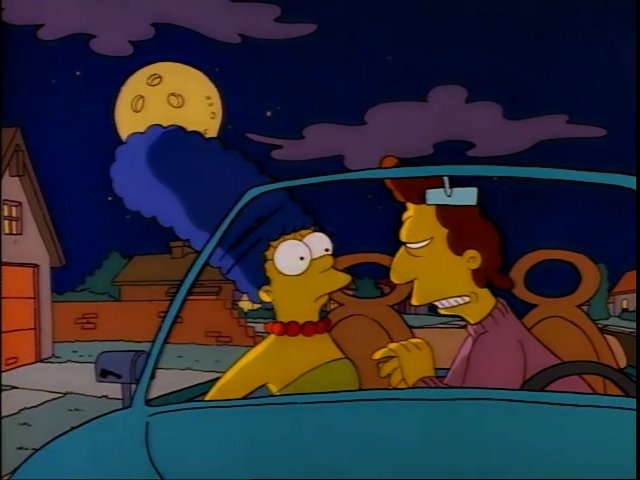
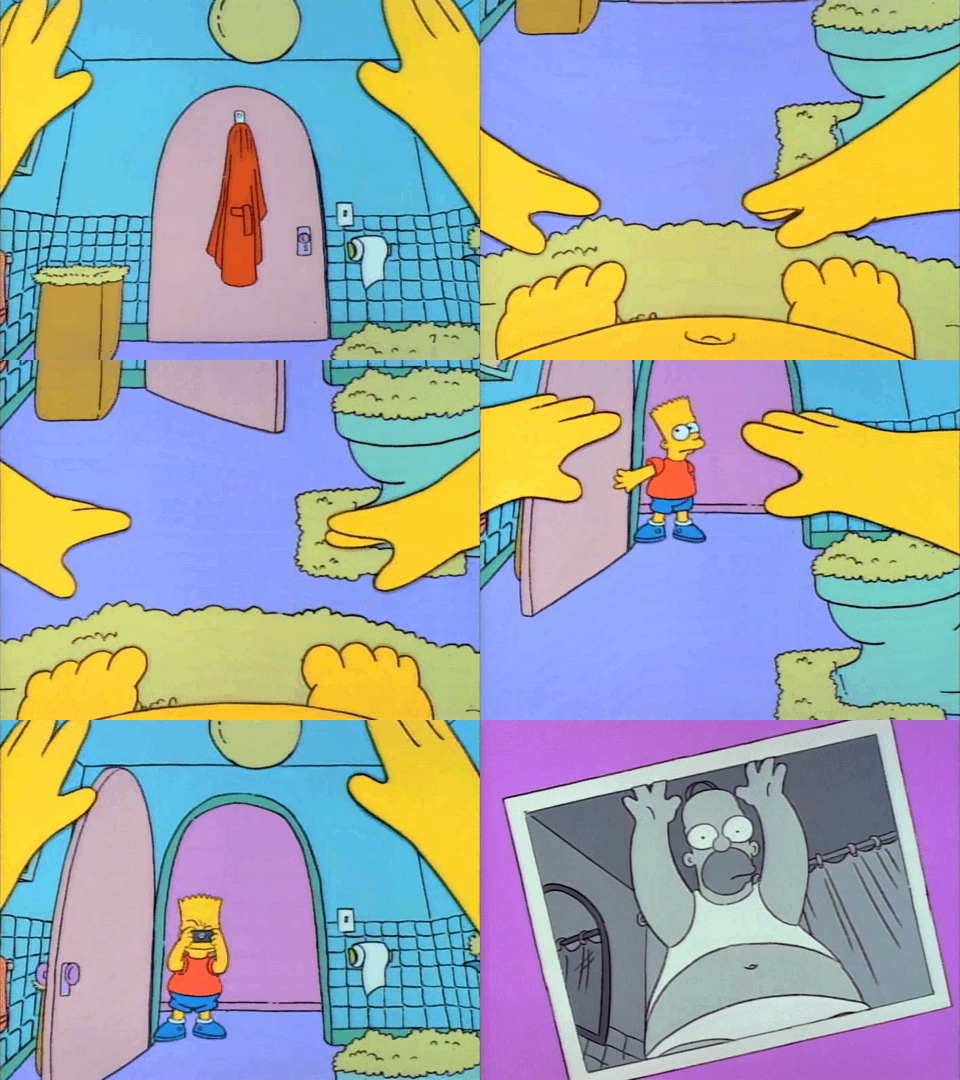
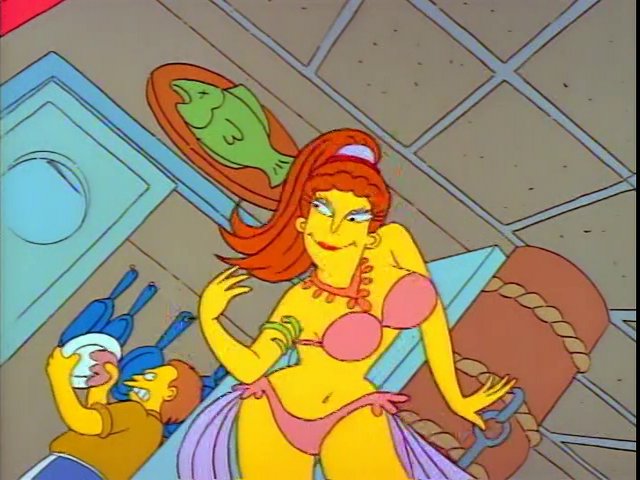
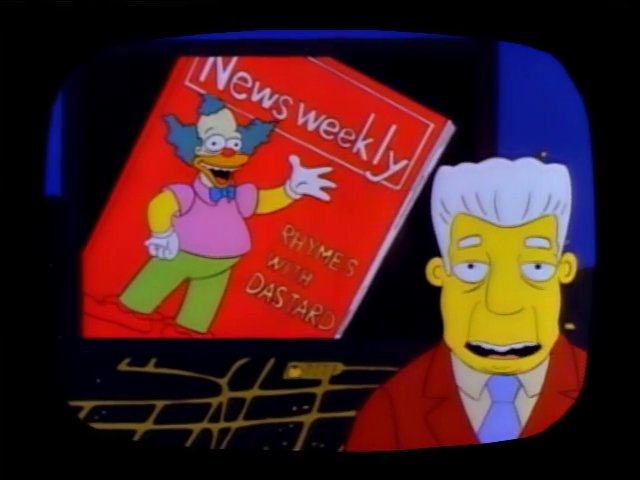
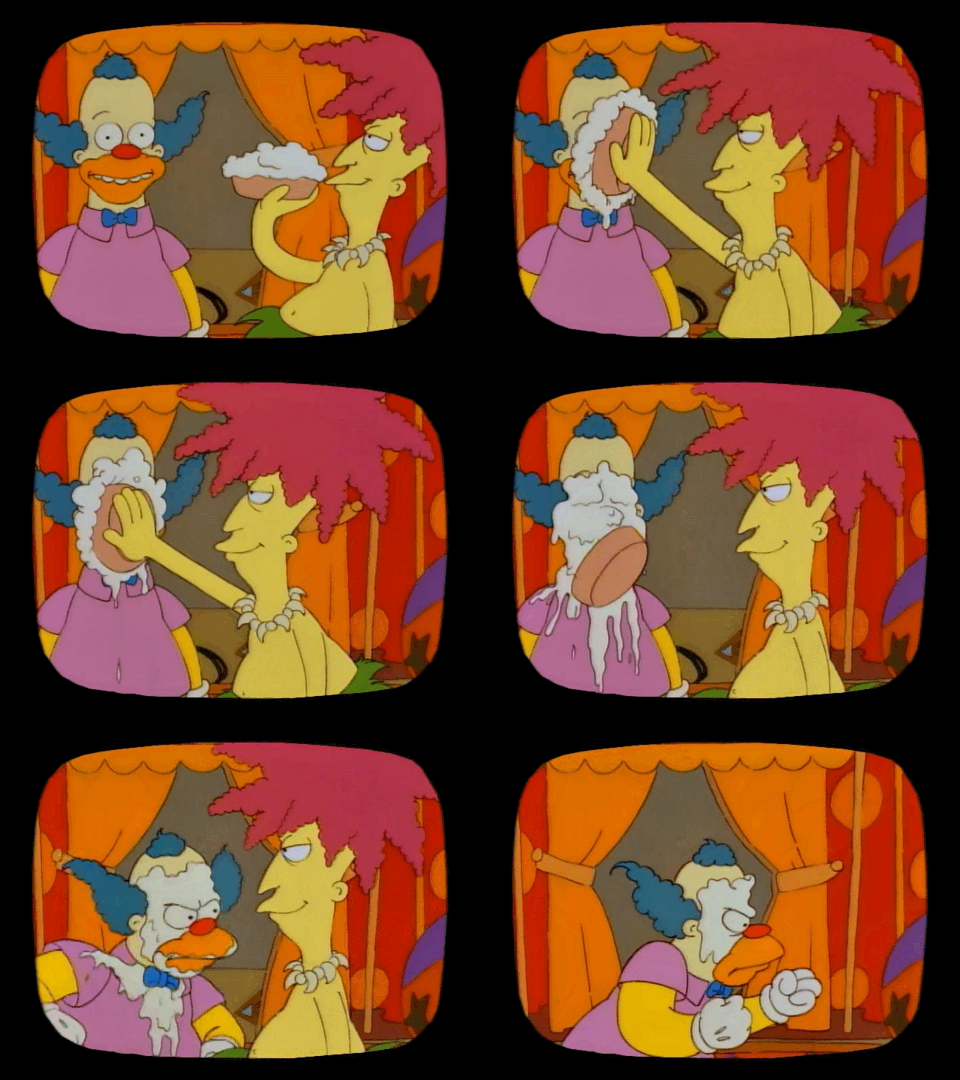
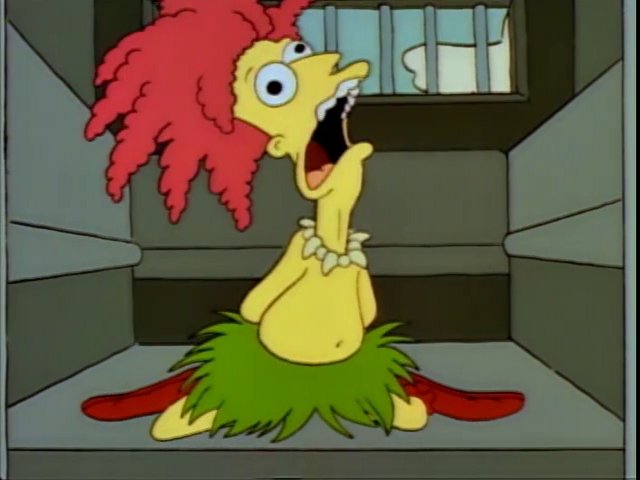
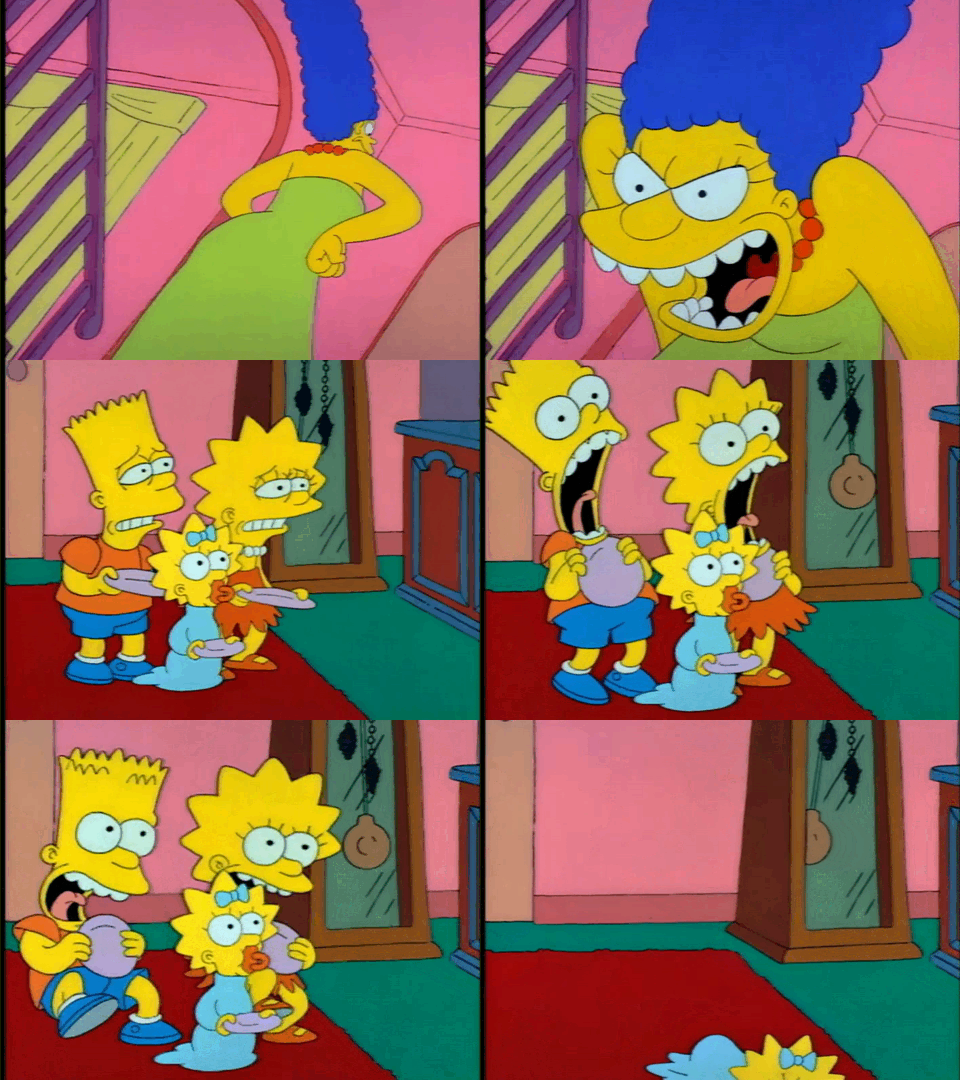
Season Two Revisited (Part Three)

15. Oh Brother, Where Art Thou?

  • “You Have The Right To Remain Dead” really feels like it should be a Bond title.
  • I love all the small interfamilial moments in these early seasons, when the show was a bit more leisurely and could make the time for it. Bart and Lisa bicker at the dinner table, Homer tells them to knock it off, so the two pantomime (or “panta-ma-mime” as Homer puts it) their insults to each other. That alone is great, but what’s even better is that they both laugh about it. They’re just little brats trying to annoy their dad a little, and it works. Such a pure moment.
  • There’s a lot of risque material in these early years, but explicitly showing Abe paid for sex and impregnated a prostitute has got to be the craziest example. I also love that Abe doesn’t even try to sanitize the story, openly talking about how he “dunked the clown” with this carnival floozy. Also, baby Herb has a beard line, because of course he does.
  • Danny DeVito is an absolute powerhouse right out of the gate, just nailing the opening boardroom scene. And as belabored as it gets by the end of framing the scene to explicitly not show his face, it still works pretty well. And finally, I love that at the end when Herb deflates and admits he’s just a lonely guy, we cut back to this dumb guy’s dumb face for no real reason.
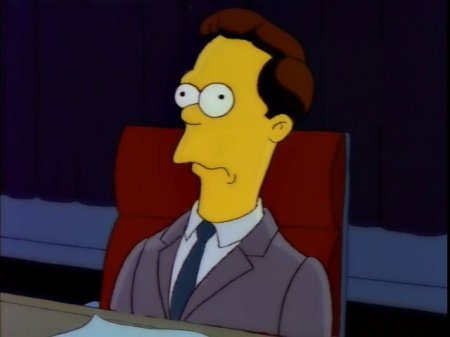
  • “All born in wedlock?” “Yeah, though the boy was a close call.”
  • One of the biggest sins of post-classic Simpsons is the change in Homer’s self-esteem. He became an absolute maniac who believed he could do anything and be praised for it, but what made him so likable and relatable was how insecure and vulnerable he could be. This is evidenced by Herb trying to build Homer up to get him to take control of building his own car. When Homer mumbles that he “sort of” understands Herb’s pep talk, Herb demands, “Say it like you mean it!” to which Homer loudly repeats, “Sort of!!” Then he proceeds to go nuts on Herb’s build team, but this is only after he’s been riled into it, so it feels appropriate.
  • I love how openly Unky Herb digs his own grave in letting his empty-headed half-brother have free reign, brought to the ultimate degree by ignoring his head engineer and forcing him to lie to Bart and Lisa (“Homer Simpson is a brilliant man with lots of well thought out, practical ideas.  He is ensuring the financial security of this company for years to come. Oh yes, and his personal hygiene is above reproach.”) It’s actually really sweet how Herb does Homer a solid by making him look good to his kids like that. Also at the end of this scene, he looks like he’s got Bender teeth.
  • The moral of the story is that what the common man wants is usually very stupid and probably should be ignored. I love how expertly the episode is geared toward building to the point where Herb views Homer as the solution to his problems, but ultimately becomes his undoing.
  • The Homer costs $82,000, which is roughly $150,000 today. I guess considering we’re told early on that Powell Motors is getting killed in the marketplace, this might be enough to bankrupt the company. But to bankrupt Herb personally? It seems like a bit of a stretch, doesn’t it? Ah, who cares. Also, the turntable animation here is really excellent, given the complex design of the car with Homer waving inside it all having to be tracked.
  • “As far as I’m concerned, I have no brother!” “Maybe he just said that to make conversation.”

18. Bart’s Dog Gets An “F”

  • Great visual of Santa’s Little Helper digging a perfect circle in the radius his chain will allow him.
  • “Not that I’m angry, but how did you get my home number? …I see. Quite ingenious.”
  • Homer getting angrier at Mrs. Winthrop on the phone is one of Dan Castellaneta’s greatest performances. I love how his irritation builds as he’s just so sure that the dog is out back, only to be swiftly proven wrong. The fact that there’s barely a pause between his rantings and the “D’oh!!” upon seeing the empty yard is just perfect.
  • Sick Lisa calling Homer at work is a really cute scene, with him teasing Lisa about having “the kissing disease” and her laughing, and Homer agreeing to get her her slightly scandalous reading material (“Teen Steam Magazine? Well, okay, you’re the sicky.”) It’s so sweet to see Homer be an actually good dad.
  • Marge turning her hand to show off her sewing finger has always stuck with me. The hands on this show are pretty simple shapes, but the turn is just so fluid and perfect.
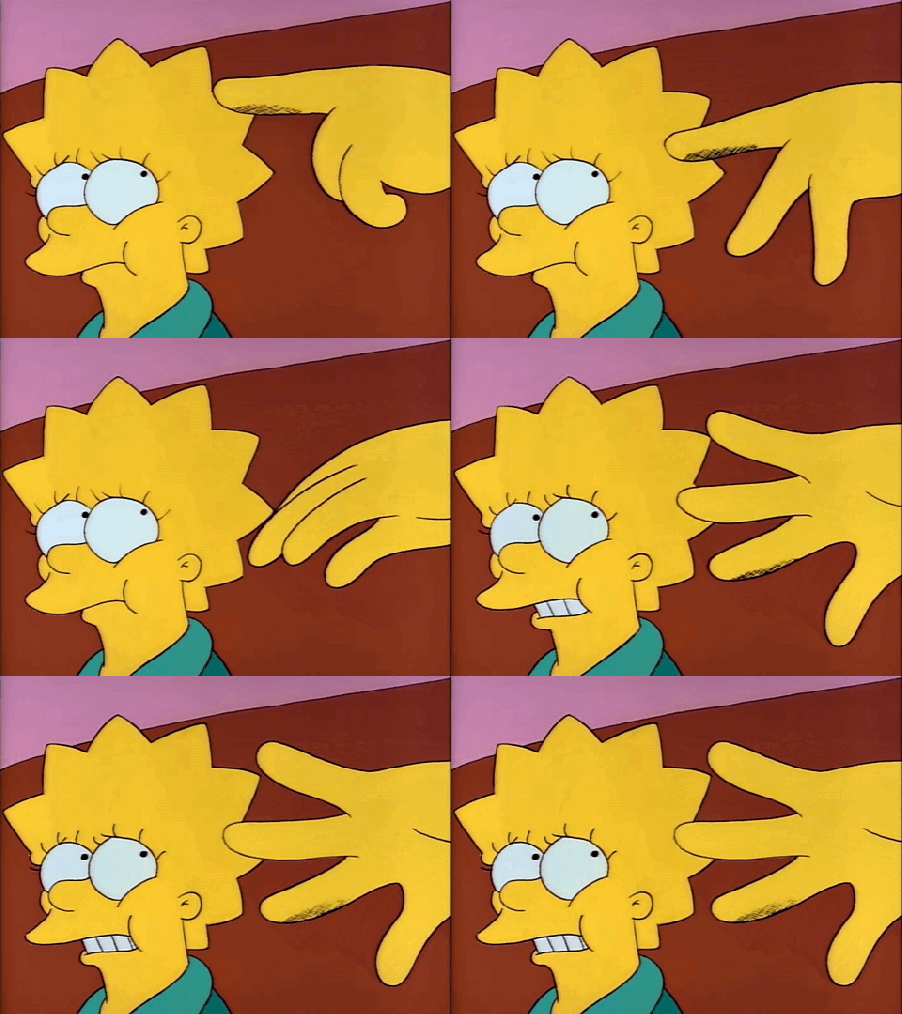
  • It goes by really quick, but I love the slogan for the Assassins sneakers: “Join the Conspiracy.” It feels like such a solid joke that perfectly encapsulates the projected brand attitude, the idea that you’re part of a secret club railing against “the Man” by buying a product, and such a gag goes by in the blink of an eye.
  • Right on the heels of DeVito last episode, Tracy Ullman delivers her own tremendous performance, just owning every scene she’s in. I assume she did a lot of characters on her sketch show, but I can’t say I’ve ever seen anything she’s done, or honestly would even recognize a photo of her, despite being an instrumental person responsible for my favorite show of all time. What a surreal position to be in, where you decide to give airtime on your TV show to these weird little cartoon bumpers, only for them to later be this monstrous hit and cultural phenomenon. I know she initially sued FOX to get a bigger cut in the merchandise, I think, but I’m pretty sure she still gets a yearly check to this day. And hey, why not? She deserves it.
  • The dog-vision throughout this show is really well done, with that great fisheye lens effect and the limited color scheme.
  • Ah, nothing like watching a nice animated family sitcom where a man gropes a dog’s genitals, with the mutt yelping in reaction.
  • I feel like this episode suffers a bit in that it doesn’t feel like there’s enough focus on Bart and his relationship with Santa’s Little Helper until the back half, and then he has to fight screen time with Homer trying to sell the dog. But there’s one moment that rings incredibly true, after Bart still can’t get the dog to obey and uses the choke chain after Winthropp bellows at him, he hugs the poor mutt and says, “I’m sorry, boy. You can’t help being dumb.” Considering “Bart Gets An F” earlier this season, and with this episode’s title riffing off of it, this feels like very meaningful, where Bart sympathizes with the dog since he’s a fellow screw-up like him. A moment or two more like that, and this episode would have been all the stronger for it.

17. Old Money

  • Abe starts out the episode as ornery as ever, but softens upon laying eyes on Bea. But I love that even with him attempting to be more congenial, the crotchety fire still burns deep (“I was wondering if you and I you know, might go to the same place at the same time and… jeez,you’d think this would get easier with time!”)
  • “Nothing says ‘I love you’ better than a military antique. Let’s look at the bayonet case.”
  • It’s great that the first act is mostly Abe’s story, as we see a microcosm of his month with Bea (like “Principal Charming,” it’s great seeing a side character operating solo from the Simpsons.) Everything seems to be going fine until that pesky Simpson family shows up to ruin everything.
  • The scene at Grandma’s World where Abe buys a wool shawl, prompting the clerk to call in a price check on “active wear” goes by so damn fast. I’d say this is another pause-your-VCR moment, but I say it goes by too fast, the scene starts with VO from Herman, then goes right into the check-out line, it’s literally only a few seconds long, and the way it’s phrased makes it more challenging to put the joke together. Or maybe I’m just dense, I don’t know.
  • I love how pissed Abe is during the whole Discount Lion Safari trip, even when it becomes clear that they’re in real danger. This shot in particular is awesome, the composition of Abe’s irritated head bouncing in the center of frame is so great.
  • “Has it ever occurred to you that old folks deserve to be treated like human beings whether they have money or not?”  “Yes, but it passes.”
  • Whelp, this hasn’t aged well.
  • This episode is a great example of how Homer’s attitude, and the audience’s feelings towards him, can effortlessly change on a dime. We see him mock and tease Abe about his “imaginary” girlfriend, unintentionally making him miss her last day on Earth, but then once Abe “disowns” him as a son, he’s absolutely devastated, and despite him being kind of a dick earlier, we really feel bad for him. Even though this episode is all about Abe, we still get in this little arc with him and Homer that wraps up rather quickly, but still feels sweet and earned.
  • The cavalcade of characters begging Abe for his money feels like a pivotal moment in the series. We’ve developed to the point that we have a small stable of lovable side characters populating this town that we can have a series of scenes featuring the likes of Otto, Moe, Mr. Burns and so forth, and as an audience, we love to see these familiar faces. We also get our first appearance of Professor Frink (my favorite character as a kid, tied with Comic Book Guy), who is flummoxed when Abe asks if his death ray can actually be used for good (“Well, to be honest, the ray only has evil applications. You know, my wife will be happy. She’s hated this whole death ray thing from day one!”)
  • “I’m looking for Abe Simpson. It’s important I get a hold of him. I have to tell him that I don’t care about his money and I love him!” “We get that a lot.”
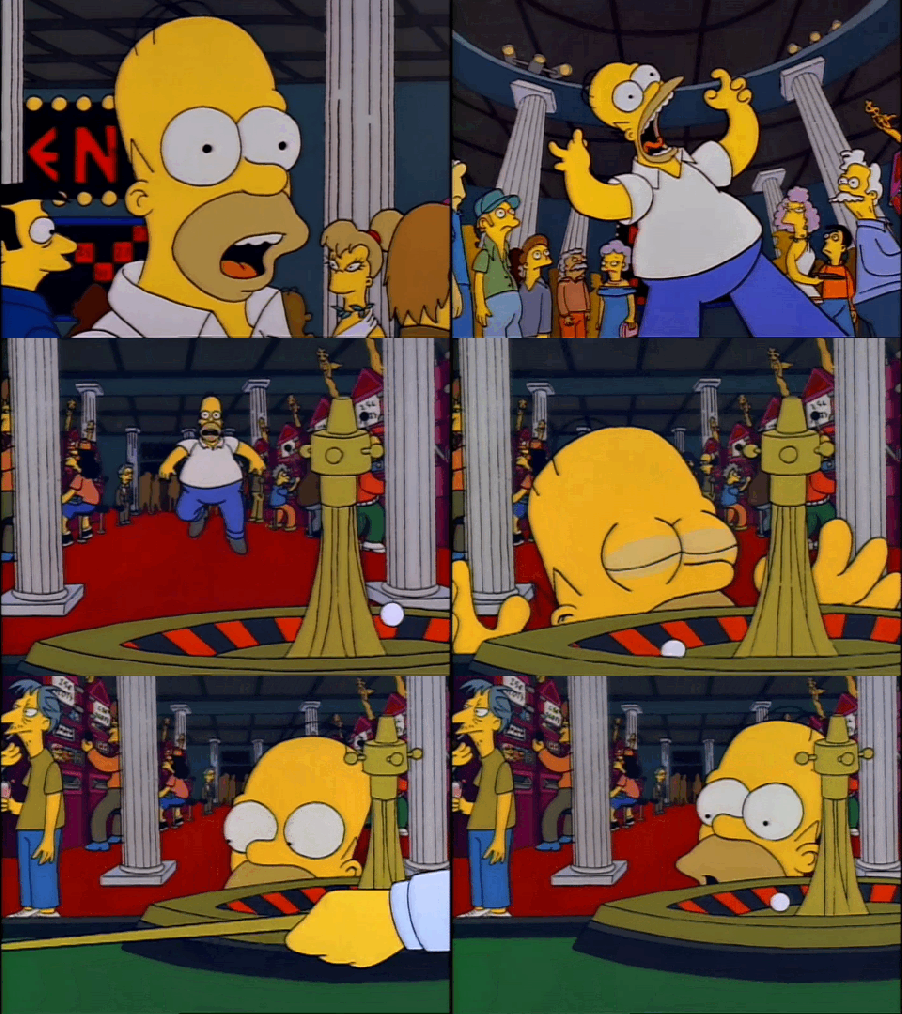
  • What a great shot, and I love how Homer runs to camera, getting down to eye level with the roulette wheel as it settles, his eyes tracking the chips as they cross the table.
  • It’s great that the very end of Abe using the money to renovate the retirement home is perfectly teed up by making the place look like even more of a dump throughout the entire episode. But it’s never too overt that it feels weird, or that you can too easily predict the ending.

18. Brush With Greatness

  • Krusty’s plea to the kids about coming to Mount Splashmore (“I told them you would! Don’t make me a liar!”) leads into the Kroon Along With Krusty song, which I love so much (NOW NOW NOW NOW NOW!) Lisa even openly identifies it as a “rather shameless promotion,” but admits it worked on her anyway, a sentiment I feel in more advertising than I care to admit.
  • The sign gag is literally on screen for a second. Now this is a pause-your-VCR moment. I remember this image more from being featured in the Simpsons Guide to Springfield book, which was a fake travel guide with write-ups on all the great things to do and see if you were to visit Springfield. Does anyone remember that book?
  • I love this bit of animation of Homer going down the tube, since it’s just a static image of him jittering about the frame. Combined with his warbling excited sounds, it’s so damn funny.

  • “Am I just a little bit overweight? …well, am I?” “Forgive us, Dad, but it takes time to properly sugar-coat a response.”
  • We don’t even get to the main plot until act two, which is a criticism levied at the show mostly started in the Mike Scully years, but here, we see the two plots (Homer’s diet and Marge’s paintings) living side-by-side with Marge’s award winning painting being of an exhausted Homer on the couch, and her breaking point with Burns being his vicious insults lobbed at an excited Homer reaching a new goal weight.
  • Professor Lombardo may not be as legendary as Artie Ziff or Llewellyn Sinclair, but I still love how simple a character he is, a man who is endlessly positive about everything, even announcing he’s got to take a leak (“Now if you’ll excuse me, nature calls!”)
  • Another fantastic piece of animation, set to wonderful faux-Rocky music. I love that the cat gets spooked twice in a row by the falling weights before fleeing the room.
  • I remember for my last re-watch, season 2 is where I really fell in love with Mr. Burns, and I’m experiencing the same feelings now. He’s just such a fucking great character, you can tell that the writers just love coming up with material for him to say. And as with all the characters, he’s multi-faceted; as despicable and evil as he is in all other regards, there’s the killer line in this episode where he earnestly and honestly looks Marge in the eyes and asks, ”Can you make me beautiful?” And you really feel it, he means it.
  • Ringo’s “Gyeeaahh!” was worth whatever they had to pay him to guest star.
  • The reveal of the Burns portrait is just phenomenal, in one of the best endings of any episode. It’s perfectly exemplary of the show’s best quality, of being able to have its cake and eat it too in regards to balancing thoughtfulness with humor. Marge’s defense of her portrait is genuinely touching, and completely in line with her character, but we still get our final line where she admits she purposefully mocked an old man’s genitalia in her depiction. I feel like I love this episode a little more each time I watch it. It might be my favorite of the whole season, and there are a lot of contenders.

19. Lisa’s Substitute

  • It’s really hard for me to picture Mr. Bergstrom bursting through the classroom door firing off blanks now. All I can imagine is children screaming, the police being called, Mr. Bergstrom getting arrested and the episode being over after two minutes.
  • Dustin Hoffman of course is great as Mr. Bergstrom, but Yeardley Smith gives such an incredible performance in this episode. Her first line to Bergstrom, her quieted “I know the answer,” really strikes me: timid, humble, slightly taken aback by this strange new thing called engaged learning. I also love her little giggle after Bergstrom compliments her for getting her first point right. Their interplay is full of moments like these. I don’t know if Hoffman and Smith recorded together, but it sure feels like it.
  • Ladies and gentlemen, the singing dorkette!
  • My wife is a teacher and she has literally pulled a Mrs. Krabappel and sent irritating kids to the principal to keep them busy, or have them run a lap around the field to blow off some steam. I also love that the kids cheering for Bart eventually just devolves into mindless hooting.
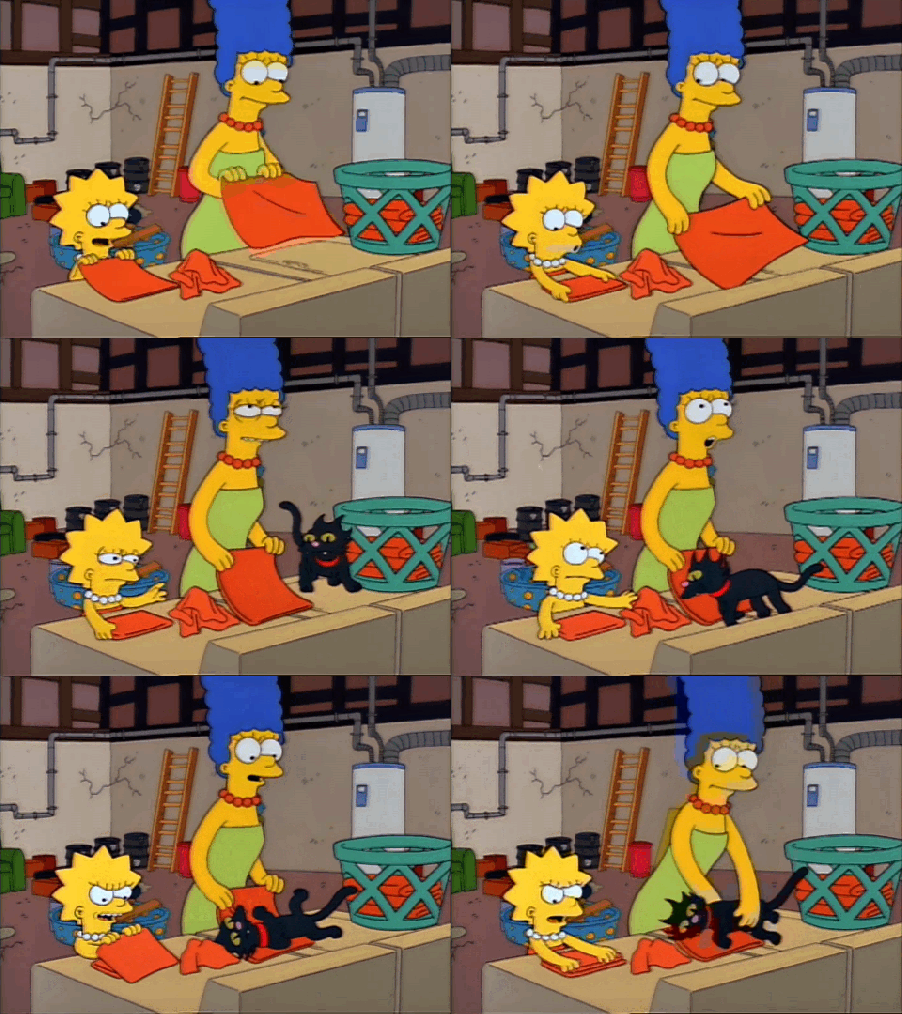
  • I love that not only are Marge and Lisa folding laundry during their conversation, making the scene more visually interesting and believable, that we also get the little bit of Snowball II leaping up and rubbing on the sheets, with Marge picking up the cat annoyed. Such a wonderful little addition.
  • More asbestos! More asbestos! More asbestos!
  • In high school, I helped make posters for a friend running for student council, and I considered replicating this poster for longer than I probably should have.
  • Another landmark first: Homer’s first time fighting with his brain, which admonishes him for being stupid (“You’re trapped! If you were smarter, you might think of something, but you’re not!”)
  • Homer’s absolute glee at the baffling concept of a “suggested donation” at the museum always cracks me up. I also love that this is Mr. Bergstrom’s first exposure point to the father of his most esteemed pupil, being cheerfully urged not to give to charity (“You don’t have to pay! Read the sign!”)
  • Homer is a clueless oaf, but once again, it’s funnier, and more sympathetic, that he knows it and is ashamed of it. I love how quickly he breaks under Bergstrom’s delicate inquiries about Lisa’s lack of a male role model (“She looks around and sees everybody else’s dad with a good education, youthful looks, and a clean credit record, and thinks, ‘Why me? What did I do to deserve this?’”)
  • Psychosomatic: one of many, many words I learned from this show.
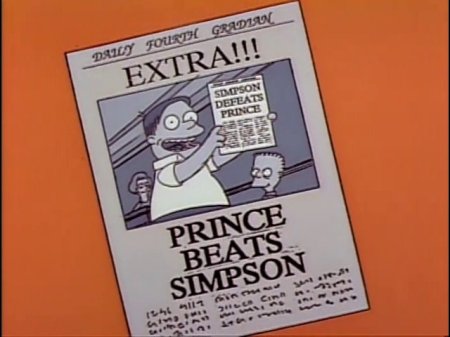
  • I remember seeing the Dewey Defeats Truman photo in a grade school history book and it blowing my mind. What a great gag to close out the B-plot.
  • Mr. Bergstrom’s greatest lines to me come in his last scene, with him talking about his life as a substitute (“He’s a fraud. Today he might be wearing gym shorts, tomorrow he’s speaking French or pretending to know how to run a band saw, or God knows what.”) Also when he just flat out tells Lisa that yeah, I’m the best teacher you’ll ever have, I know this for a fact.
  • “You are Lisa Simpson” is one of the most fondly remembered emotional scenes, but Homer making up with Lisa is the scene that really gets me. Him feebly trying to cheer Lisa up as the music box plays always tears me up a bit. Him pretending to be a monkey as Lisa giggles at her dad’s silly antics, and then the two do eskimo kisses? Fuck, that’s adorable.

20. The War of the Simpsons

  • The opening of Homer drooling over “hors doo-vers” warped my mind, that the first time I saw hors d’oeuvres written out, I had no idea what I was reading.
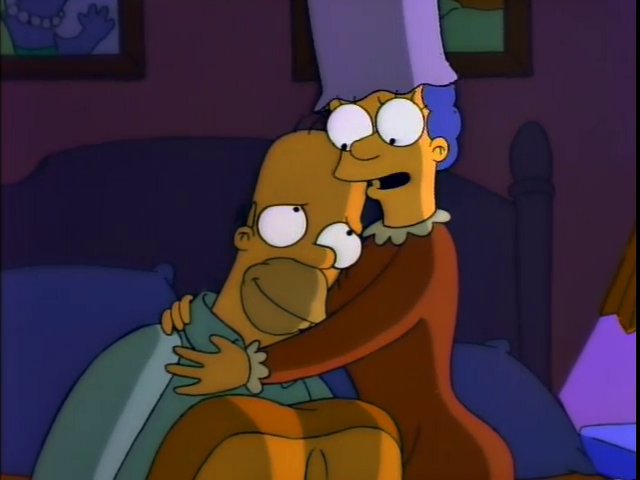
  • This image of Homer “having fun in bed” always cracks me up. I love that expression.
  • “Anybody mind if I serve as bartender? I have a PhD in mixology!” “Pfft. College boy.”
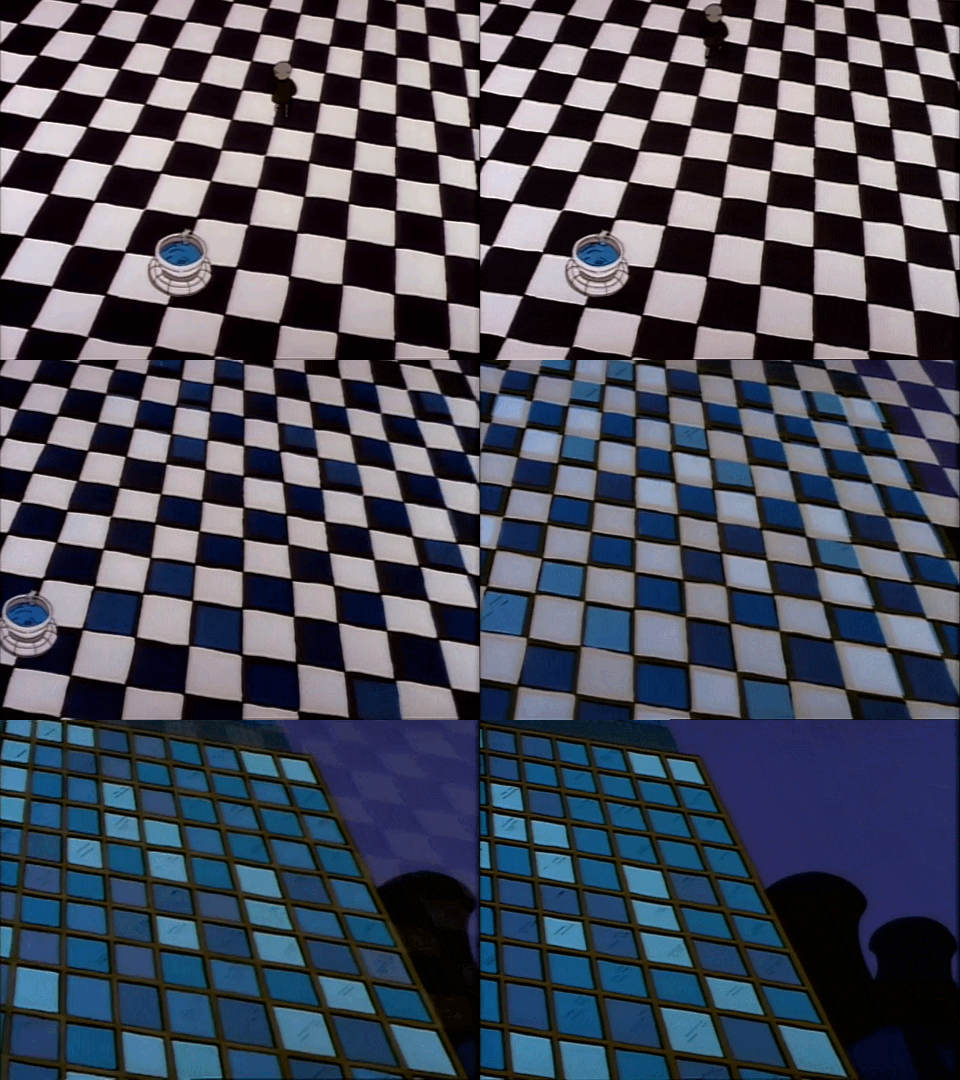
  • Homer’s memory of the party as a classy Algonquin group is so beautiful looking, with the Al Hirschfeld-inspired designs and limited color palette. I also love the 360-degree rotation that goes faster and faster as the stylized characters slowly morph into their normal forms. This art was all done by hand, so I wonder how long that cel was for the entire long pan, and whether it would fit on my wall (probably not)
  • I always laugh at Bart smiling, sitting patiently, patronizing his father as he attempts to sugar-coat and explain his drunkenness from the night before, before bluntly admitting he gets it (“I understand why, you were wasted.”)
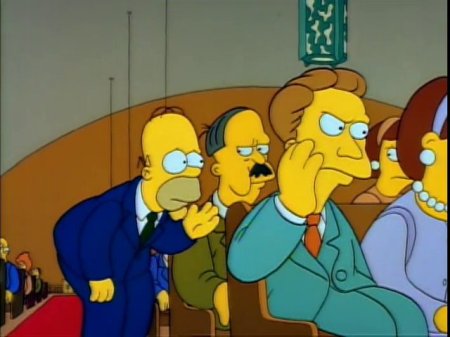
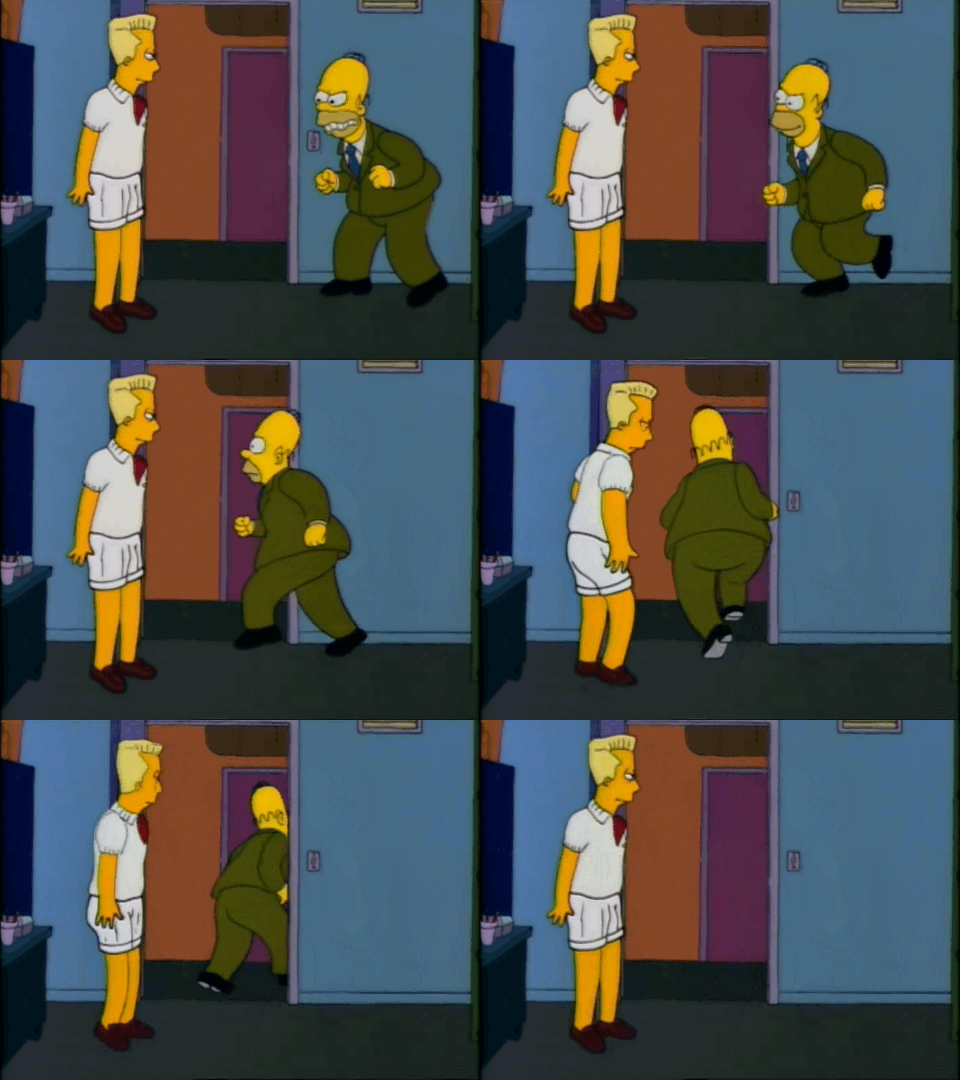
  • Is that old Hitler sitting in church?
  • “Queen of the harpies!! Here’s your crown, your majesty!!”
  • “He blows his nose on the towels and puts them back in the middle!” “I only did that a couple of times!”
  • I love how brutal the impact of that hole in the wall is. This is probably my favorite McBain clip, it just perfectly encapsulates the ethos of the lawless renegade movies they’re parodying (“Bye, book.”)
  • “As a trained marriage counselor, this is the first instance where I’ve ever told one partner that they were 100% right. It’s all his fault, and I’m willing to put that on a certificate you can frame.”
  • Yet another line I can’t believe they got away with, from Otto (“Cherry party, Bart. Any chicks over eight?”)
  • The ending never quite works for me. I don’t really get why Homer gave that much of a shit about catching General Sherman. I understand he fancies the idea of succeeding where others failed, and it’s his selfishness vs. caring for Marge, but it never really clicks with me. He tosses the fish back when Marge gets upset, and him using that as his only point of argument that their marriage is fine doesn’t hold much water considering the joke where Marge literally lists Homer’s faults for hours until her voice is hoarse. There are plenty of episodes where Homer is a dick, but believably makes good by his wife and family by the end, but this isn’t one of them.

21. Three Men and a Comic Book

  • The Casper/Richie Rich connection is a really brilliant observation, as is Lisa’s dark explanation (“Perhaps he realized how hollow the pursuit of money really is and took his own life.”)
  • It’s a great little touch that Bart throws a crumpled bill on the ticket counter rather than hand over the bill.
  • Comic Book Guy makes his first glorious appearance, sucking the nacho cheese off his fingers before presenting our heroes with the object of their desire: Radioactive Man #1. Also, a rare act of compassion that he brings the price down to $100 for Bart (“Because you remind me of me.”) Although considering he was bringing it down from Bart’s exaggerated “million dollars,” this might just be a sales tactic. Also, I wish “Freakin’ kids” took off as his catchphrase.
  • There’s two “twister mouths” in this episode, where a character will jerk their head one way but their mouth will stay the opposite direction while talking. I feel like this was a somewhat common animation flair in the early seasons, but this is the first one I noticed.
  • I don’t know how many people actually use the expression T.S. for “Tough shit,” and I’m guessing the censors also didn’t know it, because there’s no other explanation how they got away with saying it at least two times (“Kamp Krusty” being the other episode, at least that I can remember.)
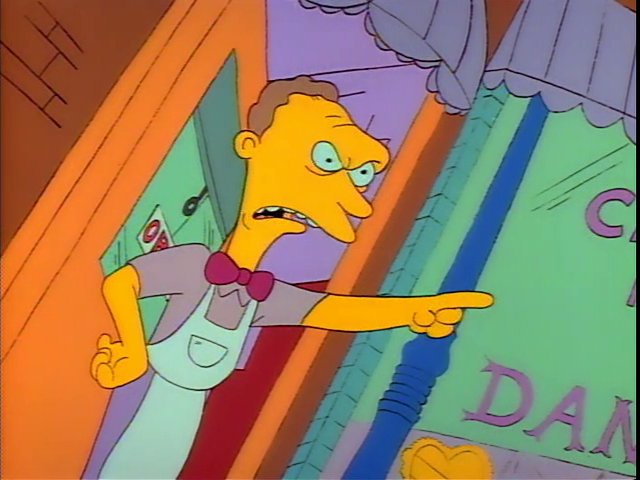
  • I love the juxtaposition between the smiling, clean and professional Krusty Burger employee on the sign, and his haggard, smoking real-life counterpart.
  • At the exchange counter, Bart drops his handful of coins on the counter as well as a bunch of bits of broken glass from the smashed case. One, how was he carrying that without cutting himself, and two, how have I made two separate observations about Bart giving someone money in one episode?
  • Another first: Nelson’s “Haw haw!” He did a similar laugh in the last episode after hotfooting Abe, but this feels like the first real “Haw haw!” It’s also one of the greatest; I love how leisurely Nelson bikes by in dead silence before letting out his instantly iconic guffaw for the first time.
  • Not only do Eddie and Lou take beer from a child while on duty, they happily chuck their cups on the street when they’re finished.
  • What a nice family friendly cartoon, featuring an old woman admitting a soap opera is getting her horny (“Filthy, but genuinely arousing.”) Her reaction is quite similar to Martin watching porn from “Homer vs. Lisa and the Eighth Commandment,” actually.
  • “I fished a dime out of the sewer, for God’s sake!” I always loved this briefly crazed animation from Martin, combined with Russi Taylor’s great line reading. Any time Martin gets upset and his hair gets ruffled is very funny to me.
  • The boys not knowing the true origin of Radioactive Man feels like an innocent little time capsule. I was a kid during the early days of the Internet, and even in those primordial years, you could still look up pop culture spoilers on Geocities fan pages and stuff. But back then, an out-of-print or elusive comic book would be the stuff of legend. Now, you can pull up anything you want in a microsecond.
  • The third act is absolutely beautiful, everything feels incredibly cinematic. Sequences like these are an absolute tribute to the production that they could get animation at such a high quality on a network TV budget and schedule.
  • “We worked so hard, and now it’s all gone. We ended up with nothing because the three of us can’t share.” “What’s your point?” “Nothing. Just kind of ticks me off.” And we end on a nasty skewering of moralizing in kid’s cartoons. Just great.

22. Blood Feud

  • Core Explosion, Repent Sins.
  • In the last two episodes, we’ve seen Mayor Quimby start to be characterized, specifically as petty and vindictive in defense of his cushy job title (“Nobody leaves Diamond Joe Quimby holding the bag!”)
  • “Bart, it’s not like I’m asking you to give blood for free. That would be crazy!”
  • It’s such a dumb joke, but I love the guy holding the blood bag in the elevator forgetting to hit the button. It’s timed just long enough to break the flow, and I love his humming to himself before he finally realizes what’s happening.
  • I love the close-up cut on Burns’ face when he says “the blood of a young boy.” It really makes it seem like he absolutely relishes the idea of harvesting more blood from young children to revitalize him more.
  • What a beautiful mural. Now more than ever, we stand by our USPS.
  • “You always told me I was going to destroy the family, but I never believed it.” “That’s okay, Bart. Nobody really believed it. We were just trying to scare you.”
  • Simple details make all the difference: I love how disheveled and distressed Smithers looks here. I also love that Burns’ hired goons are just working schmoes doing a job, as we see that Joey and Homer are on name basis with each other when the former throws the latter out (“Homer, I don’t tell you how to do your job, okay?”) It’s just business. They play poker with each other, but he will beat the crap out of him if Burns requests it.
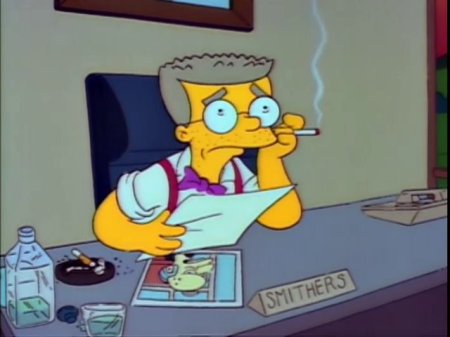
  • “Judas!!” The Burns/Smithers scene is one of those perfect tonal balances where they exaggerate a scenario to comedic levels without sacrificing or undermining the characters or the story. It’s so hard to dissect scenes like this because they just make it look so easy.
  • Bart’s prank calls were so funny to me as a kid, but as an adult now, they’re more charming than anything else, except I guess for the subversion in “Flaming Moe’s” with Hugh Jass. The one in this episode “Mike Rotch,” the audio was used in “Weird Al” Yankovic’s parody of TLC’s “Waterfalls,” entitled “Phony Calls.” Listening as a kid, I remember being delighted hearing, after the second chorus, all of a sudden, it was Bart and Moe! Ah, memories.
  • I like that when Burns comments, “What did you think I was going to do, have you beaten to a bloody pulp?,” he smiles and winks at Smithers, like it’s a fun in-joke between the two.
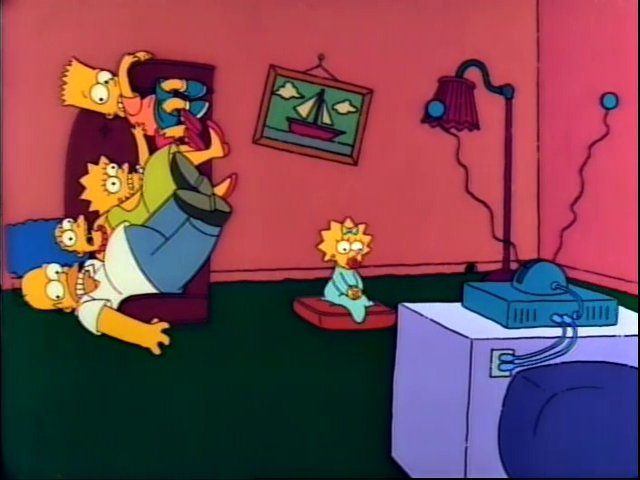
  • No better way to finish an episode than the characters openly admitting there was no point to the story. “It’s just a bunch of stuff that happened,” indeed.
Season Two Revisited (Part Two)

8. Bart the Daredevil

  • I love how the one wrestler pulls a huge wrench out of his shorts, kept in place… somehow. It’s also great how this is called back later by Dr. Hibbert mentioning a child in the hospital whose brother hit him on the head with a wrench imitating that very move.
  • I don’t know if I blame Homer for getting antsy to leave a three hour elementary school band concert. The ending where he’s lifting Lisa out of her seat to leave, but still cares enough to dart back on stage so she can bow, is very adorable.
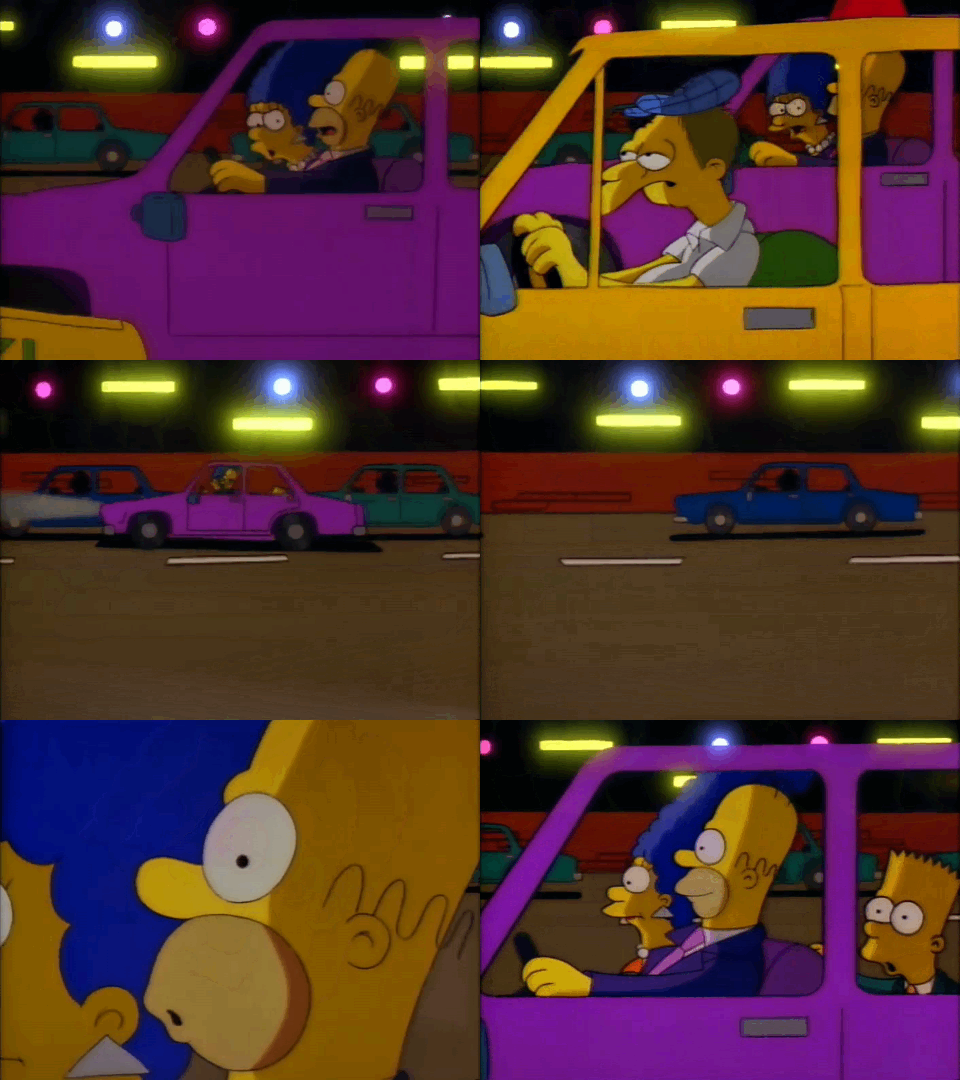
  • Homer’s frantic driving to the truck rally is pretty neat, with the colored lights in the background and the Simpson car darting to and from camera. The Bleeding Gums cameo is an additional nice touch.
  • Why hasn’t there been some crazy millionaire Simpsons fan who made their own life-size Truckasaurus yet? Also, this is one hell of an act break.
  • Speaking of the builder of Truckasurus, it’s great how the freak that built it refers to his creation as real, telling Marge that “Truckasaurus feels very badly about what happened.” He’s also a cheapass, offering the Simpsons a half-bottle of their branded champagne. Even better is you can see the foil has been torn off the neck, like this was a used bottle that was just sitting around the office that some dingus grabbed in order to placate this family into not suing. And it worked!
  • Lance Murdoch’s crew quickly extinguishing him and running off as he starts to address the crowd while still on fire is so goddamn funny.
  • “I never realized TV was such a dangerous influence.” “Well, as tragic as all this is, it’s a small price to pay for countless hours of top-notch entertainment.” “Amen!”
  • It feels very realistic throughout this entire episode that Bart just continues doing his stunts despite all the warnings he repeatedly gets. Seeing how many dumb kids get hurt imitating stuff off TV only incentivizes him to do it more.
  • The reveal of Murdoch’s illegible scribble of an autograph is fantastic. The message he orates with the pen in his mouth is long and thought out enough to make the punchline really hit, along with Bart’s awed reaction.
  • We get one of the first wild mood shifts from Homer, as he goes from stern authority figure laying down the law on Bart, but when it proves to be ineffective (“The minute your back is turned, I’m grabbing my skateboard and heading toward that gorge!”), Homer immediately falls apart (“He’s got us, Marge, there’s nothing we can do! He’s as good as dead!”)
  • On paper, Homer effectively threatening to kill himself by attempting to jump the gorge to get Bart to stop sounds disconcerting, but in the episode itself, it completely reads as merely his last ditch effort after exhausting his other options (“I tried ordering you, I tried punishing you, and God help me, I even tried reasoning with you!”)

9. Itchy & Scratchy & Marge

  • Itchy & Scratchy segments would later become more elaborate with subversions or movie parodies, but I love how all of the bits we see here are just so simplistic in their brutal depictions of violence, which of course best serves the plot of the episode. Itchy igniting TNT on Scratchy’s grave and shooting him point blank on his doorstep with a ballistic missile launcher are so damn funny, but my favorite short is at the very end as the two whip out larger and larger handguns until they’re larger than the Earth, resulting in a giant explosion propelling Scratchy into the sun. It’s just so dumb that it’s great, but also, being the last bit of I&S we see in the episode, serves to drive home how absolutely nothing has changed, and the show is just as violent as ever, if not more so.
  • We get telling glimpses at Homer’s collection of how-to books and his hammer with a price tag on it, that he’s never used any of this shit, presumably having bought them from some home shopping network with the intention of using them, but of course never did. And this all goes by without a joke explaining it further, as the audience is left to fill in the gaps with the ingredients given. What a concept!
  • The Psycho scene is a great example of how well executed the show’s usage of parody was. In addition to recreating an iconic movie scene in a ridiculously absurdist fashion, it feels even more appropriate given Maggie is mimicking something she saw on television, as the show itself is doing with this very scene.

  • So many I&S scenes of Marge’s list I want to see the examples of. “Brains Slammed in Car Door” is a big one, but “Dogs Tricked” is so great, and feels very appropriate that Marge would note down such mean behavior.

  • “…and the horse I rode in on?!” Just the show casually alluding to the F-word in 1990, no big deal.
  • “Twenty million women in the world and I had to marry Jane Fonda.”
  • After the loud protest overtakes his latest show, we see Krusty nervously laughing before an irritated Roger Meyers, Jr. It’s odd how over the years these two have kind of flip-flopped regarding who’s “the boss” or not. Presumably Krusty should be in better standings, as the I&S cartoons run on his show, although I feel like it’s been referenced that I&S is such a huge draw that it’s almost keeping Krusty’s show afloat. But it’s funny either way seeing those two bicker with each other.
  • “You know, some of these stories are pretty good. I never knew mice lived such interesting lives.”
  • The Smartline segment is just top-to-bottom brilliant. The seemingly objective topical show is clearly biased in one direction from the start (“Are cartoons too violent for children? Most people would say, ‘No, of course not, what kind of stupid question is that?’”), and we even get Marvin Monroe live via satellite to lend some kind of “credibility” to the whole affair. Roger Meyers’ dismissive attitude toward Marge’s protests is fantastic, as is his counterargument which Kent Brockman plays into perfectly (“I did a little research and I discovered a startling thing. There was violence in the past, long before cartoons were invented!” “I see… Fascinating.”)
  • A pretty sweet touch that we see Marge using the spice rack Homer made, as horribly crappy as it is.
  • I’ve always loved this piece of animation of Krusty bursting through the banner. It’s almost like it’s in slow motion.

  • “It’s filth! It graphically portrays parts of the human body, which, practical as they may be, are evil.”
  • This episode really feels so ahead of the curve in taking down rabble rousing media watchdogs. This was surely made in response to the criticism the show itself was getting from such complaining viewers in its first season, but in terms of dangerous imitable behavior, I associate that more with people crowing about violent video games in the 2000s, or later crude animated fare like South Park and Beavis and Butt-head (especially the latter, with that case of a boy burning down his trailer home after allegedly imitating the cartoon, even though it was later revealed the family didn’t even have cable.) Ultimately the episode ends on an purposefully ambiguous note, where Marge acknowledges her own hypocrisy without recanting any of her actions. Even though the episode slightly villainizes her, it doesn’t go too far where you don’t feel sympathetic toward her plight and viewpoint. It’s a fine line the episode teeters on, and it pulls it off so well.

10. Bart Gets Hit By A Car

  • I still don’t know why this episode has an on-screen title. It is funny that mere seconds after reading the title, we actually see Bart get hit by a car, but it feels weird to me.
  • The tire tracks on Snowball I’s body is a great touch.
  • What other show takes you to Hell and back within the first few minutes of an episode? Speaking of, I love the depiction of the Devil as this little shrimp who keeps track of souls on his Mac computer. And of course, Bart thinks this is the coolest thing ever, even as Satan gives him a parting farewell (“Remember: lie, cheat, steal, and listen to heavy metal music!” “Yes, sir!”)

  • Great quick joke as Bart ascends through the various floors of the hospital, we see Jacques looking quite concerned as a doctor puts on rubber gloves. Gay panic seemed to be the theme of his random post-season 1 appearances; in the “Do the Bartman” music video, we see him dancing with a series of morphing female side characters before finally ending up with Karl, much to his surprise.
  • We’re introduced to Lionel Hutz, and man, does Phil Hartman just instantly knock this character out of the park. The friendliest sleazeball you ever did see, his phony smile and sweet talking manner makes rubes like Homer easy prey for him. I also love how he’s literally a shameless ambulance chaser, as we’re told he was doing that while Bart was taken to the hospital, and then later we see his ears perk up as he hears sirens in the distance from his law office in the mall.
  • I really love these two shots, with the staging alone making it very clear that Homer is the submissive party in this meeting to get a paltry sum from the powerful man that injured his son.

  • Speaking of, I think this is the first instance of showing Burns’ incredible physical weakness, struggling to punch down on the check and straining to crush a mere paper cup. I love his pure satisfaction when he’s finally able to do so.
  • “Clogging Our Courts Since 1976.” Before we had Saul Goodman, we had Lionel Hutz.

  • Dr. Nick also has a great first appearance, just as competent a doctor as Hutz is a lawyer, both with offices full of phony degrees (Female Body Inspector, I Went to Medical School for Four Years and All I Got was this Lousy Diploma)
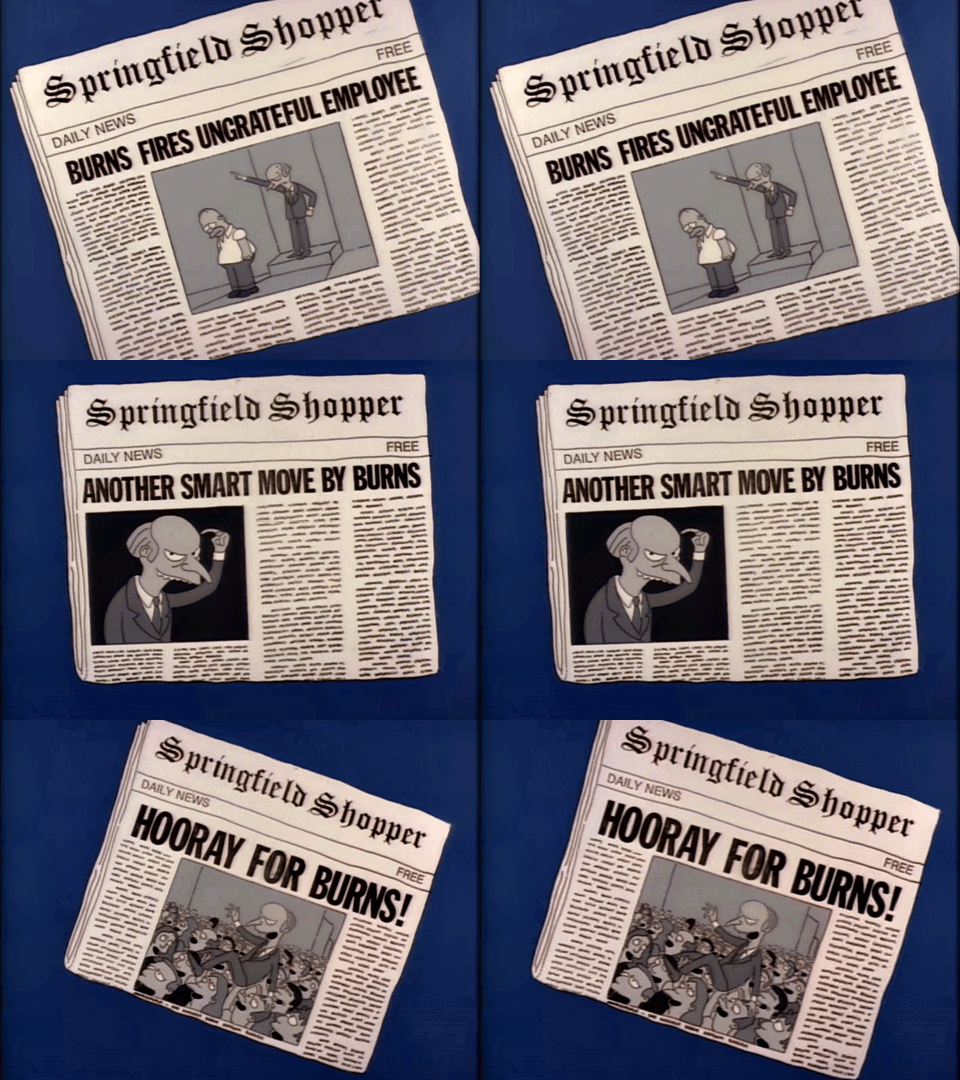
  • I love this sequence of Burns imagining the fawning headlines after firing an ungrateful employee. His little satisfied “Hmm” noises make it even better. Sometimes, obvious ADR lines feel unnecessary or like filler, but in this instance, it really enhances it.

  • “Your honor, my client has instructed me to remind the court how rich and important he is, that he is not like other men.”
  • The sequences of Bart and Burns’ sides of the story are both so great, really fun and well animated. I love that Mr. Burns doesn’t even try to hide that he’s reading his account off a piece of paper. Also great is that he even throws Smithers under the bus in his manufactured tale (“It’s not important, sir, let’s drive on.” “Why, you despicable, cold-blooded monster!”), that even he is pissed alongside the entire court when Burns is finished (“What are you looking at me like that for? You believed his cock-and-bull story!”)
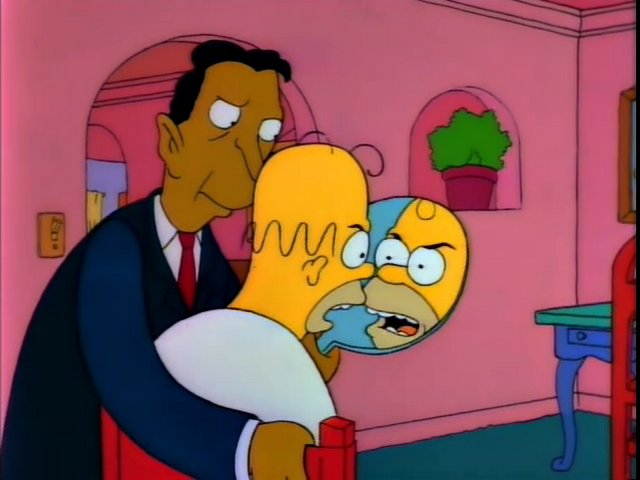
  • Alone in Burns’ lavish study, I love that Homer angrily spits on his fancy chair, but then in the next shot we see him dutifully wiping it off. Even trying to be defiant, Homer is spineless as ever.
  • Dan Castellaneta and Julie Kavner give great performances as Blue-Haired Lawyer grills Marge on the stand. The overlapping interplay between the two as Marge slowly recounts Bart’s “mental anguish” and the Lawyer quietly riffing off what she says as it’s all playing to serve his agenda is just wonderful.
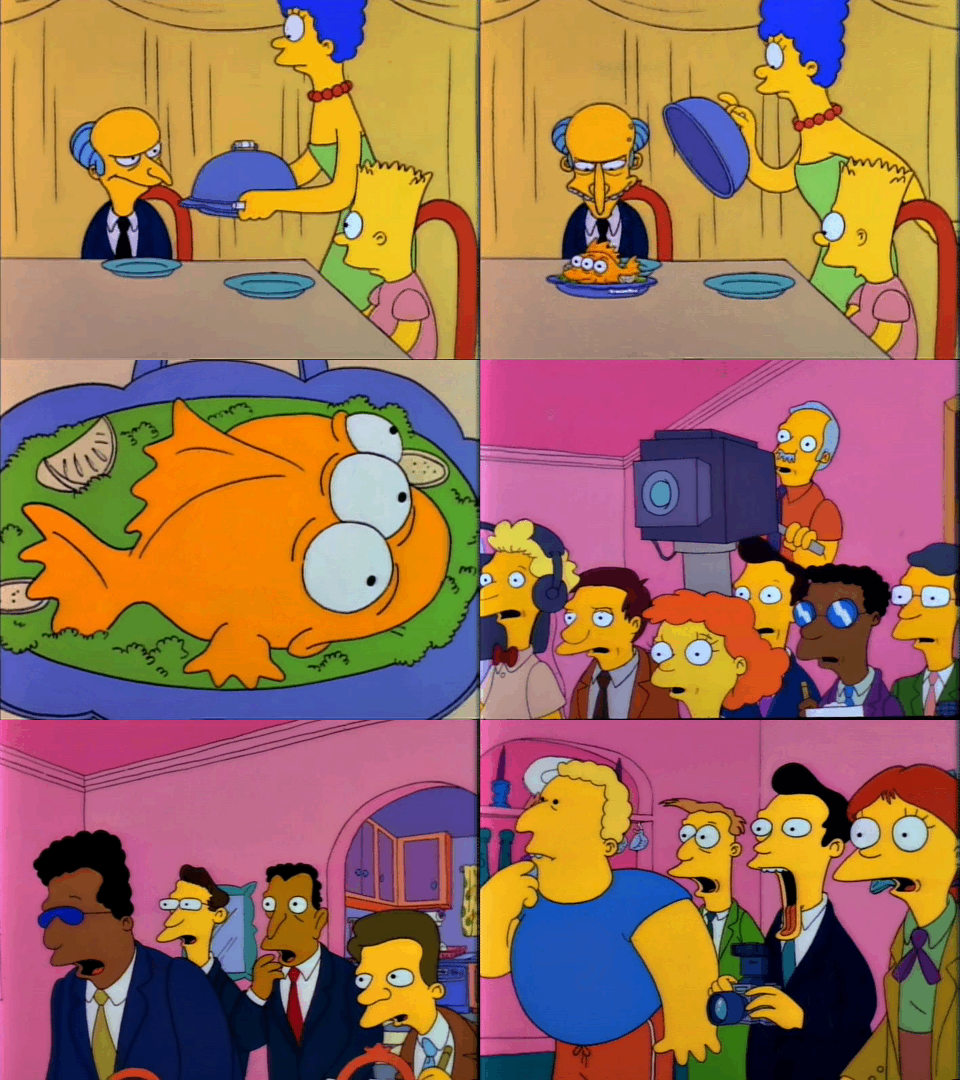
  • I’ve always thought the ending of Homer not knowing if he loves Marge anymore is kind of silly. It plays it straight enough that it feels like we’re supposed to care, but all-in-all it comes off as weirdly rushed and tacked on, especially given a lot of the build-up is told through Homer and Marge’s inner thoughts played over freeze-frames. Even then, it’s not without its moments: immediately after telling his wife he doesn’t think he loves her anymore, Homer clarifies, “But don’t worry, I’ll never let on, I’ll still do all the bed stuff. Maybe it won’t be so bad…”

11. One Fish, Two Fish, Blowfish, Blue Fish

  • “You’re always trying to teach me to be open-minded, try new things, live life to the…” “What are you talking about? Nobody’s trying to teach you that!” Lisa’s pleas at the dinner table in the opening scene is a great example of the show striking the balance of having her wise beyond her years, yet still just a little kid. She waxes poetically about wanting some variety in her life outside of greasy American cuisine, but only convinces her father after repeating “Please, Dad” over and over again.
  • “Fugu me!!”
  • I guess Bart and Lisa singing the theme to Shaft is itself the joke, but cutting back to it three times for them to sing the whole song feels a bit like filler.
  • It really is pretty damn risque they made Mrs. Krabappel into such a… liberated woman, as she appears here furiously making out with the head sushi chef in a car parked behind the restaurant. And lord help you if you disturb him (“My skilled hands are busy!!”)
  • “No need to panic. There is a map to the hospital on the back of the menu.”
  • I love this quick bit of animation of Homer in the “anger” stage. Later, we get a similarly great Homer freakout when he puts on aftershave.

  • “So You’re Going to Die” is only second to “So You’ve Ruined Your Life” for best pamphlet joke on the show.
  • It’s really cute how Homer innocently asks Marge her term for them having sex. “When we’re intimate?” And then of course he misspells it (“Be intimit with Marge.”)
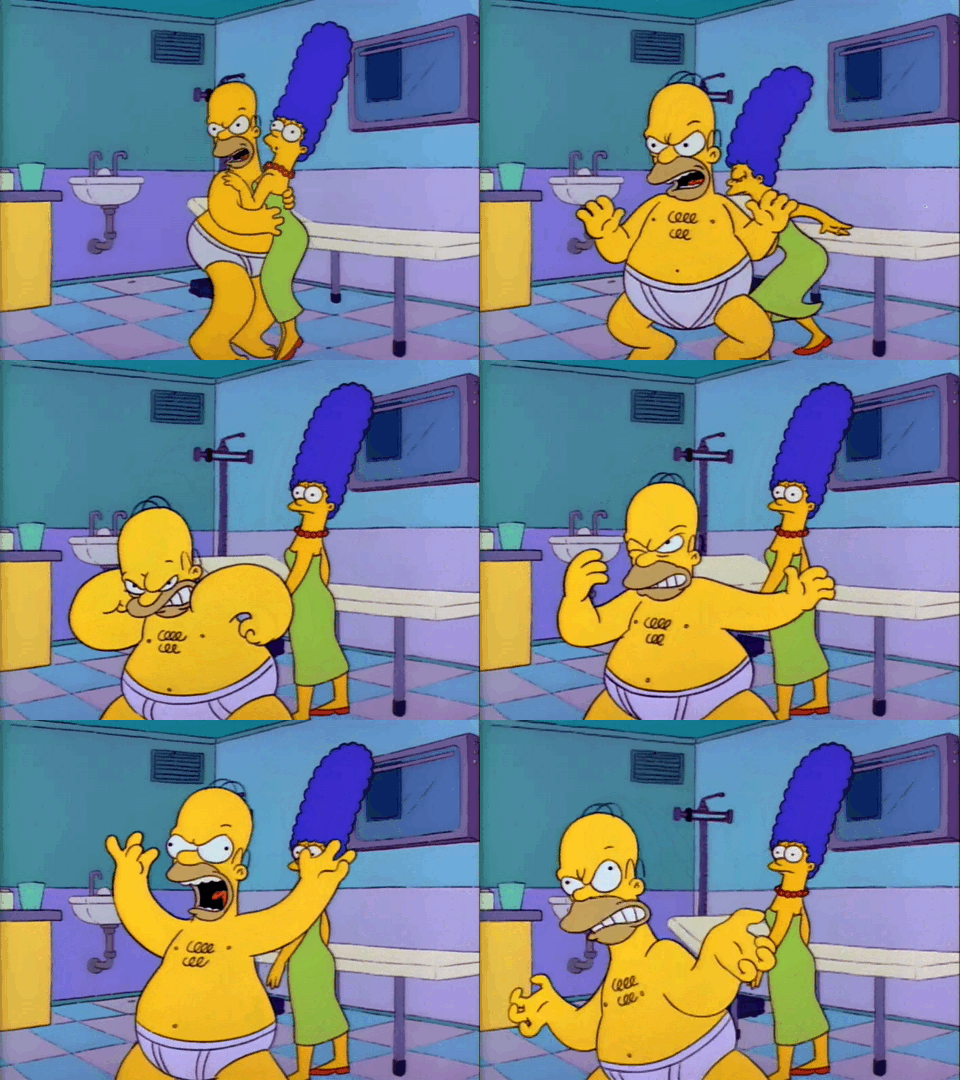
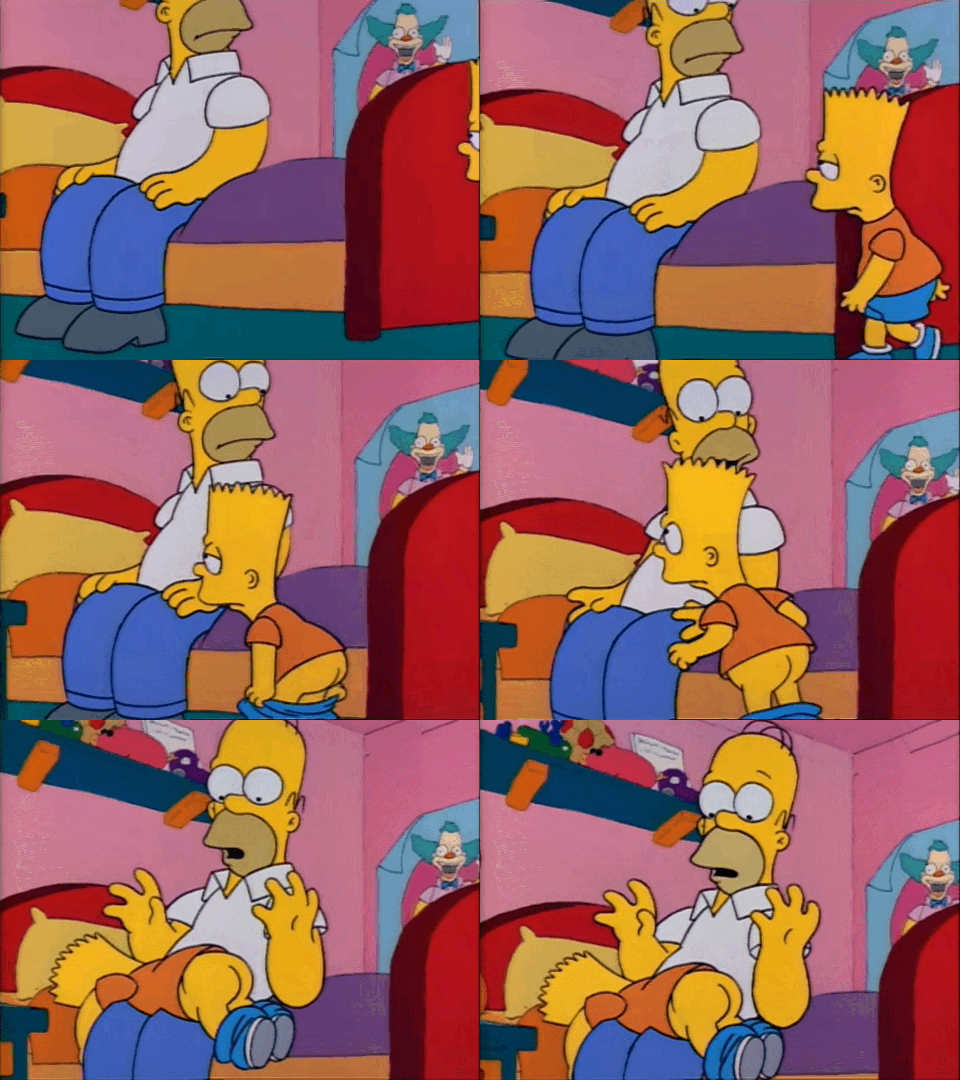
  • I love this moment when Homer taps his knee to beckon his son for a heart-to-heart, Bart naturally figures he’s getting spanked and assumes the position. The animation is so damn funny, he just looks so nonplussed by it, swiftly drops his shorts and goes limp across Homer’s lap just wanting to get it over with. So fucking funny.

  • I can’t remember when I even heard the real song last, but it’ll always be “When the Saints Go Over There” to me.
  • The harmonica wailing inmate in the cell purely for atmosphere. Just great.
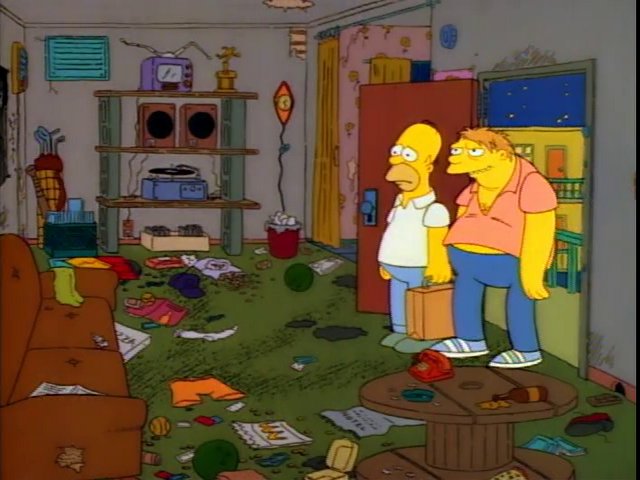
  • Originally Barney was positioned as Homer’s best friend, but the pair really only had a handful of moments together outside the bar before he just became a permanent fixture of Moe’s, with jokes solely based on him being a drunk. Here, Homer calls him for $50 to bail him out of jail (“Fifty bucks?! What’d you do, kill a judge?”) I like the small glimpses of his character we see in the early seasons, like his novelty answering machine and his filth-ridden apartment. I don’t know what other greater stories you could have told with Homer and Barney, but it definitely feels like a minor “what-could-have-been.”
  • Gotta hand it to Smithers, despite being a gay man hopelessly in love with his boss, he does his best to hype up Burns’ ogling at women’s legs at the park (“Ring-a-ding-ding, sir!”)
  • It’s such a simple look, but I love this expression when the weight of Marge’s poem finally hits Homer. The versatility of these simplistic character designs is really amazing at how many different expressions they can do with so few lines.

  • I always thought it was funny that Larry King gives his NBA picks at the end of the Bible book-on-tape, which would immediately date itself the year after he recorded it. But I’m probably thinking too much into this.

12. The Way We Was

  • McBain really is the perfect movie parody. Despite “specifically” referencing Schwarzenegger and Stallone movies, the parody still works now over twenty years because the big dumb action movie starring a loose cannon who plays by his own rules is an evergreen genre. Sure, you’ve got plenty of movies that do their own takes or subversions or outright mockeries of the tropes of such films, but there’s still plenty of media that continues to play them straight, making the McBain segments still play perfectly even now.
  • A bit on the flip side of that, you have the Siskel & Ebert parody, which is still funny, but the idea of watching movie critics on TV give their reviews in 2020 is kind of weird. I guess the spirit of it lives on with online movie discussion videos like Red Letter Media’s Half in the Bag, but it’s different. But as a young teen, I remember loving Ebert & Roeper, and reading through all the negative blurbs of shit movies on a very early version of Rotten Tomatoes. I guess I loved schadenfreude, I don’t know. It was so intense that I remember I burned a CD of audio files of Ebert & Roeper’s most scathing reviews and listened to it probably way too many times. I was an… odd child.
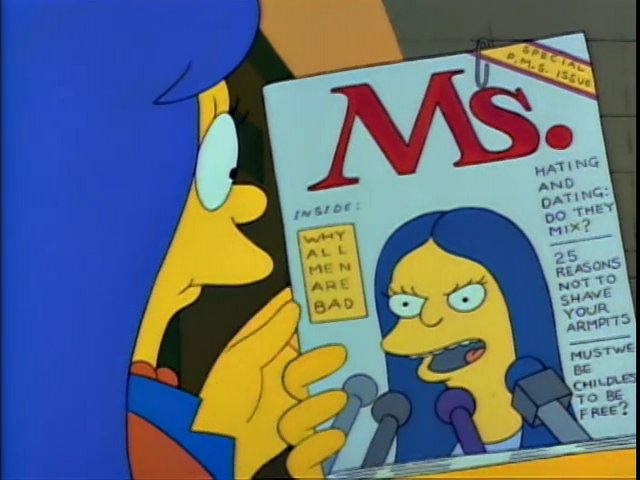
  • The magazine cover feels like it’s straight out of one of Matt Groening’s Life in Hell comics. I also don’t know if these jokes would fly nowadays.

  • It’s a nice touch that the flashback begins with Homer scoffing at “Close To You” playing on the radio, and the first act ends with the song playing when he first lays eyes on Marge and falls in love. I also like that the motif is played right at the start of act two before Homer introduces himself. I don’t know why, but the song feels very appropriate as “their” song, as we see in a callback much later in The Simpsons Movie where we see Homer and Marge use it as their first dance.
  • “I reached step one: she knew I existed. The only problem was, she didn’t care.” I remember cryptically posting this quote on my Xanga page in high school, referring to a girl I didn’t have the guts to ask out. Boy, this episode is reminding me of a lot of cringey shit I did as a kid.
  • I love how absolutely shitty a father Abe is, which explains a lot about adult Homer’s insecurities and shortcomings. He imparts upon his son a very important lesson (“Don’t overreach! Go for the dented car, the dead-end job, the less attractive girl. Oh, I blame myself. I should’ve had this talk a long time ago…”)
  • I love this little bit where Homer haphazardly wipes the hair out from his eyes. It’s a very true teenager thing.

  • The “makeout music” Homer plays is this great faux-Barry White track “Don’t Be A Baby, Lady.” I wish I knew who was singing it. But then it’s followed later with the real “Do the Hustle,” so I guess between that and “Close to You,” they may have blown their music licensing budget for this episode. It’s also funny since Barry White would appear on the show two seasons later.
  • I love the Shelbyville Forensics Meet flyer, the crude school spirit drawing also feels very setting appropriate.

  • “Where to now, Romeo?” “Inspiration Point.” “Okay, but I’m only paid to drive.”
  • Artie Ziff: the original “nice guy.” I love that Marge compliments Homer for being unpretentious, which contrasts perfectly with Artie, who is incredibly full of himself, the ultimate example being him urging Marge not to tell anyone about his “busy hands” (“Not so much for myself, but I am so respected, it would damage the town to hear it.”)
  • I love that throughout and after the prom, Homer is always holding the corsage in his hand, like a tortured reminder of what he lost. But then, when Marge picks him up, he finally pins it on Marge, repairing her dress strap that Artie ripped. I never really thought it through like that, but that’s really, really sweet.
    I also wore a powder blue tux to prom. It wasn’t retro-70s style like Homer’s, but it 100% was the inspiration for it.

13. Homer vs. Lisa and the 8th Commandment

  • This episode has three just perfect line readings, the first being in the opening flashback, Jacques/Zoar the Adulterer when Moses kills his line of work with “Thou Shalt Not Commit Adultery” (“Well, looks like the party’s over.”) He just sounds so bummed and defeated.
  • “Myth: It’s only fair to pay for quality first-run movies. Fact: Most movies shown on cable get two stars or less and are repeated ad nauseum.”
  • “So what you’re saying is, there’s a downside to the afterlife. How does one steer clear of this abode of the damned?” Martin’s Sunday School question prompting the teacher to introduce the Ten Commandments sounds like it was written on a card by Mr. Burns’ campaign manager.
  • We get our first glimpse of Troy McClure, who of course would host many more hilarious infomercials to come. It also feels very appropriate that Dr. Nick is his partner in crime, as was Lionel Hutz, cementing these two Phil Hartman roles as affable con men in their own unique ways.
  • The living room turning into Hell before Lisa’s eyes is such a beautiful sequence. It really drives the point home of Lisa’s moral dilemma, while not feeling too over-the-top or preachy, as it’s through the lens of a young child who isn’t cloying or annoying. 

  • The second perfect line reading: the grocery cashier when Marge asks him to charge her for the two grapes she ate (“Two grapes? Who cares?”) I love that Marge shoots Lisa an annoyed glance for making her do that; I like the instances where we see despite her being eternally loving, even Marge can get fed up with her kids every now and then, just like any parent.
  • “If you didn’t watch it in the theater, or rent it, or see it someplace else, we’ve got it on the Blockbuster Channel!”
  • I love Mr. Burns’ colorful description on how he thinks the other half lives (“The screen door rusting off its filthy hinges, a mangy dog staggering about, looking vainly for a place to die.”)
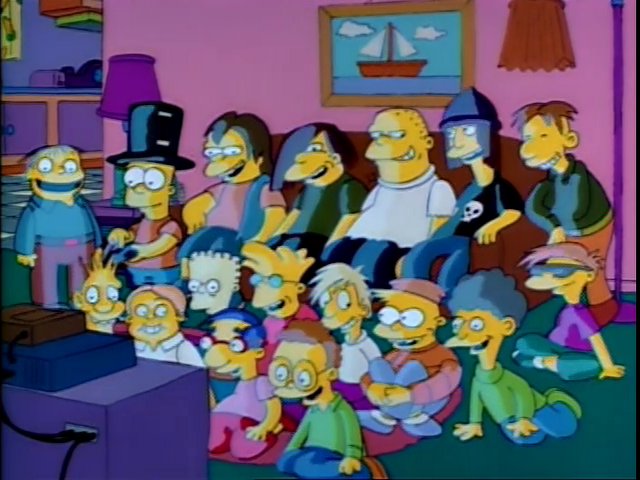
  • So many great newly impure faces of the children watching “Broadcast Nudes.” I can’t decide whether Ralph’s or Martin’s is my favorite. The latter gets in a great line, seeming to enjoy what he’s seeing a bit too much (”Gross!” “Yet strangely compelling…”)

  • It’s a bit funny that the gag where Apu shows up at the house after Homer tells Marge he only invited a few of his closest friends doesn’t work so much anymore, since we consider the two of them friends nowadays. But back in episode 26, why the hell would Homer invite the guy who runs the convenience store over?
  • The third perfect line is Mr. Burns instructing Smithers to give Homer “the Cheet-O’s.” Very natural.
  • Further making Lisa a one-woman island of morality, and speaking to how corrupt the entire town is, the police don’t give a shit about Homer’s stolen cable, since they want to watch the big fight as much as anybody.
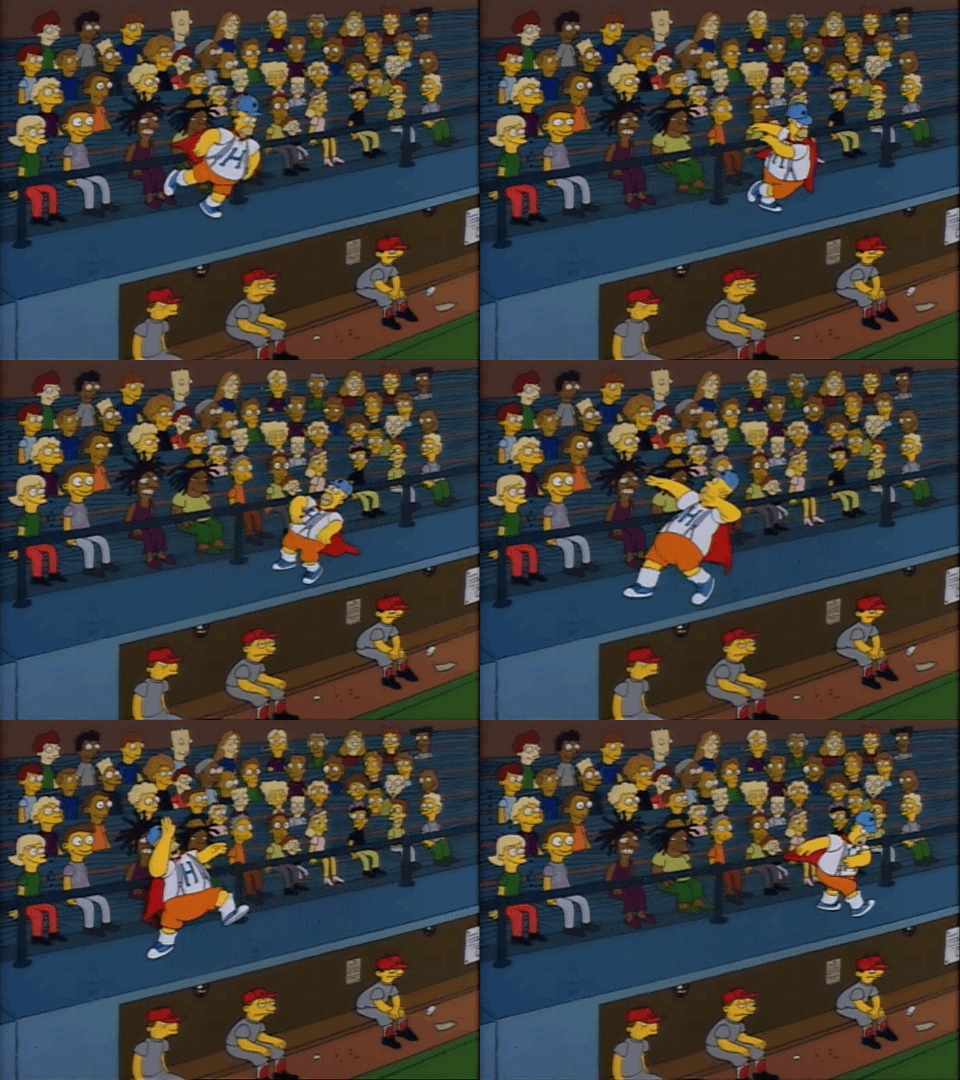
  • Another crowd shot that makes me laugh. My eyes are always drawn to Otto’s gigantic maw. It’s mostly open in motion, as the upper lip just kind of flaps up and down a bit. Very strange, but I love it.

14. Principal Charming

  • This is the first episode where we get some kind of personality distinction between Patty & Selma. While the former is turned off by intimacy, the latter yearns for it, or as Marge perfectly puts it, “It’s Patty who chose a life of celibacy. Selma simply had celibacy thrust upon her.” You really feel for Selma right away, with the tragically on-the-nose wedding and her somberly singing Brandy to Lisa.

  • “Since I’m sure you’d only resent the pity of an eight-year-old niece, I’ll simply hope that you’re one of the statistically insignificant number of forty-year-old single women who ever find their fair prince.”
  • While he would later become more and more of a spineless wimp, I really like seeing Principal Skinner wield his authority. This episode illuminates the clearest that he’s really just a big stuck-up nerd who revels in his position of power. The Bart/Skinner dynamic lost a bit of its potency when Skinner’s edges started to get sanded off, it only works if Bart can actually be punished for something. Last season we saw him reveling in deporting the boy, now he yearns to be able to use the “Board of Education,” a paddle kept being glass in his office.
  • There’s several scenes in this episode that are just Patty & Selma talking back and forth that I just love. We see them go to the Kwik-E-Mart for smokes, Selma grills Patty about her date, these mundane things where we get to learn more about these characters. When Patty asks how she looks before her date, Selma sadly compliments, “Achingly beautiful.” She’s still bitter that it’s not her who got her man, but she’s also deeply insecure about herself and still loves her sister more than anything, which ultimately becomes the crux of the episode that neither sister can leave the other one behind. As we get more episodes featuring secondary/tertiary characters, it’s only going to make me wish we got more interesting character explorations like these, instead of the five thousandth Homer-gets-a-job episode.
  • I love that the Australian Space Mutant has a little Joey mutant in its pouch.
  • Considering these are two characters we barely know much about, the Skinner-Patty relationship still seems to work. Skinner is just a lovestruck dork with a bumbling sense of courtship, while Patty initially is barely putting up with this guy for her sister’s sake, but comes around to him a bit over time. Their first date involves complaining about the restaurant they went to and the movie they saw (“Isn’t it nice we hate the same things?”) Patty laughs at this, then quickly catches herself, trying to purposefully extinguish this rare moment of joy.
  • Kissing really is kind of gross when you think about it, isn’t it?

  • There’s a great moment when Selma is at her lowest, grabbing her nephew with the hopes that some kiddie nonsense he says will cheer her up. But when he tells her Skinner is planning on asking Patty to marry him, she’s freezes, and a bit of ash falls from her cigarette. I don’t know why, but that makes the moment even more powerful than just silence.
  • Barney is the perfect disaster of a man to compel Patty to save her sister from. I love his bewildered reaction to his own bottle he brought with him (“Schnapps?”)

Season Two Revisited (Part One)

1. Bart Gets an “F”

  • Nothing like opening your season premiere with a ten-year-old talking about making love to a woman. Martin’s Old Man and the Sea book report rules.
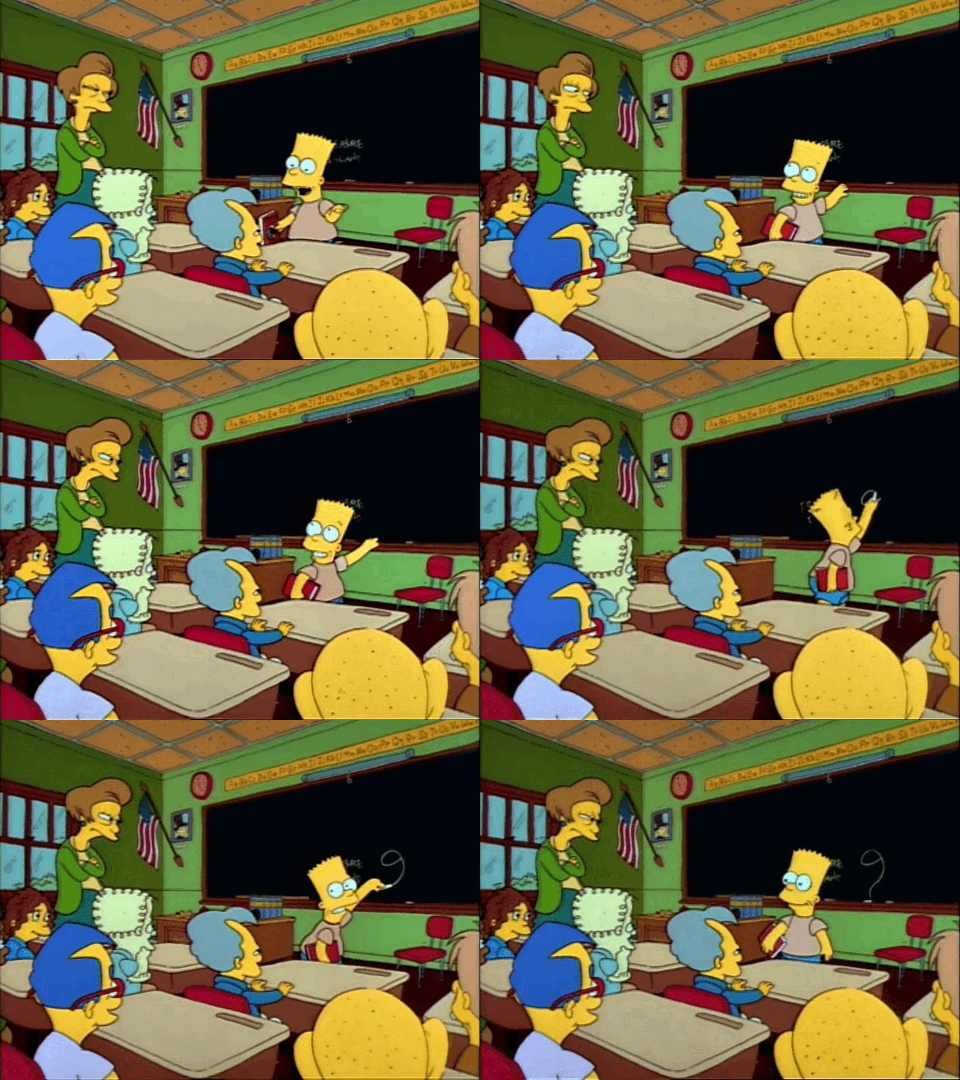
  • I love catching new visual touches each time I watch these episodes. I don’t think I ever noticed Bart blindly pawing for the chalk once before grabbing it the second time. I also love him dragging the chalk down the board at the end of his “9.”
    201-1
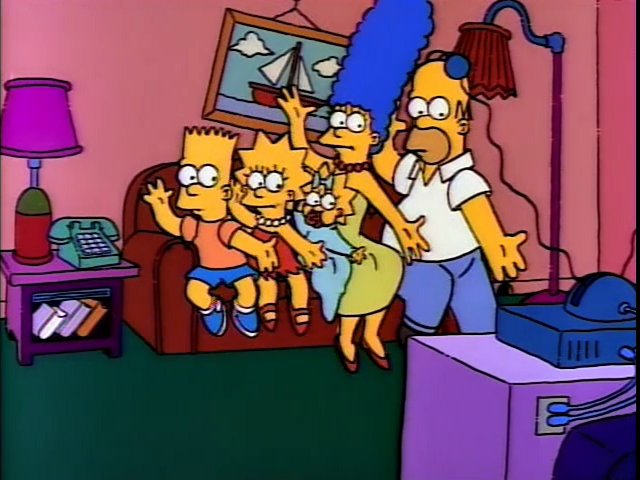
  • Why hasn’t anybody made an Escape From Grandma’s House arcade game yet?
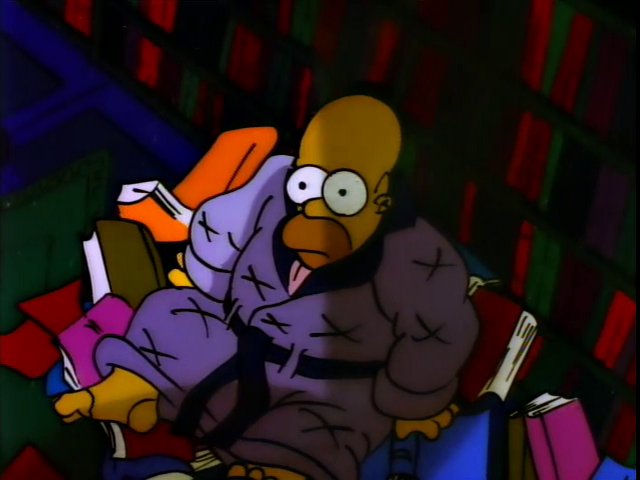
  • Homer is almost adorably supportive of Bart slinking off to study in the dead of night (“Burning the candle at both ends, eh, boy? Go get ‘em!”) I also love when he and Marge walk in on a passed out Bart in his books. Marge concernedly wonders why he keeps failing, to which Homer sweetly replies, “Just a little dim, I guess.” Honestly, one could have a worse parent than Homer.
  • “I got a big test today I am not ready for. Could you please crash the bus or something?” “Ohh, sorry, little buddy. Can’t do it on purpose. But, hey, maybe you’ll get lucky!”
  • Ah, the joys of faking sick to get out of school. When I was a teenager, there was a good year and a half I had a freak ability to trigger my own nosebleeds, a power I only used for evil one time to get out of a math test. Clearly, I learned from the best.
  • In case you needed more evidence of what a craphole Springfield Elementary is, Bart opens the nurse’s room door to find the highly trained medical professional picking up tongue depressors off the floor and putting them back in the jar.
  • “Bart is an underachiever, and yet he seems to be… how shall I put this… proud of it?” I love how following the summer of Bartmania, the show immediately comes back with a sharp jab at it. That “underachiever” line was mass produced on many a T-shirt, something that most assuredly came from a marketing department and not the show writing staff. I also love how Bart is sitting and lifting his legs back and forth like a real fidgety kid. It’s adorable.
    201-2
  • We again see how completely uninterested Springfield Elementary is in actually helping children with their problems, with Dr. Pryor openly admitting that having Bart repeat the fourth grade will be “shameful and emotionally crippling.” Later when Bart bursts into tears upon failing the last exam, Mrs. Krabappel’s first reaction is to comment, “I’d think you’d be used to failing by now!” That and her attempt at making him feel better (“A 59 is a high F!”) makes her the perfect teacher for this series: one who has no idea how to deal with children.
  • Everything with Martin in act two is so damn good. His bafflement at how his numerous academic achievements mean nothing to the other kids, his strict studying regiment for Bart (including a riding crop to keep his eyes glued to his books), and later, his crazed descent into hooliganism, culminating in pushing some unlucky boy into the girl’s bathroom (“The screams! The humiliation! The fact that it wasn’t me!”) Martin may not have had a ton of appearances over thirty years, but Russi Taylor helped create one of the low-key richest supporting characters in the whole series. RIP to a real one.
    201-3
  • “Prayer: the last refuge of a scoundrel.”
  • “Look, everyone! John Hancock’s writing his name in the snow!” Yet another joke that flew by the censors. And about our sacred Founding Fathers, no less!
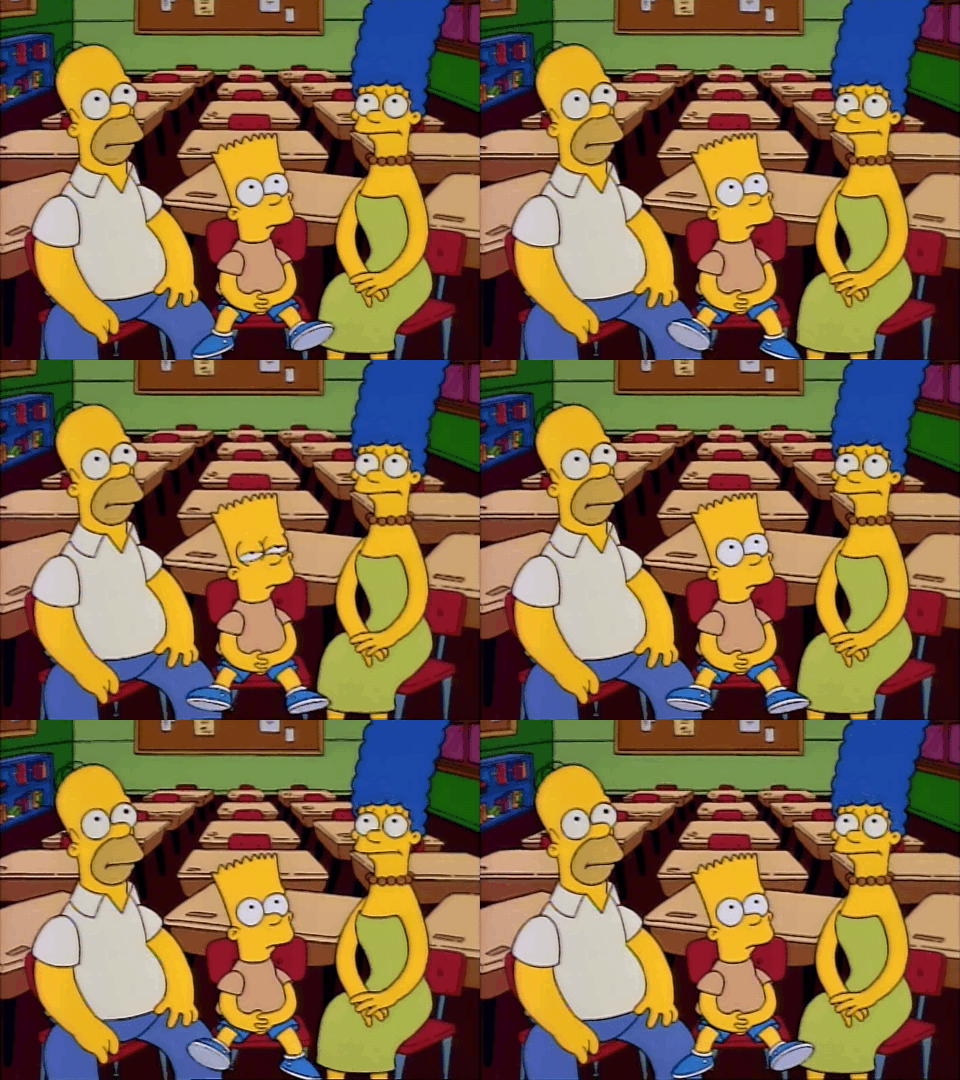
  • The ending of Bart triumphantly telling everyone about his D- is one of those perfect show moments where you completely buy the emotionality, but it’s simultaneously still funny given our happy ending involves our hero getting a near-failing grade.

2. Simpson and Delilah

  • Homer desperately trying to blurt out the right answers to the TV trivia show is great, but the additional joke of said show being “Grade School Challenge” makes it even better. Cut to a decade or so later and we got Are You Smarter Than A 5th Grader? Boy, this show really DOES predict everything.
  • “Hair… just like everybody else.” As dim-witted and buffoonish as Homer can be, this one moment of him staring woefully at the television completely humanizes him. All of his efforts through the episode are of him trying to gain back a part of himself he believes will make him whole, and even though it’s extremely hilarious and pathetic at the end to see him rub his scalp against the puddle of Dimoxinil soaking into the rug while sobbing uncontrollably, it just makes it the more sad the next morning as he solemnly stares back at his newly bald reflection.
  • Background stuff I missed: a sign next to the power plant coffee pot (Honor System Coffee Refills: 25 cents.)
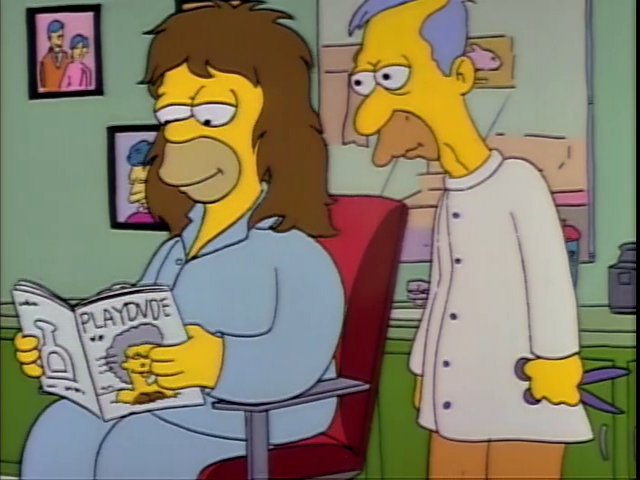
  • I like how happy Homer’s old barber is to see him after all these years (“You got rid of the sideburns!”) I also love how casually Homer picks up and starts reading a Playdude. How many barbershops have you been in where customers are reading nudie magazines?
    202-1
  • It really feels like Karl shouldn’t work. He’s the Magical Negro character whose sole purpose is to help elevate this fat oaf of a man to a position he didn’t earn in the first place. But goddamn does this show sell it. It helps that we see glimpses of Karl living his own life in his new position (seeing his elegant living accommodations, befriending “the gals down at the typing pool,”) but it also really seems like Karl has sympathy for Homer, and genuinely wants to help him be the best man he can be. He’s the positive shade of yes man, who only wants the good in their employer to flourish and believes in them even when they don’t. Speaking of which…
  • In this episode, Smithers is presented as Karl’s antonym, a right hand man who accommodates their superior to a fault. He’s wholly devoted to Burns to the point that when Homer starts encroaching on his turf, he flies off the handle. It’s pretty great to see how petty Smithers gets in the third act, and kind of dark too (“Got that big speech in five minutes, Simpson. You’re not gonna hang yourself, are you?” he asks with a laugh.)
  • “Let the fools have their tar-tar sauce.” One of the greatest Burns lines ever.
  • This scene transition from executive washroom is just wonderful. Stuff like this really shows the scope of this series. This kind of thoughtful staging and transition techniques were not only not done in regular sitcoms, but even in a lot of movies too.
    202-2
  • “I love you, Dad!” “Dirty trick.”
  • “My reasons… are my own.” God bless Harvey Fierstein. He’s a big reason why the Karl character works. And yes, he really does believe in Homer, at least enough to lay a big smooch on him (how in the hell did they get away with that?) I also love his quick butt pat on Homer’s way out.
    202-3
  • There’s lots of notable emotional moments on this show that fans talk about a lot, but the ending to this episode is one I never hear mentioned. Marge cradling Homer and singing to him, letting him know he’s beautiful to her with or without hair… I am a humongous softie, and I’m honestly tearing up a bit just writing about it. What a lovely ending.
    202-4


3. Treehouse of Horror

  • Marge’s introductory warning about the episode is so damn good. The writers knew how out of the box this concept was, a non-canonical anthology horror special full of scary imagery, and not only did they do it anyway, but they proceeded to thumb their noses at whoever would get offended at such a thing right at the start. And having it be Marge instead of fan-favorite Bart makes it even better, as she’s exactly the type who would write an angry letter to the local TV station (as would be the basis of an episode later this season, in fact…)
  • I love how desperately Homer tries to normalize the freaky stuff going on in the house because of what a great deal he got for it. Entering the room as Bart is being levitated in the air, choked out by a phone cord, surrounded by other floating objects, as an ominous voice intones, “GET OUT,” Homer’s first remark is to just reprimand Bart (“Okay, boy, let’s see you talk your way out of this one!”)
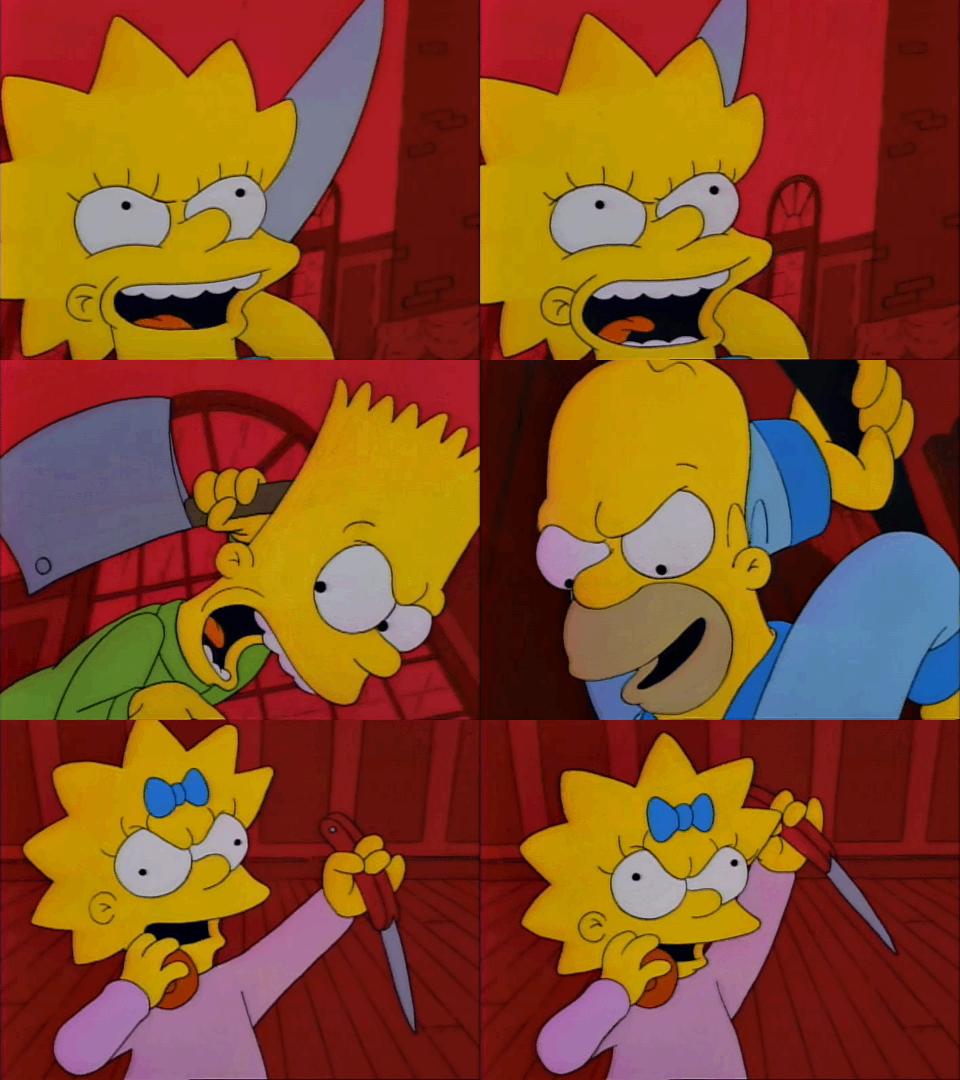
  • What a trip it must have been to turn on primetime to see a cartoon featuring a family wielding sharp objects about to murder each other, three of which being small children, one being an infant. I can’t imagine a family sitcom getting away with that even now in like a fantasy sequence or something.
    203-1
  • Homer on the phone yelling at the realtor is a hall of fame Dan Castellaneta performance. “Well, that’s not my recollection!” makes me laugh every time, like he realizes he screwed up, but he still won’t admit it to the guy he’s still mad at.
  • The house collapsing in on itself is such a great piece of animation.
    203-2
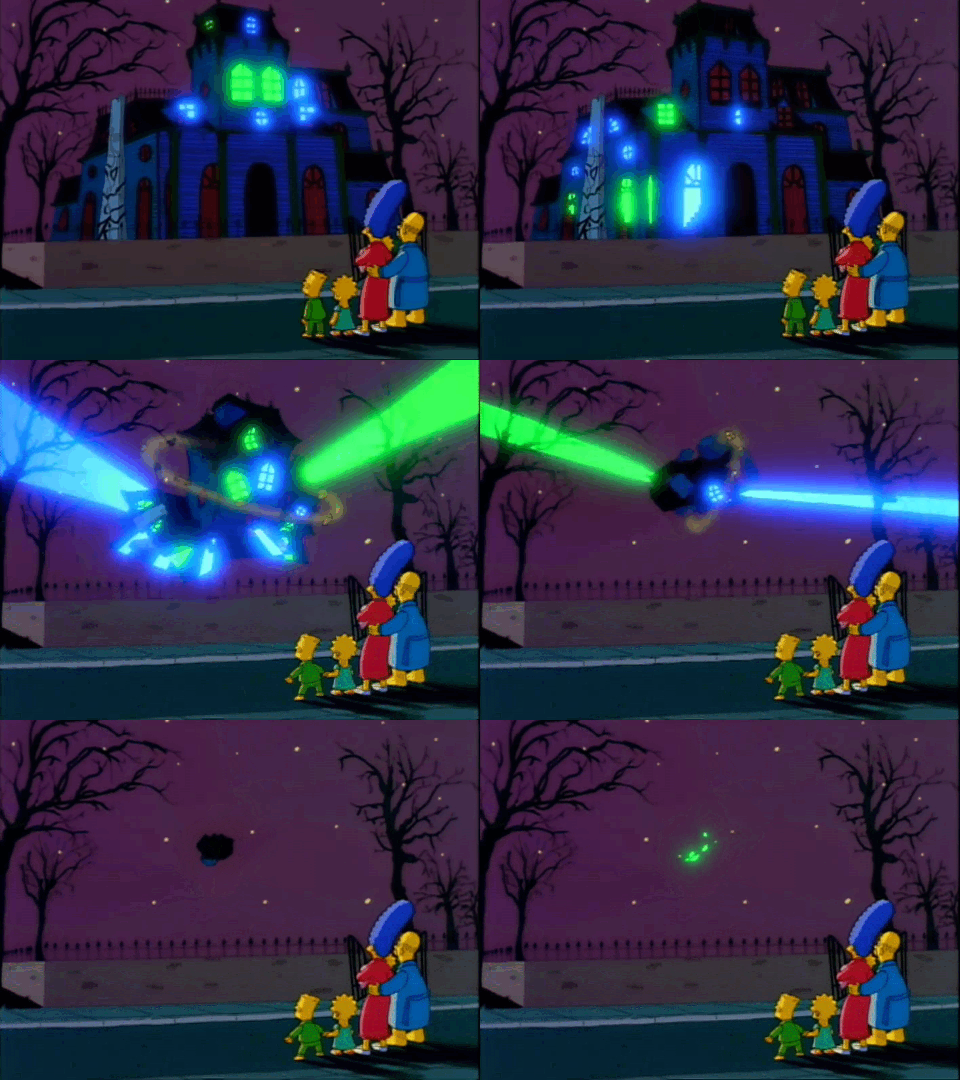
  • Even though there’s no canon within these specials, I like to think that Kang and Kodos’ ensuing malevolence towards Earth was purely based on being insulted by the Simpson family, inspiring them to give up their generous nature. 
  • “I know that to you, we Simpsons are a lower order of life. We face that prejudice every day of our lives.”
  • It’s great that the ever kindly Marge can barely bring herself to make Kang and Kodos feel better about their Pong game. “Your game is very nice,” she half-heartedly assures them as she looks away awkwardly.
  • The Raven segment is so damn beautiful, a tour de force for David Silverman and his crew. Hell, the whole episode is great-looking. I also love Dan Castellaneta’s performance, it’s pretty incredible how much passion and nuance some of his deliveries are, all while staying true to the source material and still feeling true to Homer. The fact that he slips in a “D’oh!” in-between Poe’s words and it still feels seamless speaks volumes.
  • I’ve always been struck by this final shot of Homer at the end of The Raven. It’s such a simple drawing, but it really comes off like he’s just lying there defeated and haunted. It’s great.
    203-3

4. Two Cars in Every Garage and Three Eyes on Every Fish

  • “Keep those mutants comin’, Homer!” “I’ll mutant you…”
  • A big focus in this episode is Mr. Burns’ complete lack of understanding of the common man, an obscenely wealthy plutocrat so far removed from regular society they might as well be another species. There’s the haves and the have-nots, and Burns confidently feels he can make all his problems go away by just throwing money at the have-nots in the form of his comically blatant bribe. When the government watchdog refuses, Burns can’t even process such a thing, accosting the man and shoving bills in his coat (“Take it, you poor schmoe!!”)
  • I also love how we see Burns at his most vulnerable, sorrily getting drunk in his office and aimlessly stumbling about the plant. Despite his immense wealth, he’s not as all-powerful as he wishes he was, perfectly setting the stage to be fed the idea of running for governor by a clueless Homer.
  • Re-watching this episode in 2020 about a morally bankrupt wealthy businessman running for office solely for his own benefit, it definitely reads a little bit differently. Also, the fact that his campaign comes crashing down after his hypocrisy is exposed comes off as ridiculously quaint nowadays. That and the Engineered Public Confession trope need to be permanently retired. Although I love that in this show, when Burns is recorded before his public address openly insulting the public, it doesn’t affect him at all, as he immediately bounces back with his openly pandering defense, and the numbskull masses just eat it up. Now that feels realistic in 2020.
  • “Why are my teeth showing like that?” “Because you’re smiling.” “Excellent! Yes, this is exactly the kind of trickery I’m paying you for.”
  • Homer’s unflinching support for Burns is wholly based on fear for his job. I always loved this line in retort to Marge’s mention of Blinky (“I bet before the papers blew this out of proportion, you didn’t even know how many eyes a fish had!”)
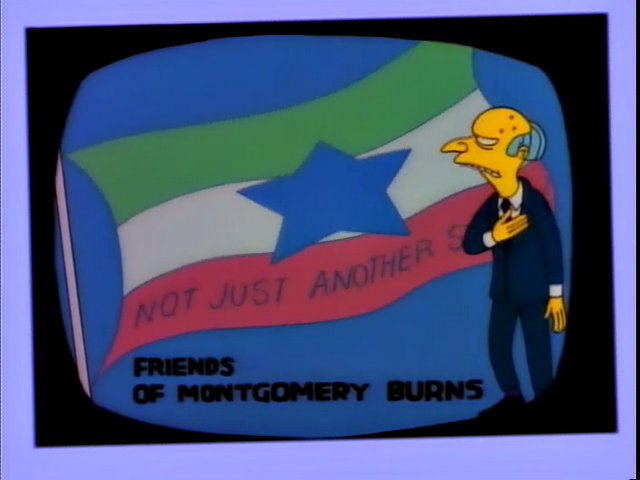
  • “Only a moron wouldn’t cast his vote for Monty Burns!” Perfect slogan, perfect jingle.
  • “Is your boss Governor yet?” “Not yet, son, not yet.” I love that we come off of the energetic montage of Burns’ campaign building momentum, and we land right back in the present, where Homer and Bart, having lived through this in real time, are just waiting for this election to be over and done with.
  • “Hello, handsome!” Homer looks so disturbing here. I also never understood who Burns’ campaign manager was referring to when he said Homer looked like Tyrone Power. Apparently he was a dashing leading man from the golden age of Hollywood. It feels like a reference that Burns himself would make, not his much younger manager.
  • “Mr. Burns, your campaign seems to have the momentum of a runaway freight train. Why are you so popular?” The perfect canned question.
  • “Lisa, you’re learning many valuable lessons tonight, and one of them is to always give your mother the benefit of the doubt.” I love how shrewd Marge is in this ending, remembering Burns’ bullshit defense of Blinky the fish and is more than willing to make him eat his words, literally. It’s one of her most shining moments of the series. Also, that reporter with his jaw dropping is one of the most bizarre and funniest things ever.
  • “Ironic, isn’t it, Smithers? This anonymous clan of slack-jawed troglodytes has cost me the election, and yet if I were to have them killed, I would be the one to go to jail. That’s democracy for you!”
  • The only weak spot in the entire episode is the ending, where Homer frets about Burns’ vow that his life will go unfulfilled. Up to this point, there have been a bunch of Homer-Marge in bed ending scenes serving to wrap the stories up, and they all worked fairly well, but since it’s Homer reacting to something said at the literal end of the episode, and not something that had been set up throughout, it feels weirdly tacked on.

5. Dancin’ Homer

  • It’s pretty great how the set-up of the episode (a Burns company event) is identical to “There’s No Disgrace Like Home,” but the two are still completely distinct and funny in their own rights. They even reused Burns needing cards to remember employee’s names and made a whole new funny joke out of it (“These must be Bart, Lisa and… expecting!” “The cards need to be updated, sir.”) The similar scenarios also allow us to better see Homer’s evolving personality; while “Disgrace” featured him trying to be as straight-laced as possible to appease his boss, here he’s ready and willing to have a fun, drunken night (“This ticket doesn’t just give me a seat. It also gives me the right, no, the duty to make a complete ass of myself!”)
  • “You’re an inspiration to all of us in waste management, sir.” “Well, take your mind off contaminants for one night and have a hot dog!”
  • Two pretty adorable moments before the ball game: Flash Baylor propositioning Marge (or as his teammate calls her, the ”mature quail,”) which Homer reacts in awe by (“You’ve still got the magic, Marge!”) And Lisa being the only one happily standing for her idol Bleeding Gums Murphy’s twenty-six minute national anthem. Speaking of, there’s a lot of the Simpson family having a great time together in the first act, all of them laughing with each other at Burns’ pathetic first pitch. It reminded me of the opera scene from “Bart the Genius.” It’s always great seeing the family genuinely enjoying each other’s company.
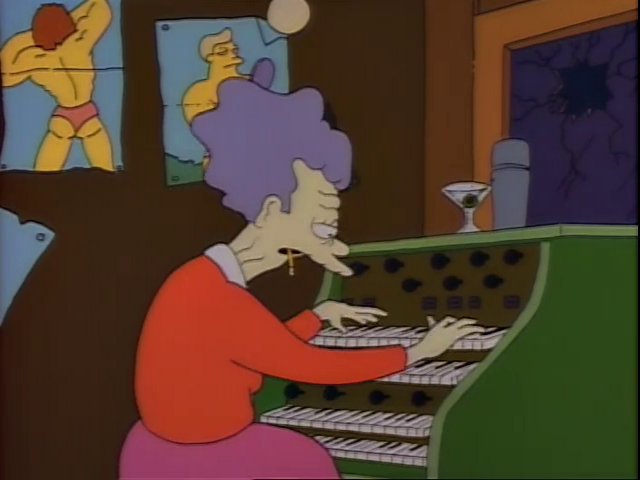
  • The ballpark elderly organist’s room is filled with great touches: a broken window clearly busted by a flyaway ball, pin-ups of sexy hunks all over the walls, and a martini atop the organ. Quite a lot of thought for such a minor set.
    205-1
  • Mr. Burns and Homer make a great team, with their competing jeers and two-person wave. It feels perfectly normal for the two to bond like they do, and it’s great to watch unfold as Homer gets more and more comfortable letting loose in front of his boss.
  • There’s a lot of great animation in this episode, from the baseball game itself, the crowd shots and Homer’s lively dancing. My favorite bit is his reggae-style “Baby Elephant Walk.”
    205-2
  • Ah, the days when they would bother to write a scene where Homer formally leaves work to pursue a new wacky job. And it’s funny too! (“Sure, what would you like? Four years? Five years!”)
  • Tony Bennett has the honor of being the first celebrity to voice themselves, and really, if someone’s gotta be first, why not Tony Bennett?
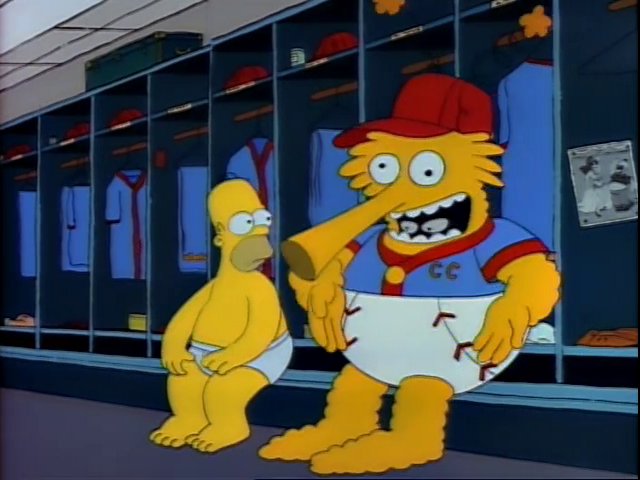
  • Another great background touch: the photo of Homer and Princess Kashmir apparently made its way to Capital City, and is now hanging in one of the player’s lockers.
    205-3
  • “My wife and kids stood by me. On the way home, I realized how little that helped.”

6. Dead Putting Society

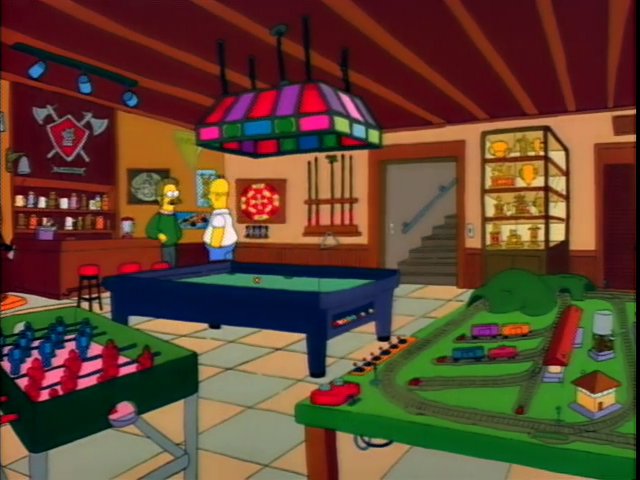
  • We’ve seen glimpses of it before this, but this opening just firmly cements the Homer/Flanders relationship: a man who is completely open and giving, almost to a fault, but all Homer can see is someone who makes his own feelings of inadequacy and personal failure burn all the brighter. If he weren’t so insecure, he and Ned would be great friends, and he could hang out in his man cave, drinking imported beer from Holland as much as he wanted.
    206-1
  • Pretty sweet moment where Marge refers to herself as her husband’s “best friend” while they’re talking in bed together.
  • Another cemented relationship shown here is Flanders and Reverend Lovejoy. I love the balance it strikes that while clearly Lovejoy is absolutely (and rightfully) frustrated by Ned calling him so late, he still gives him a context-appropriate Bible passage to ruminate on before immediately handing the phone over to his wife to hang up. He’s a man of God who kind of gives a shit, which is much more interesting than one of the two extremes.
  • I’ve always loved the little animation touch of Ned’s letter fluttering under the Simpson doorway as he bends down to drop it off.
  • Just like last episode, it’s always great seeing the Simpsons having fun together, and them all laughing uproariously over Ned’s heartfelt letter may be the ultimate example (“Bosom!”) Marge puts on a serious face, but she proves to be not so above it all as she leaves to the room to giggle to herself.
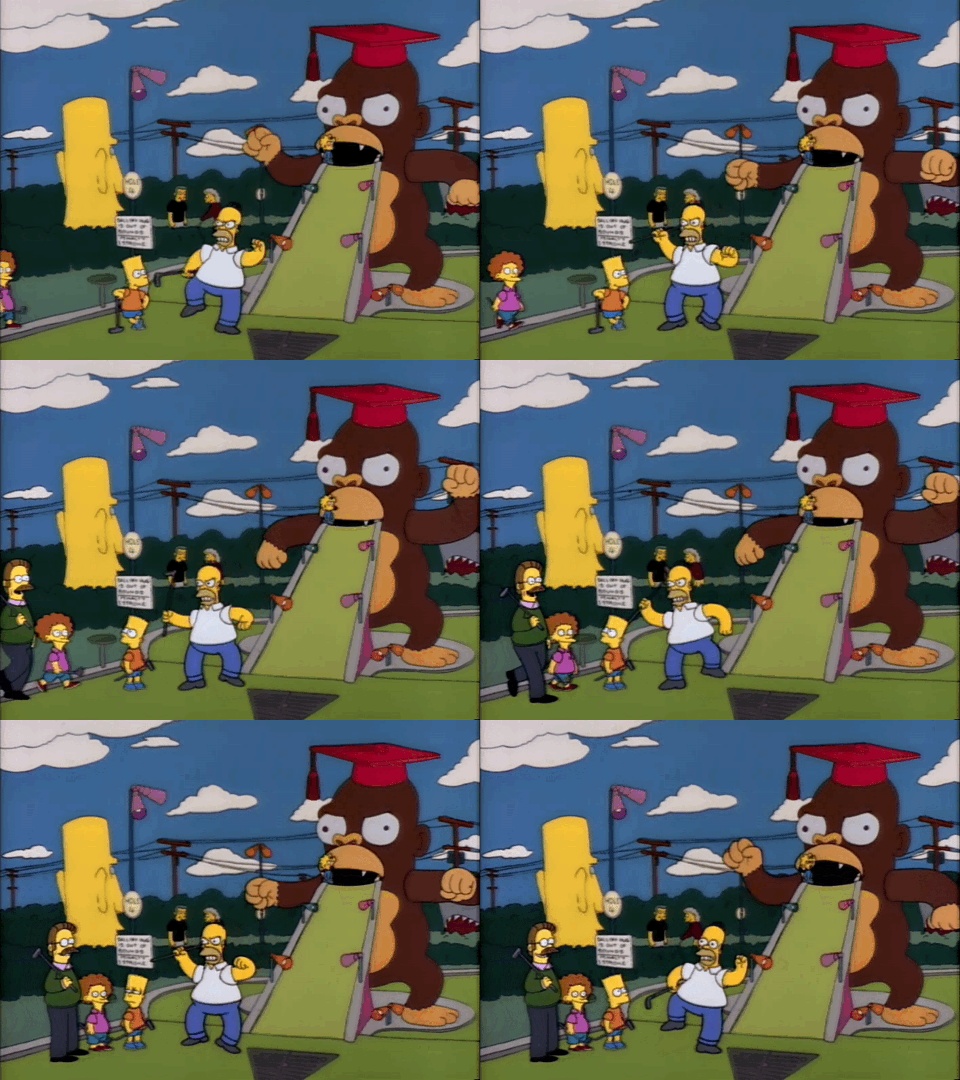
  • As a kid, I always wished we had a mini-golf course like Sir Putts-a-Lot. I also love this moment where a frustrated Homer mimics the motions of the mechanical Kong obstacle (that also has a motorboard. Professor Kong?)
    206-2
  • One of the best things in this episode is just how whipped into a frenzy Homer is throughout the whole thing, completely blinded by his jealousy, doing whatever he can to one-up his seemingly perfect neighbor in at least one thing. I love how we see him sitting and watching Bart as he’s sleeping (seemingly all night), this sort of obsessive parenting would be almost disturbing if it weren’t over something so frivolous and dumb as a miniature golf tournament.
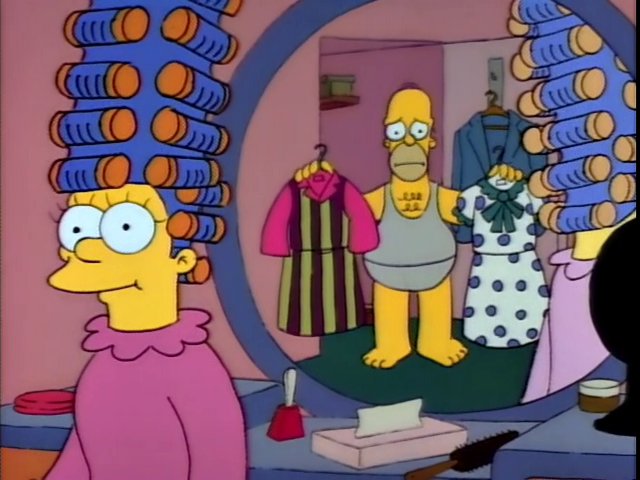
  • Jeez, was Marge blind when she was picking out these outfits? Plus she only wears her green dress and hat to church anyway. Maybe these got buried in the back of the closet for a reason.
    206-3
  • “Homer, I couldn’t help overhearing you warping Bart’s mind.” “And?”
  • Honestly, Bart’s right on the money with the one-hand clapping thing. And yes, a tree falling in the woods does make a sound. Take that, Lisa.
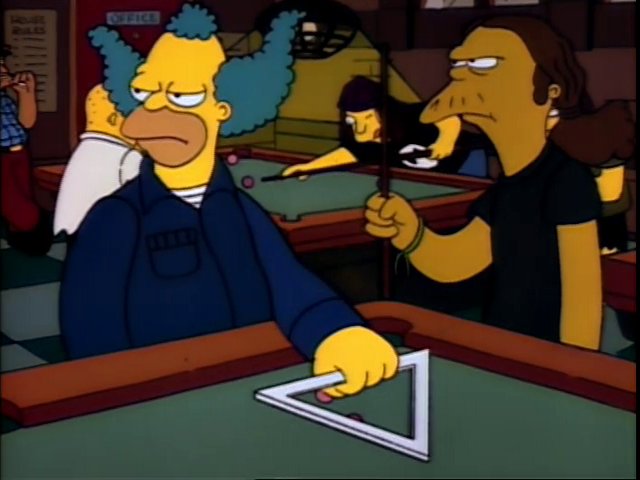
  • C’mon, kids, disgruntled civilian Krusty just wants to play pool at this seedy bar. Is that so wrong?
    206-4
  • I love the British announcer at the mini-golf tournament. He’s not really saying any jokes, but the seriousness of which he takes his job and the dedicated coverage he gives to these two dumb kids whacking putters is both incredibly funny, and actually makes the third act feel like it actually has weight and some real stakes, which makes it even funnier when Todd and Bart impromptu just agree to forfeit together.
  • Of course, Ned is still in good spirits until the very end, finding the stunt of he and Homer mowing their lawns in dresses amusing, reminding him of “his old fraternity days.” Man, the days of Ned being like a normal guy were weird. Nowadays, there’d be some joke about him going to a Christian college where you were forbidden from looking at a woman for more than five seconds or something.

7. Bart vs. Thanksgiving

  • Nothing beats opening your Thanksgiving special with a close-up shot of removing turkey innards.
  • Dan Castellaneta and Harry Shearer are so great as Bill & Marty, two yammering numskulls who frequently just talk without thinking. Their questioning of their own banter during the Thanksgiving parade is one of many great moments of the series of them breaking their on-air personas (“Boy, now I know how the pilgrims felt!” “What are you talking about, Bill?”)
  • Bart “helping” Marge is such a great scene, as I definitely remember many instances of me asking to help my mom in the kitchen as a kid that played out basically just like that. The animation of the cranberry sauce slowly dropping out of the can is great, as is the perfect timing between Bart walking away and the sauce quickly turning to red mush.
  • I love those well-groomed go-getters of “Hooray for Everything” and their catchy “Dancin’” song. Their exit from the stadium prompts one of my favorite random one-off lines of the entire series (“In the Silverdome, now ablaze with flashbulbs, as `Hooray for Everything’ leaves the field!  Of course, a stadium is much too big for flash pictures to work, but nobody seems to care!”)
  • The pacing of this episode is so unique. The first act is nearly ten minutes and it’s just the family getting together for Thanksgiving dinner. Everything feels so personal, as the show makes jokes about the headaches and frustrations of extended family reuniting under one roof. The scene where we see Maggie sitting alone on the couch as Marge walks in and out is just incredible and I’m not even fully sure why, but I love that they decided to devote so much screen time to such a small moment.
  • Great touch: one of the guards at Burns’ estate is reading Les Miserables while eating his meager Thanksgiving rations.
  • Really great pan of Bart crossing over to the wrong side of the tracks (“Yes! We Have Rot Gut!” is a very welcoming sign). I also love the glee in Bart’s voice marveling he’s entered the bad side of town.
  • “Twelve bucks and a free cookie, what a country!”
  • Kent Brockman makes his first live appearance, doing a hollow fluff piece (the type of work he’d later describe that act to “tug at the heart, and fog the mind”) on the homeless shelter (“Thanks for your help, fellas. This reporter smells a local Emmy!”)
  • I like that the show encroaches on “very special episode” territory in Bart feeling bad for his homeless chums, but it cuts through it when the two bums don’t hesitate for a second in taking money from a ten-year-old.
  • Bart’s nightmare upon coming home is absolutely beautiful, maybe the most visually striking sequence the series had done at this point. It just exemplifies how the series utilized the great power of its medium to create something so visually evocative, all while serving the emotions of the story. Also, all the finger pointing at Bart reminded me of the ”Deep, Deep Trouble” music video, which if you haven’t seen it, is definitely worth a watch. “Do the Bartman” has the nostalgia factor, but “Trouble” is just as good, if not better, with some really quirky animation that manages to make even seeing Bart get executed by his family and sent to Hell fun to watch.
  • The ending is genuinely sweet and feels earned, both with Bart finally apologizing to Lisa, and Homer looking on from the bathroom window. And so, the family reunited gathers to attempt to celebrate the holiday once more (“Oh Lord, on this blessed day, we thank Thee for giving our family one more crack at togetherness.”)

Season One Revisited (Part Two)

7. The Call of the Simpsons

  • Pretty strange that the very first “Shut up, Flanders” actually came from Bart complaining about Rod.
  • Albert Brooks really is the perfect Simpsons guest star, with all of his characters being wonderful smooth-talking manipulators in some form or fashion. Big Bob isn’t as legendary as Jacques or Hank Scorpio, but he totally dominates the entire first act, buttering Homer up even after all but telling him he’s a broke loser who can only afford his shittiest RV (“Simpson, you’ll never own a better RV, and I don’t mean that in a good way. I mean, literally, buddy, this is for you, you know. It’s this or a wagon.”)
  • “The Simpsons have entered the forest.” Lisa immediately nailing her deadpan lines.
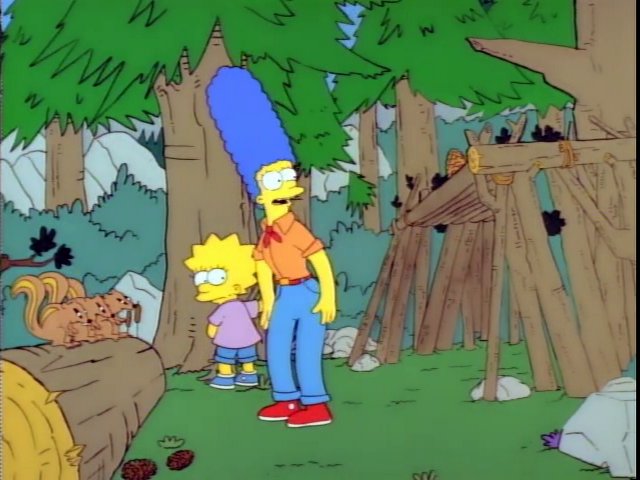
  • While Homer and Bart are out starving and/or freezing to death in the wilderness, the Simpson women fare much better for themselves, making a little home-away-from-home. Not only do they use a large branch as a broom, but Marge also arranges live squirrels as little knick-knacks, as they just stand there motionless, making peace in their new lot in life as decorative pieces in this deluded housewife’s makeshift outdoor home. This episode is silly.
    107-1
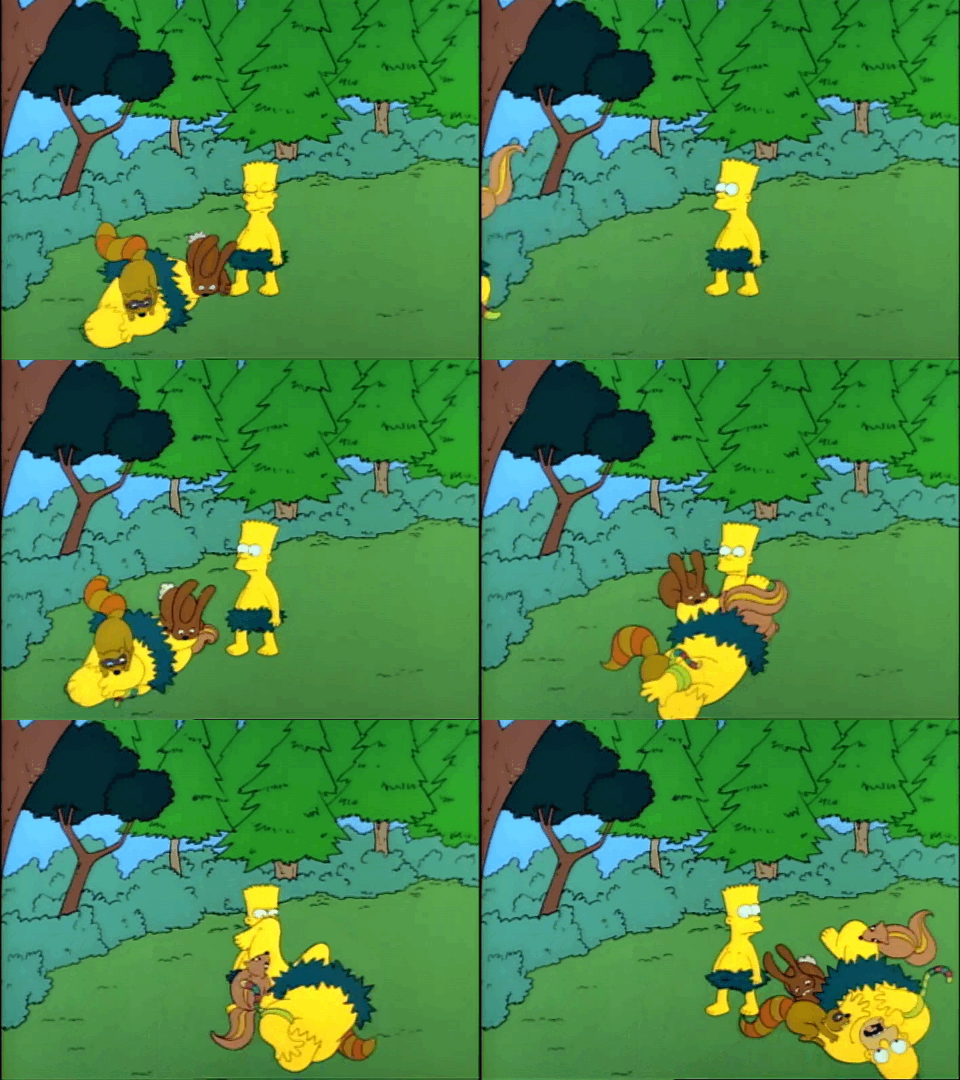
  • The rabbit getting flung out of Homer’s snare is the best joke of the entire episode, and even though the visuals are great, the sound design is what really makes it tremendous.
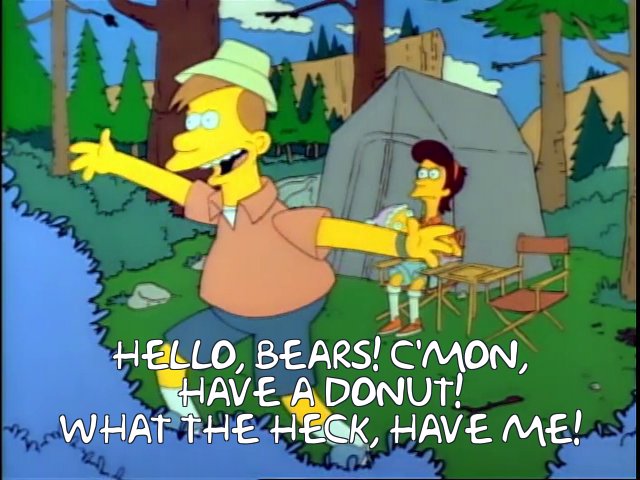
  • I watched Grizzly Man a couple months ago, and I felt kind of bad that I was thinking of this scene by the ending.
    107-3
  • This is the first episode to lampoon the vile phenomenon that is the media circus, and three decades later, it still feels like fresh satire.
  • It’s such a small moment, but I love when a reporter asks Marge if her marital relations with “Bigfoot” are “brutish,” she smiles briefly before asking if her answer will be on TV.
  • The ending where a team of scientists can’t tell if Homer is man or monster still feels dumb to me, but Marge parroting one of the eggheads, calling Homer her “brilliant beast” is pretty sweet.
  • In0between Albert Brooks at the beginning and the media circus at the end, the middle “lost in the woods” chunk isn’t really that interesting, outside of a few choice great moments like the rabbit in the snare. Homer and Bart’s woodland shenanigans mostly feel like they’re out of a Nickelodeon cartoon (well, except for Bart proposing he and his father hang themselves), and I have no real sentiment toward the Maggie and the bears storyline. This is definitely my least favorite of season 1.
    107-2

8. The Telltale Head

  • Our first official Krusty line is him screaming “KILL HIM!!” at a young child as part of a vicious, bloodthirsty mob. Season 1 really is pretty hardcore.
  • “We’ll die together, like a father and son should.”
  • “All these questions… is a little blind faith too much to ask?!”
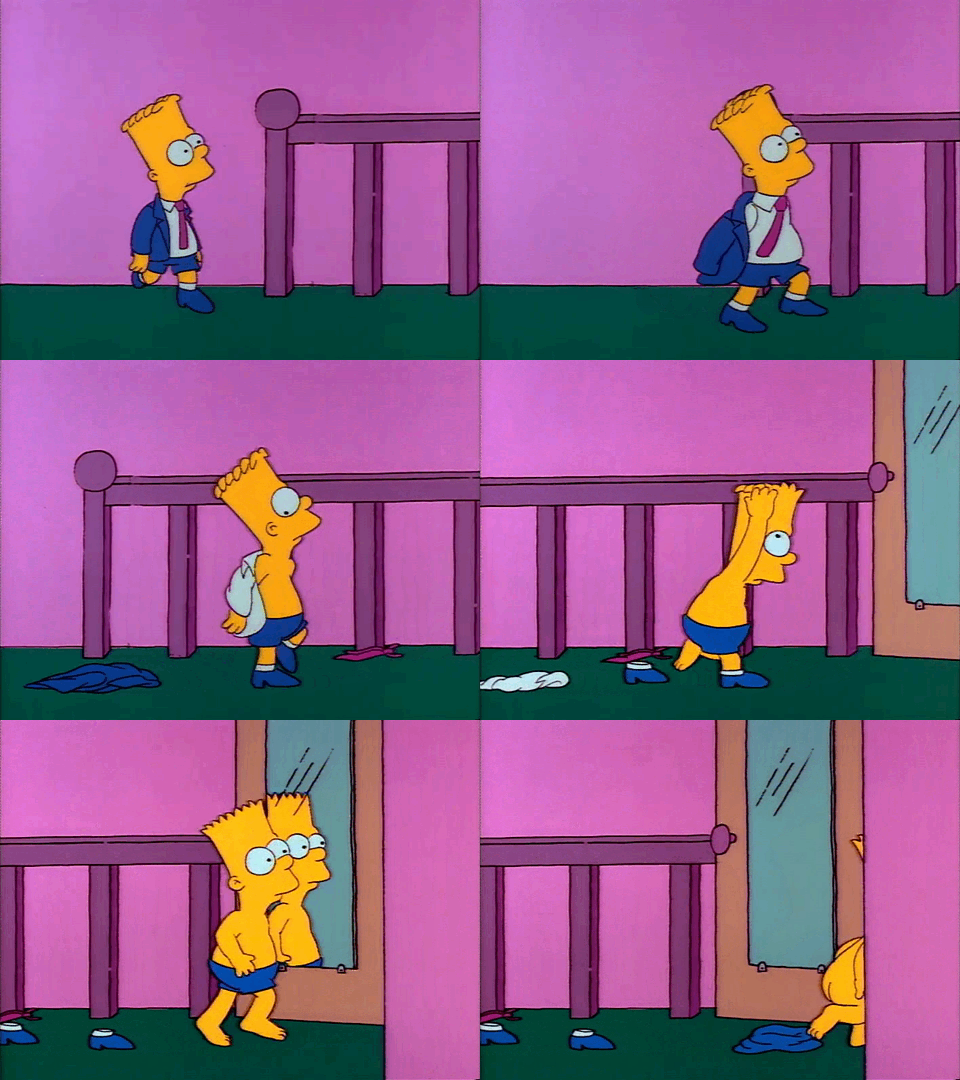
  • I’ve always loved the sequence of Bart getting undressed in the hall, it’s so well executed. Speaking of, it’s pretty incredible how quickly the animation quality has shot up from the first few episodes to now. By the end of the season, the show was nearly firing on all cylinders visually, leading right into season 2, where things only got even sharper.
    108-1
  • I like the two instances of Homer and Bart echoing each other through the episode. First is outside of church, when the two are confronted by Marge, when she asks if they were going to sneak a walkman into church (Bart) or planning on staying in the car to listen to the game (Homer), both sheepishly reply, “Maybe,” signaling to the like-mindedness of the two characters. Later, Homer offers Bart a kindly aphorism, “Share the wealth, that’s what I always say!” Bart mimics his father in offering to pay for the bullies’ Squishees, only to find they stole a bunch of other stuff as well. With Bart’s admiration of Homer in place, we see why his “advice” on how being popular and accepted sunk in with him so much.
  • The best one-off character of the season is the owner of the Candy Most Dandy shop. This is a man who hates children.
    108-2
  • Homer is agog reading about “The Stealth Bowler,” a bowling ball with a liquid center. Curious if that’s actually a real thing, a quick Google search suggests no. According to a random blog post specifically referencing this episode, “A liquid centre in a bowling ball would tend to retard the rolling motion of the ball, decreasing its power and accuracy simultaneously.”
  • I love how when Bart grabs Snowball II to muffle the cat’s scream, we hear only one half of its screech, then when he lets it go outside, we hear the second half, almost like he paused and unpaused it.
  • In 1990, the idea of a population getting whipped into a violent frenzy over the desecration of a statue of a problematic historical figure was probably a very amusing exaggeration at the time. In 2020, however… We also get a small taste of the dismissal of actual history for the sake of embellished idol worship with the Jebediah Springfield documentary, where the narrator offhandedly mentions how new evidence suggests that Jebediah was most likely killed by the bear, rather than vice-versa.
  • I have no idea why they posed Homer so daintily sitting here, but I love it all the same.
    108-3
  • It’s pretty amazing thinking back on how concerned parents and nagging media groups were coming down on this show for Bart being a bad role model for children, while in the show, he’s really just a believable little kid. He’s a bit of a brat, but despite his snark, he still has great capacity for shame (“Bart the Genius”) and empathy (“Moaning Lisa.”) This episode almost plays out like an after-school special of Bart stepping in with the wrong crowd and learning his lesson by the end. Hell, the most dangerous semi-imitable prank he pulls in season 1 is dropping a cherry bomb in the toilet, and his punishment for it is literal deportation and being abused and tortured by two dirty Frenchmen.

9. Life on the Fast Lane

  • I like how even Bart can’t help but admit that Lisa’s birthday macaroni art is pretty damn impressive.
    109-1
  • “Good morning, consumers. The Springfield Mall is now open for your spending needs.”
  • Among the list of Homer’s awful birthday presents Patty & Selma bring up, they mention “the Connie Chung calendar.” At the time, Chung was a CBS news reporter. Was she viewed as an attractive woman from television, or is that a Connie Chung calendar exists at all the gag? I’m not entirely sure.
  • We get a perfect duality of Bart at the dinner scene. He bickers with Lisa about which gift their mother loves most, where Lisa touches a nerve that she hasn’t used Bart’s perfume. Bart then asks his mother with genuine concern why that is. When Marge quickly bullshits an excuse that she’s saving it for a special occasion, Bart is quick to fire back (“What the hell are you talking about? There’s gallons of it!”) Marge covers her ass again (“But this occasion is already so special, if we make it any more special, we might end up making it less special.”) The naive kid that he is, Bart buys this, and rubs it in Lisa’s face, who simply groans, “Oh, brother.” What a lovely scene.
  • The bowling ball absolutely crushing the cake is so well done. I love how quickly the waiters book it after it happens. There’s not even an awkward pause, they just leave immediately.
    109-2
  • “The holes were drilled for your fingers!” “I wanted to surprise you! I couldn’t chop your hands off and bring it to the store, could I?”
  • I love how casually Marge admits to the bowling alley attendant that she’s only there out of spite.
  • Albert Brooks as Jacques is brilliant, of course. I love the interplay between him and Julie Kavner, as it’s clear that they recorded a lot of their scenes together. There’s a bonus feature on the season 1 DVD of outtakes with the two of them, where Brooks keeps ad-libbing, cracking up Kavner and the rest of the crew. I can’t find it online anywhere, but if you’ve got the DVD, do yourself a favor and rewatch it.
  • Homer tending to the kids by himself feels so real, trying to put on a brave face, but family time quickly proves awkward for him (“Does the time always drag like this?”) But he does his damn best; his nighttime checklist and the four handing off the pizza box to chuck in the trash is pretty adorable.
  • “I’m a married woman!” “I know, I know. My mind says stop, but my heart, and my hips, cry proceed!”
    109-3
  • Another perfect first appearance: Helen Lovejoy, the self-admitted “gossipy wife of the minister.” She’s the perfect false-faced “friend,” claiming to be well intentioned while clearly being anything but. Jacques is right, “let’s hope something runs over her.”
  • I’m still dumbstruck by the dead serious tone of some of the scenes in the last act. Homer picking up the autographed glove, pain clear in his voice as he reads the inscription, “For Marge?” Later, he approaches his wife in the morning in the kitchen, tentatively reaching for her hand, but loses his nerve and grabs the lunchbox instead. He feebly attempts to finally show appreciation for Marge through her PB&J sandwiches, but ends his childish talk with a grave conclusion (“I’ve just never mentioned it. But it’s time you knew how I feel. I don’t believe in keeping feelings bottled up. Goodbye, my wife.”) It’s really chilling. I can’t think of any other scene in the whole series that has this intense of a tone.
  • “I’m going to the back seat of my car, with the woman I love, and I won’t be back for ten minutes!”

10. Homer’s Night Out

  • In one of the earliest continuity Easter eggs, we see Bart’s piggy bank has been hastily taped back together, after being previously smashed by a crazed Homer desperate for beer money in “Homer’s Odyssey.”
  • The two bathroom scenes with Homer and Marge six months apart are so great. You get your quick storytelling in Homer’s former assistant (now supervisor) meeting and then getting engaged to a coworker, as well as some lovely interplay between husband and wife, showing them at their best before the episode tears them apart.
  • “Where’s my spy camera? Where’s my spy camera? Where’s my spy camera?!”
    110-1
  • Have we ever seen the Rusty Barnacle after this? Once we were introduced to the Sea Captain and the Frying Dutchman, it seems redundant Springfield would have two nautical themed seafood restaurants.
  • I love how absolutely miserable the groom and his father are at their own bachelor party (“How do I tell you this, my boy? We’re in hell.”)
  • As Princess Kashmir makes her dramatic entrance, we catch a glimpse of this angry dishwasher. One can only imagine how frosty things were when Kashmir was hiding back there.
    110-2
  • It’s quite jarring hearing Martin eagerly ask, “Who’s the sexy lady, Bart?”
  • Homer becoming a town-wide phenomenon still feels really silly. It would be one thing if he were the subject of ridicule, like it’s this big dumb fat guy cavorting with an exotic dancer, which at times that kind of seems to be the case (outside the schoolyard, the most realistic scene is the women at the aerobics class giggling at the photo on the bulletin board.) But in the third act, men the town over seem to be un-ironically cheering on Homer as this party animal stud.
  • Barney’s apartment is quite the sight (“If you get hungry in the middle of the night, there’s a open beer in the fridge.”)
    110-3
  • “A plant employee carrying on like an over-sexed orangatang in heat! This is a family nuclear power plant, Simpson! Our research indicates that over fifty percent of our power is used by women!”
  • Teaching Bart his lesson involves his father dragging him to every gentlemen’s club in town, with him eagerly trying to peek over the crowds to check out the shows (“Bart!! I said look at the floor!!”)
  • It’s great how Marge’s plan to teach Bart that women aren’t vapid sex objects basically backfires as Shauna Tifton is revealed to pretty much be just that (“My pet peeve is rude people, and my turn-ons include silk sheets and a warm fireplace.”)
  • “How does he do it, Smithers?” “He’s a love machine, sir.”

11. The Crepes of Wrath

  • Homer incapacitated at the bottom of the stairs for hours on end is so pathetic (and sadly, more relatable as I enter the wonderful world of random aches and pains in your 30s.) Dan Castellaneta’s shudder before weakly imploring, “The boy… Bring me the boy…” is so damn good. The performers are just getting better and better as the season goes on.
    111-1
  • I understand why they made Agnes Skinner a kindly, doting mother, a source of embarrassment for Principal Skinner for the kids to exploit. I don’t think we saw Agnes again until what, season 5? I wonder what the impetus was to wildly shift her character after all that time.
  • I love how clear the show makes it that as bad as Bart may be with his pranks and mischief, Principal Skinner and the school staff are even worse. Skinner is more than willing to kick Bart out of the country through this dubious exchange program just so he won’t have to deal with him anymore, regardless of any danger the child may encounter abroad (“But Bart doesn’t speak French.” “Oh, when he’s fully immersed in a foreign language, the average child can become fluent in weeks!” “Yeah, but what about Bart?” “I’m sure he’ll pick up enough to get by.”)
    111-2
  • The parade of abuse on Bart starts right away when a flight attendant grabs him and literally chucks him through the airplane doors on the tarmac.
  • Skinner’s speech welcoming Adil to the school is just wonderful, a backhanded call for acceptance while still being incredibly jingoistic and pandering (“You might find his accent peculiar. Certain aspects of his culture may seem absurd, perhaps even offensive. But I urge you all to give little Adil the benefit of the doubt. This way, and only in this way, do we hope to better understand our backward neighbors throughout the world.”)
  • “How can you defend a country where five percent of the people control ninety-five percent of the wealth?” That margin’s only gotten thinner since then. We should’ve listened to Adil.
  • “Your paperthin commitment to your children sends shivers down my spine!”
  • We can add international espionage to the list of hot button topics covered in the first season of this silly little cartoon show that I’m sure many parents at the time figured was family friendly, joining the likes of infidelity, depression and sex work.
  • I love that despite knowing there’s antifreeze in the wine, Bart still gulps it down in one go.
    111-3
  • “He brought us gifts! His first unselfish act!” Lisa isn’t featured much in this episode, but she gets a fair share of great lines.

12. Krusty Gets Busted

  • The Krusty the Klown Show is children’s entertainment at its most depraved: loud, obnoxious and pandering to children’s most basest impulses. That his daily call-and-response concludes with kids pledging to kill themselves if the show ever went off the air is another line I can’t believe they got away with, and perfectly reflects the idol worship of the young and impressionable.
  • Though first appearing in “The Telltale Head,” Apu becomes more fleshed out here, portrayed as a friendly, but mostly apathetic retail worker who cares just enough to make informed small talk with his regular customers (“What’s the matter, sir? Never have I seen you so unhappy when you are purchasing such a large quantity of ice cream.”) He later threatens two small children who enter his store that he’s “armed to the teeth.”
  • In describing the assailant, Homer claims he was a man with “big red hair,” which always struck me as odd. Had they not finalized Krusty’s design before recording the episode? It makes sense to describe a clown’s hair as red, but I wonder if someone caught it too late and it was too late to fix it. They could have just dubbed “green hair,” even if the lip sync would have been wrong, it wouldn’t have mattered. Ah well.
  • The feds busting into Krusty’s house culminating in the biggest gun ever being pointed point blank at his head is such a great sequence. This episode has the best animation of the season, it’s really beautiful throughout.
    112-1
  • It’s honestly very sweet that Homer attempts to conceal the truth from Bart about his hero, trying to send him off to bed before the news announcing Krusty’s arrest, and later his apprehension of fingering the clown in court in front of his poor son.
  • “Earlier this evening, the Springfield SWAT team apprehended the TV clown, who appears on a rival station, opposite our own Emmy award-winning Hobo Hank.” A throwaway line, but such a fantastic joke of this blatant editorializing by a struggling network getting in a potshot at their competitor in a time of crisis.
  • I don’t think I ever noticed that magazine text before. Yet another thing I’m surprised they slipped by 1990 censors.
    112-2
  • The report on Krusty’s life and career is fantastic. The heart attack scene is one of the first true hall-of-fame animation moments as Krusty hangs on for dear life to a crowd of braying children. Even Kent Brockman can’t help but chuckle at it. But just as great to me is the clip showing Krusty post-recovery, showing him as a “changed clown,” socking his trusty sidekick in the face. How slow the pie is smushed into his face followed by how quickly the violent retribution comes makes it all the funnier.
    112-3
  • I can’t imagine how bizarre and hilarious it must have been to hear Sideshow Bob finally open his mouth and Frasier Crane’s calm, soothing voice came out. I only feel like this reveal might have hit even harder if a silent Bob had appeared in a couple more episodes throughout season 1, but he and Krusty were only featured incredibly briefly in “The Telltale Head.”
  • I like that despite his calls for a more intellectual, stimulating program that will enrich young minds, Bob is just as crass a capitalist as Krusty, only wanting to veer away from the chintzy Krusty keychains and mugs to more “sophisticated” fare like collectors plates and commemorative coins. He may have slapped a new coat of paint on his former tormentor’s media empire, but he’s still just as greedy and vain as he was.
    112-4

13. Some Enchanted Evening

  • One of the things most interesting about this show is noticing which scenes were survivors from the original production of the pilot (the biggest giveaway being those damn gradient backgrounds). There are some wonky remainders from the first cut, but most of the episode is as good as the show has ever looked up to this point. I assume the reshoots for this episode occurred at the very end of season 1’s production, and it’s clear the crew had figured out what they were doing at that point and pulled off a great looking episode.
  • “You’re a pig. Barney’s a pig, Larry’s a pig, we’re all pigs, except for one difference. Once in a while, we crawl out of the slop, hose ourselves off and act like human beings.”
  • Marge’s lion scream is so bizarre. The only other time this happened was in “Homer Alone,” it definitely doesn’t feel like it fits within the world of the show.
    113-1
  • “Son, there’s not a woman alive who can resist a man who knows how to mambo!”
  • At least twice I’ve seen this clip of Ms. Botz threatening Bart float around on social media with people marveling at the fluidity of the animation mostly unseen on this series, especially within the last decade or so. And yes, it is a beautiful piece. There’s certain elements of the early years of the show that I kind of miss, and one is the looser feel to how the characters move and react. There’d be plenty of great expressions and moments of more “realistic” animation acting as the show went on, but there’s a part of me that actually does miss some of the goofier stuff of season 1 and 2.
  • Case in point, Lisa and Maggie dashing off-screen at the end of this gif. It’s just so silly, but I kind of love it. I also love Homer and Marge’s saunter out the door, and as it slams shut, you can see the kiss mark left by Marge attempting to kiss her husband goodbye in a scene from the original version of the pilot.
    113-2
  • I love the animation of the guy at the desk on “America’s Most Armed and Dangerous.” The incredibly choppy movement reminds me of animations from the Konami arcade game for some reason.
    113-3
  • There’s some genuinely unsettling moments after the Ms. Botz reveal, with her stalking her prey down in the basement, and when Lisa is desperately on the phone calling for help and gets pulled by the phone cord out from under the table. It’s a goofy cartoon, yes, but the reality of the situation, three innocent children being victimized by a remorseless thief, still shines through a bit.
  • “You’re a smart young man, Bart. I hope you’re smart enough to keep your mouth shut.” “He isn’t!”
  • God bless that blue thing with the things. You saved Homer’s marriage.
    113-4
  • “Lord help me, I’m just not that bright.” Once again, it’s much funnier when Homer acknowledges and is shamed by his own shortcoming and lack of intelligence. And it makes it all the sweeter when Marge is able to boost him up (“The way I see it, you raised three children who could knock out and hog-tie a perfect stranger. You must be doing something right.”)

Note: There will be week breaks between seasons, so Season Two Revisited Part One will be up on August 3rd.

Season One Revisited (Part One)

To introduce again, this “Revisited” series will chronicle my rewatching of the show’s first eleven seasons nearly ten years since starting this blog, consisting of off-the-cuff observations, notable quotes and other related remarks. I decided to do these in parts to keep these posts from being super long. Don’t expect any in-depth analysis, as I’m trying my best not to repeat the same comments from a decade ago. Feel free to watch along!

1. Simpsons Roasting on an Open Fire

  • First laugh of the series: “Pardon my galoshes!” I don’t know why I love that line so much.
  • Principal Skinner’s character quirk of mispronouncing words didn’t pop up much, but it lasted quite a while (“Lisa’s Pony” is the last time I recall it happening.) Probably for the best. I also don’t think I noticed that after correcting “medlies,” he gaffes again, introducing some holiday “flavorites.”
  • Homer falling off the roof and the kids applauding him as he gets up is such a wonderful human moment.
  • It’s honestly pretty adorable that Bart wants to get the “MOTHER” tattoo. After Marge firmly told him no, he genuinely believed that getting ink in her honor would soften her heart.
  • Pitch perfect satire in Mr. Burns proudly announcing increased safety protocols at the plant have not affected upper management pay raises, but there will be no Christmas bonuses for the other “semi-skilled” workers.
  • Lisa is posed just like a Life in Hell rabbit. Season one is full of little design elements of artists attempting to mimic the Matt Groening style.
  • “I get the feeling there’s something you haven’t told me, Homer.” “Huh? Oh, uhh… I love you, Marge.” “Homie, you tell me that all the time.” This first episode solidly affirms Homer’s character: he’s a complete dolt who’s always dealt a bad hand in life, but he’ll never stop fighting tooth and nail for the love and respect of his wife and children. Homer is at his finest when he’s doing absolutely ridiculous and moronic things, but for completely earnest reasons, like nearly killing himself jumping Springfield Gorge. The biggest trait that “Jerkass” Homer lost was his sense of shame, which drives him through most of this first episode.
  • The Santa instructor looks like such a hardass. The gag is that Santa school is serious business, but his formidable presence behind Homer judging him adds to it so well.
  • One of the show’s greatest tricks is when it mocks cliche schmaltz while being authentically endearing, which is especially the case in this episode, lampooning sickeningly sweet Xmas specials. Upon discovering his father’s mall Santa secret, Bart earnestly smiles, “You must really love us to sink so low!”
  • It’s interesting that, upon first airing, Lisa’s thoughtful defending of her father to Patty and Selma could be viewed as a single “child talks like an adult” gag, rather than being true to her character. But it’s great either way.
  • Sitcom convention is immediately bucked as Homer loses big time up until the very end. His “win” in bringing home the new family dog is completely unintentional, as he only took pity on the mutt for being as big a failure as he is.

2. Bart the Genius

  • Ah, the season 1 opening. Whatever happened to these guys? Did they ever catch that bus?
    Also, as far as chalkboard gags go, “I WILL NOT WASTE CHALK” is a pretty perfect one to be the first.
  • A season 1 staple of the Simpson home was having portraits of characters all over the walls, but here, past two corridors, we see a picture frame of two more corridors. Pretty trippy stuff. Another artistic staple is all of the backgrounds having that weird, washed out gradient look. I don’t really know what they were going for, but I’m glad it was changed for season 2. They look awful.
  • As I came upon this heavily memed shot of Skinner, I realized this re-watch is taking place after many recent years of non-stop Simpsons shitposting, so I’m sure I’ll spot many, many more familiar shots like these that have been re-appropriated a billion times.
  • “What are you looking at, Bart? Are those naughty dogs back again?” One of many lines I’m surprised they got away with in 1990.
  • “He’s a good boy now and he’s getting better, but sometimes even the best sheep stray from the flock and need to be hugged extra hard.” “That’s exactly the kind of crapola that’s lousing him up!” It’s funny how “Itchy & Scratchy: The Movie” has Homer & Marge switch their good cop/bad cop parenting styles, and both still feel true to character.
  • “What do we need a psychiatrist for? We know our kid is nuts.”
  • “Pay attention, because if you do, one day, you may achieve what we Simpsons have dreamed about for generations: you may outsmart someone!” Another early example of a main theme of the series: the Simpson family’s hopeless desire to be looked upon favorably in an uncaring society.
  • Everything about the gifted school is perfect: the teacher’s snobbery toward “low” art like comic books, their cold apathy toward the lives of the class hamsters, and a group of ten-year-olds thoughtfully contemplating fate vs. free will, while next period they gleefully swindle the new kid out of his lunch like normal awful children. “Discover your desks, people!” sums up the enlightened, pompous bullshit perfectly. And if them being full of shit wasn’t clear enough, the episode doesn’t end with Bart being exposed as a fraud, but only when he admits it himself. The Enriched Learning Center for Gifted Children was duped just as easily as Springfield Elementary.
  • Episode two and we’re already seeing how thoughtful these scripts are. Act three opens with Bart reading the Radioactive Man comic he swiped from class. Homer is surprised by this (“Comic books? Guess you don’t want to overheat the old noggin, eh?”) Later, we see Bart’s crude graffiti, once subject of outrage by Skinner, is now behind velvet rope as a landmark to Bart’s supposed brilliance. Both of these small callbacks not only make the story feel more complete, but play into the themes and character motivations as well. Especially the latter point, since of course Skinner would try to shamelessly advertise that a genius student attended his school for his benefit.
  • The acting is so subtle, but upon reading Bart’s confession, you can see the soul leaving Dr. Pryor’s body as he realizes he’s been had (“You know, you misspelled ‘confession.’”)
  • Homer and Bart tenderly bond through the entire episode, but at the very end when Bart comes clean while admitting how much he cherishes his newly strengthened bond with his dad, Homer is still blinded with rage and chases his naked son through the house. How bizarre this must have seemed at the time playing next to the likes of Full House and The Cosby Show.

3. Homer’s Odyssey

  • In his very first appearance, Otto arrives late to pick up the kids for their field trip, openly admitting he was hung over. He proudly shows off his fruits of his blackened out state to Bart: a new tattoo, and closes out by offering him some sage advice (“Cool! I want one!” “Not until you’re 14, my little friend.”) As I recall, so many of these classic characters showed up almost fully formed in these early seasons.
  • I love that Mrs. Krabappel threatens Bart with the humiliating punishment of singing in front of the whole class, but as big a ham as he is, it backfires when Bart actually enjoys it.
  • The show’s very first fake filmstrip (Nuclear Energy: Our Misunderstood Friend) is perfect, with its chipper presenter Smilin’ Joe Fission literally sweeping all criticism under the rug in this propaganda film. I also love the serious opening with the nuclear blast eliciting uproarious cheering from the children.
  • Why didn’t the “MUST BE 21!” sign sick around at Moe’s? Man, season 1 backgrounds were weird.
    103-1
  • The Homer-Moe relationship is firmly established in this episode. Moe bluntly tells Homer he won’t spot him for a beer because he doesn’t think he’ll ever get another job to pay him back, but as Homer solemnly leaves, he calls out with a smile, “Don’t worry, we’re still friends!” 
  • I love the continuous action of Homer signing the report card and his arm starting to fall, continuing in the next shot as the kids quickly make their exit. Just the way the arm flops down as Homer just lies there motionless, like writing his signature took his last ounce of strength. That drawing of him on the couch is just so pathetic it’s hysterical. Also, yet another bizarre double-painting of Marge and her hair.
    103-2
  • “LoafTime, the cable network for the unemployed, will be back with more tips on how to win the lottery, right after this!” Hey wait, the family didn’t get cable until Homer stole it next season! What a plot hole! This also leads right into the first appearance of Duff, and it’s a doozy (“Unemployed? Out of work? Sober? You’ve sat around the couch all day! Now, it’s Duff time! Duff: the beer that makes the days fly by!”) Just brilliant.
  • Not just any series would be brave enough to have its main character try to commit suicide in the third episode, but dammit, this show not only has the balls to, but is even able to make writing a suicide note funny. Not only does Homer pen it on “Dumb Things I Gotta Do Today” stationary, but the message itself is dripping with irony (“I can only leave you with the words my father gave me: stand tall, have courage and never give up.”) Homer’s inner turmoil is played completely straight, even while dragging a giant boulder through town to toss off a bridge like out of a Looney Tunes cartoon. It’s incredible how the two tones don’t clash at all.
  • I never noticed the drunk passed out in front of city hall before. What a cynical touch.
    103-3
  • The third act still doesn’t quite work for me. Homer’s righteous crusade for safety and his adoring fan base that follows feels too rushed to be completely earned, but I like that there’s an episodic origin to our favorite lovable oaf being hired as safety inspector. 
  • Lastly, I present the greatest crowd shot of season 1. Just look at this. I can’t decide who I like best: the weirdo in the red mask, the dummy above him with the gigantic smile, or those strange fellows on the right who appear to be conjoined at the head.
    103-4

4. There’s No Disgrace Like Home

  • Even with this being the strangest season 1 episode in terms of characterization, the theme of the Simpsons being mystified by “normal” people still holds true. Also, coming directly after Homer being driven for safety, it kind of makes sense for him to try and apply that kind of passion to having a model family. In any case, it’s worth it to see Homer chasing after his children like a wild man screaming, “Be normal! Be normal!!”
  • The mom circle at the company picnic is so perfect, with the one mother humble bragging about which of her super talented children she should love more (“Usually, I use their grades as a tie-breaker, but they both got straight A’s this term, so what’s a mother to do?”) An already tipsy Marge doesn’t have that strong a rejoinder regarding her own family (“If it’s not true greatness we have, we’re at least average.”)
  • Between “Cease the infernal tootling!” and him threatening to release the hounds on his invited guests within ten minutes, Mr. Burns is truly born.
  • The end of act one lays it on so thick with the picture perfect family, but it’s just so over-the-top that I still love it.
  • “Sometimes I think we’re the worst family in town.” “Maybe we should move to a larger community.”
  • Look at these weirdos. Bart’s right, “these people are obviously freaks.”
  • At his lowest point, I love Homer’s “I want to be alone with my thought.” Singular.
  • Not only is Homer’s pathetic excuse for attracting the police dog’s attention funny (“I got some wieners in my pocket…”), but even better is how Lou and Eddie buy it immediately.
  • A rare snippy line from Lisa when her father turns off the television (“Why can’t we have a family meeting when you’re watching TV?”)
  • Such a pivotal touch that we see the happy family from the company picnic, the ultimate ideal that Homer has been trying to hold his own family to, are grumpily sitting in Dr. Monroe’s waiting room. As screwed up as the Simpsons think they may be, they’re not the only ones. There’s some kind of lesson in that. Also, the waffle cone walls always make me hungry.
  • “There go my young girl dreams of Vasser…”
  • Like the gifted school before him, Dr. Marvin Monroe’s practice is a total sham. From his empty affarisms to his patented aggression therapy mallets, his quickie therapy is clearly a means to line his pockets as fast as possible. While most families are probably easy sheep to his bullshit, the Simpsons prove to be so dysfunctional that his previously bulletproof “family bliss or double your money back” guarantee prove to be his undoing, and the Simpson family’s gain to their much earned happy ending.
  • The shock therapy scene is another moment that must have been so bizarre to see in 1990. Where the last episode saw the patriarch of a family sitcom attempt suicide, now we have several children, including an infant, get electric shocked repeatedly. What a wonderful show.

5. Bart the General

  • “Bart! You’re saying ‘buttkisser’ like it’s a bad thing!”
  • The bus scene with Bart and Lisa is truly excellent. The first two scenes further cement her character as a good, model student, but also a kid who is more than happy to mess with her brother, “forcing” him to say sweet nothings about her before finally giving him his most coveted cupcake… after it falls to the dirty bus floor.
  • God, I love Bart’s dream funeral so much. It’s even funnier remembering the scene is all in Bart’s mind, where Skinner openly admits in retrospective all that schoolwork was a big waste of time, and Homer psyched that his son’s funeral got him a day off of work. And we end on punching a child’s corpse, as all great scenes should end on.
  • I love how deformed Bart’s entire head gets in the Nelson POV shot of him getting pummeled. Bart is pretty beat up through most of this episode, but it sits at just the right level of his anguish being believable, but not too much that you’re disturbed by it.
  • Homer’s Code of the Schoolyard is an undeniably classic bit, and ties in perfectly with his behavior in the previous episode of wanting more than anything else to be viewed as “normal” (“Don’t tattle. Always make fun of those different from you. Never say anything, unless you’re sure everyone feels exactly the same way you do.”) I like how Homer grumbles at Marge’s attempts to suggest a pacifistic approach, and even here, there are still great character-building jokes thrown in for good measure (“I’ll bet he doesn’t do well in his studies, either.” “No, he’s pretty dumb.  He’s in all the same special classes I am.”)
  • Grampa Simpson is another fully formed first appearance, as is the Retirement Castle itself (the attendant guiding Bart, “Second floor, third dank room on your left” is just excellent.) His ornery letter to the editor in defense of the elderly being “bitter, resentful individuals who remember the good old days” really says it all.
  • Despite only having a handful of appearances, Herman is such a great character. The absolute glee in his voice when he’s crafting the declaration of war is so funny and genuinely disturbing (“That way, everything you do will be niiiiiccee and legal.”) Herman made a random reappearance on the show a season or two ago, but in 2020 America, he would most definitely be a QAnon supporter.
  • I don’t think many sitcoms in 1990 did extended sequences parodying war films like Patton. Or have children directly quote from the Nuremburg trials. In case you needed to be reminded, The Simpsons truly was one of a kind from the very start.
  • Abe’s got two hall-of-fame speeches here, with his admonishment of Bart slapping one of his soldiers, and his tearful ode to past horrors (“I thought my time had passed. I thought I’d never hear the screams of pain, or see the look of terror in a man’s eyes. Thank heaven for children!”)
  • “Article Four: Nelson is never again to raise his fists in anger. Article Five: Nelson recognizes Bart’s right to exist. Article Six: Although Nelson shall have no official power, he shall remain a figurehead of menace in the neighborhood.”

6. Moaning Lisa

  • I love how this show goes from a goofy school bully story akin to a Saturday morning cartoon (featuring parodies of graphic war movies) to a quiet and honest look at the existential ennui of a little girl. This series showed off its immense range so early in its first season.
  • It’s great how this shot is just a freeze frame where they just moved Bart’s pupils, but for some reason it makes it even funnier, with Bart being content to just stand there and watch as he sends his father on a wild goose chase for his missing keys. I also love the loud squeaking of his shoes in the  next shot as he walks across the kitchen floor.
    106-1
  • This is the first time I’m registering how woefully inept Springfield Elementary is that rather than help Lisa’s emotional state in any way, they send her home with a reprimanding note to her parents that “she is sad.” Never mind that four episodes ago we met the school’s on-site psychiatrist, but they serve only to commend or punish, not to actually help in any way.
  • After failing to help one child, Homer reaffirms his parenting abilities by forcing Bart to do chores (“Hey, man! I didn’t do anything wrong!” “In times of trouble you’ve got to go with what you know.  Now hop to it, boy!”)
  • I love how much tenderness there is in season 1. The scene where Homer confronts Lisa somberly playing her sax always gets to me. His impulsive anger at the noise dissolves immediately upon hearing the pain in his daughter’s voice. He knows he’s too dim to understand what’s wrong with her, but he’s truly doing what he can.
  • Marge’s dream of her childhood is so perfectly succinct, with her mother instructing her to “put our happy face on, because people know how good a mommy you have by the size of your smile.” That subliminal conditioning completely explains Marge’s impulse to put a positive, unquestioning spin on everything, which is a perfect set-up for the ending with her and Lisa.
  • The goofy video game boxing subplot feels like it should clash tonally with the Lisa A-story, but it really doesn’t. They even cross paths when Homer and Marge both discuss their problems in bed, where the silly side story is actually given an element of emotional weight in Homer feeling threatened by his son outshining him (“Getting old is a terrible thing. I think the saddest day of my life was when I realized I could beat my Dad at most things, and Bart experienced that at the age of four.”) And nothing beats seeing a grown man crumpled on the floor sobbing uncontrollably over an unplugged game system.
  • The ending with Marge and Lisa is so incredibly beautiful. The happy ending doesn’t have Lisa just “get over” her emotions like any other sitcom would have, but rather finds comfort in her mother affirming that she has a caring support system that will be with her always. One of the best, if not the best, scenes of season 1.
  • I love Lisa sheepishly waving to Bleeding Gums on stage at the Jazz Hole. This ending is so damn sweet; even at this early stage, the show has mastered executing comedy and genuine emotion without even switching gears.
    106-2