730. One Angry Lisa

Original airdate: October 2, 2022

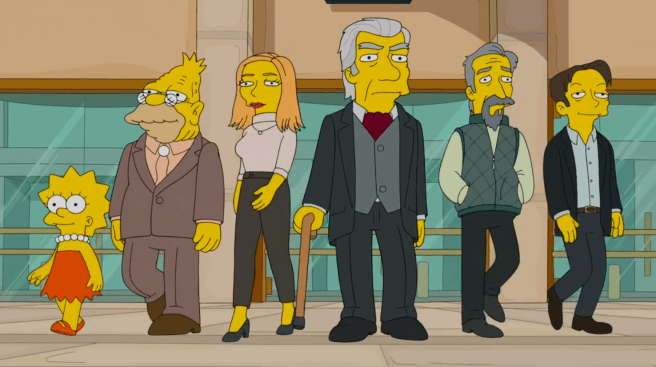
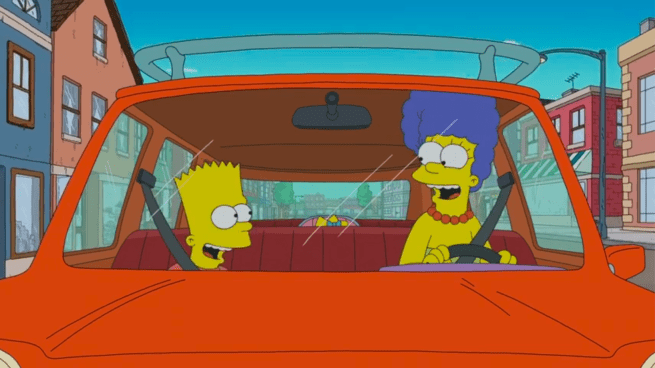
The premise: Homer gets Marge a “Pedalon” bike, but he gets worried when she quickly becomes obsessed with it, and her handsome instructor. Meanwhile, Lisa is surprised to get a jury duty summons, and even more surprised when she actually ends up serving.

The reaction: I feel like I only know about Peloton bikes from people making jokes about them. I’m sure they’re really big with affluent people who work in entertainment, so I guess it was only a matter of time they’d be satirized on this show. Although there must be people all over the country who have Peloton bikes, so it might be a more recognizable subject matter than I think. Either way, the plot line is so basic, it’s not that hard to follow. Marge could have joined an in-person gym and it basically would be the same story. Continue reading “730. One Angry Lisa”

729. Habeas Tortoise

Original airdate: September 25, 2022

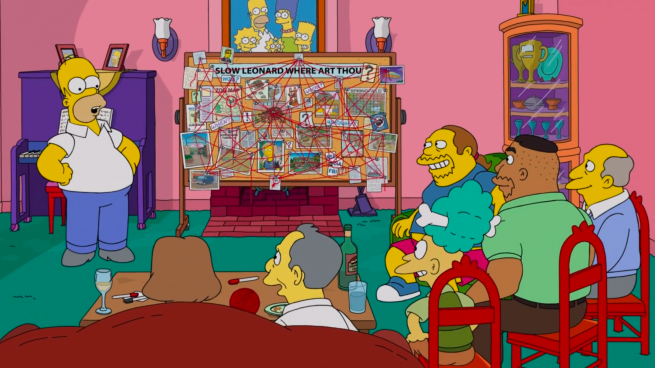
The premise: On a family trip to the zoo, Homer is shocked to find his beloved tortoise Slow Leonard is missing. Suspecting something is afoot, he reaches out to other online weirdos, finding himself the head of a social group of crackpot conspiracy theorists, all throwing out their own out-there ideas about what really happened to their beloved reptile.

The reaction: As real life continues to outpace satire more and more, I really sympathize with any comedy that bases itself in social commentary. Online conspiracy theorists almost seem unable to be parodied, since the absolute insane shit they genuinely believe, and their reasonings behind it, are usually completely absurd on their own, so there’s no way you can really top that without seeming redundant. Thankfully the episode isn’t really about that, and more focused on Homer trying to find comfort in a group of peers who don’t look down on his lack of intelligence. We open on a town hall meeting where Homer is mocked for doing something foolish (suggesting Springfield build a library, forgetting the meeting is actually being held in a library), later bemoaning to his family that everyone thinks he’s dumb, which brings to mind the opening of “Secrets to a Successful Marriage,” and probably dozens of other episodes. Homer fretting that he’s stupid? The man’s been brain dead on TV as long as I’ve been alive, how many times does he have to be shocked at this “revelation”? Anyway, Homer finds kindred spirits with the likes of Comic Book Guy, Sideshow Mel, and others, all believing that there’s a greater conspiracy behind the disappearance of Slow Leonard, the 150-year-old tortoise. At one meeting, when CBG is about to criticize a suggested theory, Homer nips it in the bud quick, recalling his humiliation at the start of the episode, proclaiming, “There are no bad ideas. Nothing said here is stupid.” The conspiracy group becomes incredibly close-knit from this point, even leading to an engagement between Miss Hoover and Gil. But then the Simpson family discover something shocking: Slow Leonard walking into their kitchen. Homer explains that he accidentally uncovered the tortoise himself burrowed in a hole in the outskirts of the zoo. Him absconding with the animal is kind of glossed over, but it’s clear that Homer didn’t say anything because he doesn’t want to lose his new friends. Things are pretty quick to wrap up after this: at Miss Hoover and Gil’s wedding, the team’s ideas on how to squeeze info out of the zookeeper get way too radical and violent for Homer’s liking, and he finally reveals the truth, along with Marge, who arrives with Slow Leonard. The final resolution is kind of confusing: Homer keeps the group together by moving on to a new conspiracy (“What is calamari?”), but that doesn’t really address the problem with the group being quick to escalate to radical degrees. It’s just kind of unclear what the point of the episode is. Homer found comfort with people who spouted the same bullshit nonsense as him, but his opening goof about the library was more about him being forgetful and dumb, not believing in the kind of wackadoo stuff these other characters do. Homer’s vulnerability throughout was nice to see, but the story all culminated too quickly and ended all too nicely. Overall, a pretty soft, inoffensive season premiere.

Three items of note:
– I always find it weird when an episode will flip-flop between using real brands and fake ones. Marge says Homer can post his thoughts on “Facelook,” but then later namedrops Instagram and TikTok. I thought maybe it was because we actually see Homer using “Facelook,” but they could have easily just not shown a logo and had it be a generic-looking social media page. I feel like it must be some kind of legal concern. But then in a scene over the credits, we see a cooking TikTok Homer filmed, complete with a TikTok logo in the corner (not the actual one, but it actually says ‘TikTok.’) So why not just say ‘Facebook’ then? I don’t get it.
– The Slow Leonard group is comprised of different types of Springfieldians, from educators (Miss Hoover, Superintendent Chalmers), upper crust celebrities (Sideshow Mel, Drederick Tatum), to civil servants (Chief Wiggum), it felt a little like a missed opportunity to not show (or at least talk about) how their paranoid behavior influences their work life. Peppered throughout the episode are references to other popular conspiracy topics like flat Earth, 5G cell phone towers, and a veiled reference to COVID, which feels like easy writing, like they had a checklist of crackpot tropes to check off plugging into the script. Toward the end when Slow Leonard is revealed, the group initially doesn’t believe it’s really him, crafting more insane theories of what it really is. It almost feels like that could have been a better angle to take the episode: Homer supports the unhinged rantings of his new friends as to not undermine them like he experienced, but he ends up fostering a psychosis so far gone, he can’t even get them to believe the truth in front of their eyes. The group actually feels way too nice. Maybe they were afraid to push beloved characters like Wiggum or Gil too far in an extremist direction, but why not? The people of Springfield are no strangers to reactionary violence.
– Homer makes a hearty serving of paella to offer his guests at their first conspiracy meeting, and later, the episode ends with him giving a live cooking of the dish recorded for a TikTok. The initial joke, I guess, is that he’s putting in greater effort to create a complicated dish for his weird new friends than he ever would his own family, but I don’t know why they bring it back up again toward the end. It might be a personal thing, though, it still feels weird to me when the Simpsons are eating food beyond a relatively basic meal. Remember the early episodes when they would just be eating weird technicolor mush on a plate for dinner? Bring back the goop!

728. Poorhouse Rock

Original airdate: May 22, 2022

The premise: Bart gains a newfound respect for his father after coming to work with him, resolving that he’d like to have a job and a lifestyle like him one day. However, a wise musical janitor (voiced by Hugh Jackman) throws cruel reality in his face, singing about the death of America’s middle class and the sorry future prospects of the younger generations.

The reaction: The creative inspiration for this episode was an Atlantic article from 2020 examining the lifestyle the Simpson family leads, and how, financially speaking, it was slightly exaggerated in the early 90s, but now a complete fantasy in our modern day. Homer Simpson, a man without a college degree, is able to hold down a job that pays well enough to be the sole breadwinner, living in a nice-sized house and is able to support his three children on one income. That sort of living situation isn’t so easy to come by in modern day America. It’s yet another example how core elements of this show that were once a potent social satire feel so outdated three decades later, but crafting an episode examining that fact is a novel idea. Before we get there, though, we get half the episode setting the almost too elaborate groundwork. After an extensive first act culminating in Homer’s shock that Bart doesn’t respect him (this is news to him?), he takes the boy to work with him in the hopes he’ll see him in a new light. Bart is pretty quickly won over by the power plant’s complimentary snacks, free office supplies, and Homer’s ability to boss around interns to do his work for him. The morning after this visit, he comes down to breakfast dressed as his father, openly stating not only does he immensely respect Homer, but he wants his exact life when he grows up. This feels… off. Bart has always felt like the toughest Simpson to write for in more recent times. He’s not as easy to turn into a broad stereotype (Lisa the liberal scold, Marge the worrywart, Homer the insane maniac), since he’s a snarky bad boy, but also an ignorant kid. I feel like Bart could have been easily enamored by seeing how little Homer does at work each day, yet his position is held in high regard and he gets a substantial paycheck from it. That framework of doing very little for big returns would be very appealing to Bart, and also set the satire in motion of commentating on the comparatively cushier jobs once held by boomers and Gen X’ers. Instead, Bart is in awe of Dr. Phil playing in the break room and Homer’s moronic ploy of cashing his paycheck in singles to create a money shower in the car. Bart comes off as too naive to me. The back half of the episode is the all singing, all dancing portion, as Hugh Jackman’s magical mystical janitor character appears to regale Bart with the tale of the death of the American dream, from the post-war boom to the awful, awful present, care of unchecked capitalism’s boot firmly on the neck of the working man, preventing poor commoners like Bart from having any kind of future like his parents once enjoyed. It’s a musical opera, with material that feels like warmed over leftovers you might have seen on Last Week Tonight with John Oliver, especially one of the final numbers where the elderly of Springfield sing about how they listen to FOX News and vote for the GOP because of their fear-mongering. None of it feels like very inspired satire, and none of the songs are very memorable, despite an admittedly strong performance by Nancy Cartwright. It feels kind of pointless, given the show isn’t going to change to reflect any new reality this episode is illuminating, and there’s no real answers the episode can give, since there’s no attainable solution to this issue. The best they can do is highlight “firefighter” as an evergreen job, since the world will never be not on fire, literally or metaphorically, which is kind of cute, but I guess for Bart, that means he’s going to be a fireman? It’s a glaring non-ending, but I don’t really know what else they could have done. In the end, this feels like it could have been better off as a YouTube short “response” to the Atlantic article, but as a whole episode, it doesn’t really hold together, and again, holds up a greater magnifying glass to how this series is so bizarrely out of time.

Three items of note:
– Homer originally lucked into his power plant job in the early 80s, but now thanks to our floating timeline, and if the events of “I Married Marge” and “I Love Lisa” are still considered “canon,” Homer started working there in 2012, and they bought their home a few years later, well after the housing bubble collapse and Obama bailed out the banks rather than help any of the customers they fucked. These aren’t really criticisms, since I’ve bitched enough about the out-of-time thing, but more horrifying reminders of how much closer and closer I’m getting to Homer’s age. I’m already uncomfortably close to his original age of 36, so thinking of him getting hired by the plant and Bart’s birth occurring a year after I graduated from college and a year after I started this very blog is pretty frightening to me.
– The opening bit involves Marge inviting her lady friends over to watch a “very classy historical British streaming show,” of course meaning Bridgerton. Oh, sorry, I meant “Tunnelton.” Get it, because it’s the opposite of a bridge… Sigh. Honestly, can they just not show the shitty “parody” titles for these things? Just don’t even show them. They namedrop Netflix, you give enough context clues, we know what you’re doing. The show did plenty of TV and movie parodies in its heyday where they were just watching the shows, or if they did shake it up, it was some absurdist variation of it, like “Knight Boat.” But “Tunnelton” is just Bridgerton, so who fucking cares? Just call it Bridgerton. You already said Netflix, so what’s the difference? Also, Miss Hoover is among Marge’s guests, which felt like a weird addition. Have they ever hung out together? Also present are more usual suspects Luann Van Houten, Bernice Hibbert, and Sarah Wiggum, still voiced by Megan Mullally, which is currently causing one No Homers poster to go mental (“I heard Sarah speak as Megan, I got up and seriously screamed out ‘FUCK’ and threw my remote at my TV.”) Who knew there existed Sarah Wiggum fans?
– The couch gag features character designs by Spike R. Monster, a Venezuelan fan artist who has gained some Internet fame for his depictions of the kids of Springfield as teenagers, including in webcomic form in the aptly named Those Springfield Kids. They’re a very talented artist with a fun take on the Simpsons style. I follow them on social media and was very surprised to see the announcement about his involvement with the show officially. The show has had guest artists do couch gags, but they’ve always been by famous animators, and they’ve also featured already completed fan works, like the 16-bit couch gag or that potato ink thing? (sorry, I’m a bit tired writing this and I don’t feel like looking it up) But this feels like a first, where they got an actual fan artist do character designs of their fan fiction to depict on the show itself, and honestly, that’s pretty damn cool to me. Spike and their girlfriend “Meatgirl” are both great artists and big fans of the show, new episodes included, as clearly shown in Spike’s thread of artistic tributes to every episode of this season. It feels like a wise move to reach out to the fans like this, and honestly, they’d be smart to continue doing stuff like this. I’m sure the show has always sought out fan feedback, but I feel like now more than ever, they should take heed to whatever the hardcore fans are really responding to and run with it. It doesn’t matter what a grumpy curmudgeon like me thinks of this show, people like these two artists are the real true and loyal fans, and it was honestly really cool of the show to make this guy’s day by offering them this opportunity.

So once again, we’ve reached the end of another season. Hot diggity damn, can you believe it? I can definitely say this has been the most interesting year the show’s had in a good while, with a number of more experimental episodes (“A Serious Flanders,” “Pixelated and Afraid,”) and character exploration shows (“Boys N The Highlands,” “Girls Just Shauna Have Fun.”) They even “officially” filled the fourth grade teacher slot with a new character, though what they do with her remains to be seen. The success of these more non-traditional episodes will vary on who you ask, but it’s certainly admirable of the show to try something different than just settle for the same old stuff. Of course, some of these efforts were spectacular failures, as this season had its fair share of truly awful episodes (“The Wayz We Were,” “Mother and Other Strangers,” “Bart the Cool Kid,” “Pretty Whittle Liar,” “An Octopus and a Teacher.”) But fan response, from what I can gauge of it (mostly from random Twitter comments and lurking around No Homers out of curiosity) seems to really be keen on these more ambitious efforts, and you know what, good for them. I’ve long been perplexed as to who this show is being made for and what people are getting out of it, but that doesn’t mean I don’t want people to enjoy this show. It comes from a place of non-understanding than any sort of scorn. If the fans actually watching this show are actually excited about these new chances the show is taking, then hey, that’s just lovely. And honestly, it’s making me a little curious if they’ll continue doing weird new stuff like this in season 34, and that’s something I’ve never, ever said about an upcoming season. While there’s only one episode in the past year I can look back on with any kind of real fondness (“Portrait of a Lackey on Fire,”) that’s definitely one more than usual. So smell yah later in September, losers. This blog’s gonna go down in flames only when this show goes first!

727. Meat is Murder

Original airdate: May 15, 2022

The premise: Krusty’s empire is bought out from under him by Gus Redfield, former burger-store-owner-turned-billionaire whom Krusty ruined in the past. Gus seeks out Abe Simpson, his former partner, wanting to give him a seat on the board of his company, populated by his selfish children with their own agendas.

The reaction: This is another one of those episodes where the premise is largely carried by a guest character (or characters, in this case), but there’s not a whole lot given for me to actually care about these newbies. The big twist at the end involves all these characters we just met, while Lisa and Abe just sit there and react, and I’m doing the same, wondering what I’m supposed to be feeling. But before that, we have a ton of set-up to do. In a flashback to fifty years ago, we see Krusty, coming off of a flop set at a comedy club, stopping at “Worth-A-Try Burger” for a bite, only to be impressed by the food, so much so that he agrees to help do promotion for them. We later find that when Krusty tried to take a larger cut from the restaurant, they told him to get lost, so he set up his own competing Krusty Burger, eventually becoming the only game in town, and leading to the media empire he controls today. In present day, Gus Redfield reemerges, the former owner of Worth-A-Try, now an insanely wealthy business tycoon, who enacts his revenge by buying out the entire Krusty conglomerate. Then it’s revealed that Abe was Gus’ right-hand man, who he reunites with and offers to go into business together. So finally with the episode almost half over, we get into our story: Abe is worried he’ll screw up this new opportunity, so he takes Lisa with him (affectionately referring to their team-up as “Grampsa,” in a pathetic, mewling attempt at sentimentality that’s repeated twice.) Homer and Marge just let the doddering old man take their daughter on a private helicopter to God knows where, where Gus introduces them to the fellow board members, his spoiled, mooching children. I don’t know how much of this specifically parodies HBO’s Succession, but I don’t care since I haven’t watched it, and this material should be able to stand on its own. Gus’ daughter tries to warm herself up to Lisa, pledging she wants to take control of the company to make it more eco-friendly, in a charade they thankfully don’t keep up for long like it’s genuine, as we see she’s looking up research of Lisa’s greatest interests to best con her into taking her side so she can convince Abe to vote her way. So the board meeting to overthrow Gus results in a tie, with Abe as the final vote, who bucks outside influence and stays true to his old friend. Then Gus reveals this whole thing was a set-up, bringing in Abe as a ringer vote to maintain control and finally be able to relinquish his children’s control of the company. All I’m doing is describing this incredibly involved plot because I don’t know what else to really dwell over. Like I said, the entire premise is focused on the lives and business aspirations of four new characters that aren’t very interesting who have little connection to the Simpsons at all. Meanwhile, Abe’s worry about “the Simpson curse” plaguing him to make the wrong decisions doesn’t really hold weight since I don’t even know what’s at stake. What even does this company do? What does Gus want to do with full control outside of firing his kids? What will Abe get out of this? Who cares? In the end, Abe plays up his senility to make his vote invalid, resulting in a deadlock that doesn’t really defeat Gus, just putting him in a squabbling limbo as Lisa and Abe leave and go home. In the end, I don’t know how to even react to the episode on the whole since it felt like nothing that happened mattered, what little of it I understood. I’m kinda just checking my watch for this season to come to a welcome close.

Three items of note:
– So how the hell old is Krusty? Fifty years ago, he looks and sounds exactly the same as the present. In “Day of the Jackanapes,” Krusty claims he’s been in show business 61 years, which always felt like a weird line, but maybe if he’s considering being a class clown in Hebrew school as a kid, he could be in his 70s. I guess the same could be said here, if you think Krusty could be in his 20s in the flashback, but it’s still curious. I suppose the joke is that with all his clown make-up on, Krusty has remained age-less. Also, it seems like they’re doing a little tribute to The Founder, the movie recounting the life and times of Ray Kroc and how he fucked over the original McDonald brothers for their franchise. It’s never really been delved into, but I always assumed Krusty’s media empire was built on his TV show and all the merchandising tie-ins all sprung from that, but this episode seems to imply that Krusty Burger was where he had his initial success and everything else followed. None of these are really complaints, it’s just interesting stuff I noted.
– There’s an awful lot of great voice talent wasted in this episode: John Lithgow, Krysten Ritter, Seth Green, Paul F. Tompkins… Lithgow, especially, getting the most screen time as Gus. The character’s plan was to act flighty and borderline senile to give the impression that he could be overthrown by his children via a boardroom vote, but I never got that impression from the dialogue he’s given prior to the reveal. That’s a shame, since I feel like Lithgow definitely could have given a great performance with that kind of role, but he just wasn’t given the material to support it. Instead, he does an unfunny riff on Willy Wonka‘s “Pure Imagination” and shouts a lot. Cool.
– The other Rayfield board members include a guy from Shark Tank, Angela Merkel and TikTok’s very own Charli D’Amelio, someone I know nothing about and am not in any rush to change that. I’m reminded of when they had Justin Bieber on in the heat of his popularity and fans were up in arms for what amounted to an incredibly brief cameo, complete with a “warning” at the bottom of the screen announcing when he was going to appear. Here, I’m sure some fans will be similarly annoyed, but her appearance is no more pointless than any hundreds of other celebrity cameos I can name. I’m more curious how this booking happened; Justin Bieber was, at the time, a very identifiable celebrity even the older writing staff would have known about, but D’Amelio had to come from either one of the writer/producer’s teenage children telling them about her, or the result of researching who’s a hip young celeb that the kids like is who we could book on the show. Was this an attempt to get younger people to tune in? I really have no idea.

726. Marge the Meanie

Original airdate: May 8, 2022

The premise: Marge reveals that she used to be quite the prankster back in middle school, resulting in her bonding with Bart over their shared fondness for mischief. Homer feels left out, and turns to Lisa to try to find out if any of their interests overlap.

The reaction: Sometimes there are certain episodes that feel so incredibly thin that there doesn’t seem like there’s much to grab onto. This season has had a lot of fairly ambitious episodes, so this one feels pretty undercooked in comparison, like they didn’t bother taking a few more passes on the script. Marge has a run-in with an older woman who seems deathly afraid of her (“Marge Bouvier, you ruined my life!”) It turns out she was the principal of her old middle school. In flashbacks, we see that upon moving up from grade school, Marge was all alone and a constant victim of bullies, with the principal being largely apathetic to her struggles. She accidentally causes the principal to trip and fall in a garbage can, resulting in her getting some much needed social cred. We then see two more intentional pranks Marge pulled on her, and that’s it. If this episode is about her actual secret inclination toward mischief, it feels like we needed to see more of her actually being a little shit and what drove her as a kid to do these things. Also, Marge was at that school like twenty-five years ago, and this principal is still traumatized by her? Whatever. Bart repeatedly tells his mother how impressed he is and how he’s glad he has something to bond with her with (“We’re the same! I finally have a parent I’m proud of!”) Marge and Bart proceed to pull pranks on irritating townsfolk like Comic Book Guy and Helen Lovejoy, but Marge’s conscious is taking its toll. She loves this new bond she has with Bart, but feels bad about what she’s doing. This all culminates in a prank gone wrong involving tripping Mr. Burns into oncoming traffic, where he’s hit multiple times by cars and lands on top of power lines, getting repeatedly shocked, an aggressively cartoonish sequence that almost feels uncomfortable. Marge has a brief therapy session after that, which seems like it should delve into where these rambunctious urges of hers are coming from, but we get none of that. Meanwhile, Bart seems nonplussed about almost murdering an 104-year-old man and begs his mother not to give up pranking (“If you give it up, you’re giving me up!!”) He breaks down in tears after this. The emotional stakes are ratcheted way up, but I just don’t care enough about what’s happening to buy into it. I get that Bart feels a greater sense of attachment to Marge, but it’s being pushed too far. Marge agrees to one last job, a prank pulled on her old principal, which results in her having a heart attack. However, this was actually a prank she and Marge pulled on Bart to get him to stop pranking. So being responsible for nearly killing Mr. Burns was fine for Bart, but with this other old person, it’s fine? I feel like this had potential to be an interesting Marge episode, exploring her past and giving some insight into some hidden aspects of her character. She’s always portrayed as the perfect mom, so to see her indulging in some more off-kilter impulses might have been interesting. Instead, it all just felt so empty and pointless. There’s a lot of episodes that feel like they have premises with potential but end up falling short, but this one seemed like it was barely even trying.

Three items of note:
– The B-plot involves Homer trying to see what he has in common with Lisa, if anything. He indulges in her love of vegan food, even though he finds all of it disgusting. The two plots seem to share a common thread that Homer and Marge are both doing things to bond with their children that they themselves don’t like, but they don’t really gel that well considering with Marge, it’s a secret shame she’s trying to suppress, while Homer genuinely hates everything Lisa’s making her eat. In the end, Homer and Lisa discover they have similar food allergies, and we get our sappy ending (“Dad, you passed down the most important part of yourself: your kind heart.”) The doctor lampshades this by fake coughing (“I’m afraid I’m allergic to treacle!”) Have the writers been reading this blog and seen how many times I’ve complained about bullshit overly-treacly endings?
– We see Superintendent Chalmers in the flashback, reacting to the principal being knocked in the garbage (“I’ll do a lot better with the next person I hire. He’ll be a WIN-NNERRRR!”) First off, I thought this was implying that he was going to fire the principal, perhaps being the beginning of an endless downward spiral for her, thus explaining why she despised Marge. But no, after this, we see she stayed on as principal to get pranked by Marge over and over. What? Secondly, does anybody still laugh at these “SKINNER!” variations anymore? They did a similar thing with Nelson doing alternates to his usual “Haw haw!” for a while, and occasionally still do. Thirty years of episodes and we can’t stop with these cutesy takes on these catchphrases. It all just feels so fucking old. In the last episode, we actually attempted to show a different side of Chalmers, at least briefly, but even there we had him scream “SIMP-SON!” just like he does with Skinner. Maybe after seven hundred fucking episodes, we can  examine different things that might be funny about a side character rather than do the same running gag for the hundredth time?
– Bart’s love of pranking almost feels out of time for me. I’ve talked about how weird it is whenever he uses a slingshot in modern episodes; it harkens back to his origins as a riff on Dennis the Menace, which was an old reference back in 1990, but now is completely anachronistic. Here, we see Bart attempting to pull the peanut brittle can filled with snakes gag, something that I just can’t imagine a kid in 2022 even knowing what that is. Maybe a really young kid might get his hands on a prank kit with a whoopee cushion, fake gum or whatever and think it’s funny, but modern day ten-year-olds are all on their smartphones cyberbullying each other on TikTok, not putting Kick Me signs on people’s backs. When’s the last time any kid has done that? I might be overgeneralizing a bit, but any time they try and portray Bart like this in new episodes, it always seems pretty outdated.