496. Politically Inept with Homer Simpson

2310
Original airdate: January 8, 2012

The premise:
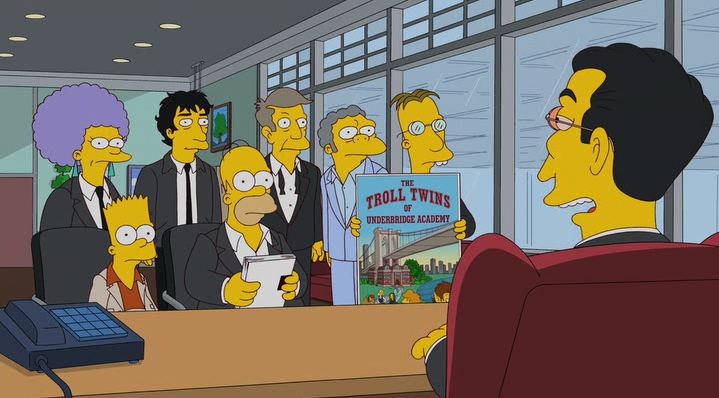
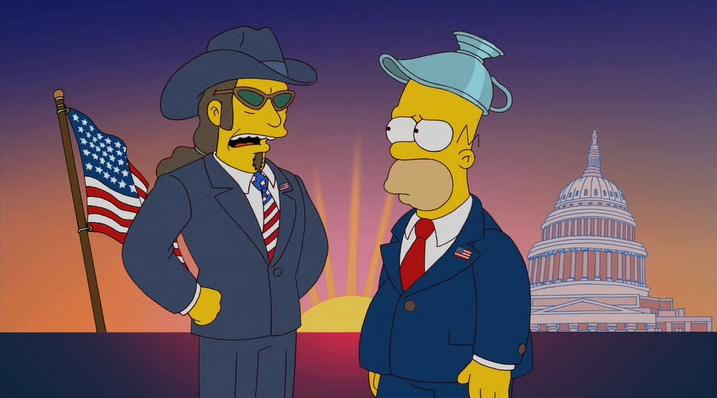
A viral video of Homer going nuts on an airplane gets him his own political talk show, where he blusters on about traditional values and small town American rights. His nonsensical, ill-informed rhetoric becomes so influential that he gets tapped to pick the Republican presidential nominee, famous rocker and insane person Ted Nugent.

The reaction: Boy, this is a real time capsule of an episode. Sort of. Some elements of it still feel depressingly relevant in our current dumpster fire of a political climate, but boy oh boy, Homer as Glenn Beck? Once again, despite Krusty’s cries two episodes ago about looking dated and hacky, the show doesn’t seem to care. And also once again, South Park beat them to the punch by two years. But let’s look into this a bit more. That episode featured Cartman becoming the new morning announcement reader at the school, and abusing his power by attacking the student body president because he doesn’t like her personally. He became a Glenn Beck expy, but all in a way that was in line with his character; Cartman loves attention and relishes being in a position of power, and he’s also a huge asshole. So what do we have from The Simpsons? Well, Homer goes nuts on an airplane, grabbing the intercom and spouting some nonsense about customer’s rights. He then goes on a cable news show and shouts that he speaks for the honest Joe American, which then leads to him getting his own show, where he becomes Glenn Beck Lite. Why is he doing this? He’s talking out his ass extolling good ol’ boy American values, but as Dan Castellaneta marries his Homer voice with a Beck impression, I just don’t understand what Homer’s point is or his goal. Through the episode, he flip flops between his original impassioned airplane speech, then claiming he’s just playing a character, to an advocate for the little guy, to actually wanting to implement change, and the ending involves him not able to buy into his own bullshit anymore and giving up his fame. So much of this episode is nonsensical and unfunny, but the core of it absolutely does not work when I can’t figure out the main character’s motivation throughout the entire episode. They wanted to do a Glenn Beck parody, and they squeezed Homer into that box so they could do it. So topical. Except not.

Three items of note:
– The opening at the airport feels even more dated than the Glenn Beck plot line. Making fun of TSA regulations and security checks in 2012?
– The whole gravy boat thing I guess is referencing the Tea Party? Except the episode doesn’t do anything with that. The show had some juicy material at their disposal lampooning that dumb political movement, or just the idea of a TV loudmouth holding that much influence and using it irresponsibly, but they reduce it to just one line that Lisa says to push the plot forward. The gravy thing is pretty much squandered, with screen time instead used for some elaborate fake dream to sway Homer back to reality. Bleh.
– I feel pretty stymied by this episode, it’s hard to come up with what to talk about. When we get to the point where Ted Nugent seems to be living at the Simpson house for some reason, I just don’t even know where to begin. Why is he here? What’s he promoting? He shoots an arrow into Flanders’s forehead, and then later shoots a bunch of kids into the air from his bow, and nobody bats an eye. I guess he’s just craaaaaayyy-zeeeeee so it’s fine? I dunno. This one was just really fucking confusing.

One good line/moment: Oh, I don’t know… Brockman’s headline for the gravy moment “Au Jus-tice For All!” was cute. That’s all I got.
495. Holidays of Future Passed

2309
Original airdate: December 11, 2011

The premise:
During the holiday season thirty years into the future, a deadbeat Bart tries to reconnect to his kids while dealing with his wife remarrying, and Lisa struggles with how best to deal with her aloof, online-addicted teenage daughter.

The reaction: This episode first hit my radar when I heard the high praise attached to it after it aired, much higher than anything I had heard from the show in a good long while. And while this is easily the best episode of the season, I certainly wouldn’t call it good. I don’t even think it’s better than the future show before this, “Future-Drama.” We focus on the parental troubles of a grown up Bart and Lisa returning home for the holidays. First up is Bart, who living in the dilapidated elementary school and trying to be a fun dad to his two estranged sons. I don’t really care for this constant characterization of future Bart that he’s never matured beyond his ten-year-old mentality (which he literally says as such at the emotional climax). “Lisa’s Wedding” showed the most believable Future Bart to me, working in construction and promoting local tough man contests on the side. Bart was always a street-smart kid, so I can easily accept this future vision. But every other future show has him as a pathetic mooch who has done absolutely nothing with his life, which makes it hard to feel any kind of sympathy for him. His plot line features the kids getting along better with Homer, who proves to be a great grandpa, which is a pretty adorable idea I wish they’d spent more time on, and he ends up sparking the resolution with Bart and his kids, which feels pretty empty and cloying. Meanwhile, we see Lisa has ended up marrying Milhouse, another future concept I hate, but as we saw last season, the writers just can’t step away from shipping those two. Her conflict and make-up with Marge and her daughter is a little more satisfying, but nothing really notable. Surrounding these stories is an endless parade of future jokes, many of which feel like stuff picked up off the Futurama writer’s room floor. There are some amusing moments, but so much of it just seems way too fantastical for just thirty years into the future. Remember how sensational but pragmatic “Lisa’s Wedding” was with picture phones, VR headsets, and the Rolling Stones still on tour? Here we get sentient talking trees, shrink rays, hyper-evolved dogs and cats, and Flanders marrying Maude’s ghost. All and all, is this one of the best episodes the show has had in the last decade? Oh yeah. Is that saying much? No.

Three items of note:
– Also coming home for Christmas is Maggie, who is now an international music superstar. She also doesn’t speak in the episode, because of course she doesn’t. It was a joke played to perfection in “Lisa’s Wedding,” where we hear from Homer that she’s a chatterbox, and Dr. Hibbert says she sings like an angel, but she is always interrupted before she gets to speak. Here, she gets a lot more screen time than in “Wedding,” and the contrived explanation of her staying mute is that she’s pregnant, and future women need to stay quiet for the health of their baby. What? So she ends up at the airport, and then later in Kearney’s cab when she goes into labor, and then checks into the hospital, all without saying a word? Isn’t she like a hardcore rock star? When she walks in the Simpson house at the very end with her new baby, she still says nothing. It felt like the writers trying to continue the joke from “Wedding” without realizing the new context for Maggie not speaking makes absolutely no sense.
– We get to see a lot of Springfield residents and what they’re up to in the future, some of which seem kind of crowbarred in. In “Wedding,” they felt a little more natural and relevant to the story, or surprising, like seeing Quimby driving a cab working for Otto. Cabdriver Kearney isn’t as interesting. Neither is an entire clone army of Ralph killing themselves, nor is Lenny and Carl switching brains, continuing the endless confusion about what the fuck their relationship is. The Bart and Lisa stories might have been more successful if they were a bit more developed, so devoting so much time to these character sidebars felt like a squandered opportunity.
– Lisa virtually enters the Internet to find her daughter, which arguably is one of the slightly more plausible future things we see here, but it’s incredibly reminiscent of the Internet we saw in Futurama. There’s also a throwaway gag about Martin Prince now being Marcia Princess, which is very odd. There was a similar “joke” in the last Martin episode of his fantasy of being a buff basketball player with male and female groupies, and him taking a good long look at the former. Are we supposed to laugh at the idea of Martin being gay or transgender? You could make jokes about these subjects, but if the joke is just “he’s gay!” or “he’s now a she!” it’s kind of shallow and gross.

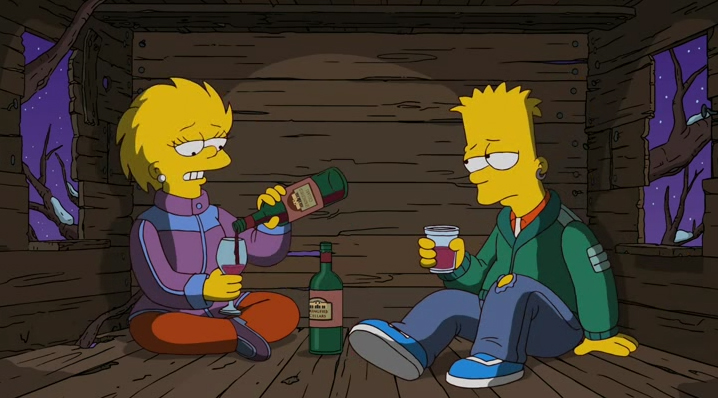
One good line/moment: The scene of Bart and Lisa drinking up in their treehouse I thought was incredibly effective. The two felt very natural and believable as they bitched about their problems and reassured each other. It’s easily the most effectively human scene this show has done in years. Not even the talking tree bullshit that ends the scene could ruin it.

494. The Ten-Per-Cent Solution

2308
Original airdate: December 4, 2011

The premise:
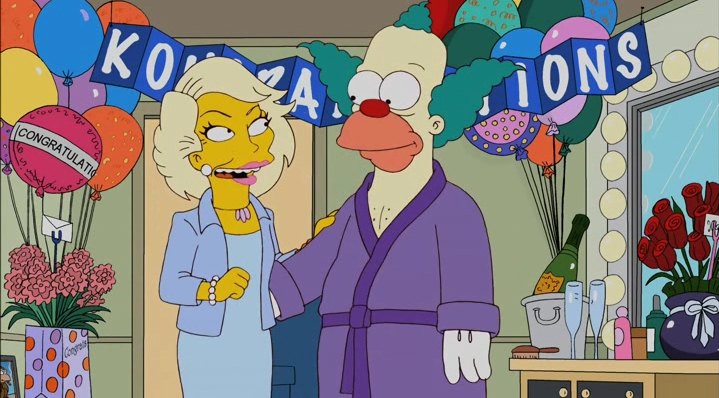
Krusty gets fired from his own show, and ends up reconnecting with his old agent and ex Joan Rivers. I’m sure the character had a name, but I forget. Joan helps Krusty find new life on pay cable, but soon proves to be an incredibly overbearing producer of his new show.

The reaction: How many comebacks can Krusty possibly have? This is, what, his sixth? I guess going back to this story well is as good an excuse as any to trot out jokes about whatever the current trends in TV are. Or, rather, multi-year-old trends, and by “jokes,” I mean “love letters.” We open with the Simpson family going to visit the television museum, which I guess Springfield has, where they meet Annie Dubinsky (I just looked up the name of Rivers’s character), a talent agent who literally walks out of the shadows to introduce herself. Meanwhile, Krusty has just gotten fired and the Simpsons find him wallowing in shame and lamenting his fall from grace… while sitting in a ball pit at Krusty Burger, a restaurant named after him. On the street corner with a “Will Drop Pants for Food” sign, this ain’t. The family introduces him to Annie, who immediately is hostile to Krusty, and she decides to regale the story of their past relationship to these strangers she’s known for less than 24 hours. Their backstory really doesn’t matter, as the two mend fences and get back together. Despite Annie working in a rundown office and proudly claiming most of her famous clients are dead, she works her magic and gets Krusty a show on HBOwtime (such creative naming). With four minutes left to go, a conflict is manufactured with Annie being a humongous pain-in-the-ass producer, the network heads confronting Krusty about it, then she gets fired, and then the two are rehired for a Real Sex type show, because old people having sex is hilarious. What? She’s crazy, then she’s not, she’s fired, and then she’s not. What a resolution.

Three items of note:
– The episode opens with three Itchy & Scratchys, all “parodies” of Oscar contenders from 2010. We get a laborious, self-aware line from Krusty about how the jokes were topical when written, but taking a year to actually produce and animate makes them look “dated and hacky.” Part of me has always felt that the writers must be aware of some of the biggest problems plaguing the show, and this seems to be a clear example that yes, they do realize that this stuff is dated and hacky, their own words, and that they don’t seem to care. Or, by commenting on it, they think it excuses it. Also odd is that the network heads push Krusty out of his show for making too many old references that kids don’t understand. Oh, so unlike children who are keen on Itchy & Scratchy cartoons based on kiddie fare like Black Swan and The King’s Speech?
– I feel like the genesis of this episode came from the writing staff going to see the Pee-Wee Herman revival show, and thinking they could do a similar thing with Krusty. It was a live show that ran in New York and Los Angeles around this time, and a televised version aired on HBO earlier that year, but it’s something that I’m sure was not on a lot of viewers’ radars. Despite that, they build it into the plot of this show with Krusty’s retro reboot live show directly modeled off of the Pee-Wee show, with grown men openly cheering for nostalgia, which is a really juicy topic to milk for comedy, but the episode barely does anything with it. It feels more like they just put it into the show because they loved it, which would continue through the third act when Krusty makes his cable deal. We get glory shots of Game of Thrones, The Sopranos, the John Adams miniseries and The Ricky Gervais Show (in this case, they literally just show a clip from the actual animated series). There’s no joke to this, it’s just like, hey, these are some great shows on HBO! We love you guys!
– This is an episode that doesn’t really involve the Simpsons, which we haven’t really seen in a while, so it was weird seeing them constantly crow barred in. As mentioned earlier, Annie just rattles off her personal life story, and sexual past, to these complete strangers, then later I guess they get comped tickets to all of Krusty’s shows. Bart and Lisa are with Krusty during the set-up of his new show, for some reason. But the most telling line of all for me is after Annie pours her heart out about how Krusty broke her heart, Marge pipes in, “Would you ever consider taking Krusty back as a client?” Why does she care? She has no connection to Krusty. Why in the fuck would Marge care about Krusty getting work again, especially after hearing that story? There is no reason, other than we need to push the story along, someone needed to say that line, so they gave it to Marge.

One good line/moment: Krusty recalls in the past getting laughs out of kids by hitting them, at least until the 70’s (“Some jerk tracked down the kids and made a documentary. It’s called Circus of Shame, or something…”) Dan Castellaneta’s read of that last bit was pretty great, very subdued and introspective. He and his wife wrote this episode, by the way, coming after such hits as the Christmas special with Katy Perry, and the Cheech & Chong show. Such a pedigree.

493. The Man in the Blue Flannel Pants

2307
Original airdate: November 27, 2011

The premise:
After impressing him at a party, Mr. Burns promotes Homer to be the power plant’s “accounts man,” but as he gets more accustomed and overworked in his swank new job title, his family life begins to suffer for it.

The reaction: We love foodies. We love the Ocean’s movies. Now, we love Mad Men. I think? I only watched the first season many years ago, but John Slattery plays what I assume is basically a facsimile of his Mad Men character who is mentoring Homer in his new job of doing nothing but wearing fancy suits and drinking. But before all that, we have an unrelated opening where Krusty throws a party at the Simpson home for his brand of vodka for no reason. Then, Mr. Burns shows up of his own volition, by himself, and tries to make awkward small talk with guests. Then he does karaoke with Homer and is having a great time. Incredibly anti-Burns behavior. From seeing Homer making clever small talk with a group of guests, Burns makes him the company accounts man, a job that is never quite explained, which itself is made a joke of. But as the episode goes on, we see that the job is both incredibly easy and uncomplicated, and is also stressing Homer out and overworking him. Maybe we could see the transition that’s not just a meaningless montage for once? But whatever. The ending is pretty stunning. It involves Homer promising to take the family river rafting, and also promising to take Burns and some other investors river rafting as well! So, he’s got to be in two places at once without the other party knowing! Have you ever heard of such a crazy scenario ripe for comic hijinks?! That the show is exhuming such a hacky, played-out sitcom trope like this is bad enough, but the execution is even lamer. The two rafts are running downstream at the same speed, with a little land divider between them with shrubbery to obscure the view. So Homer jumps ship to go back and forth between the two rafts and neither party seems that suspicious about it. Then it ends with him deciding which raft to save before it goes over a waterfall, because I guess Burns and the four able-bodied adults can’t paddle themselves to safety. And then later Homer falls down the waterfall in a hilarious ending and he’s just fine. The episode ends with Marge expressing gratitude that Homer’s not an ad man anymore, which ultimately means nothing because I still have no idea what that means. What shit.

Three items of note:
– The opening sequence with Krusty is really dumb, but what’s most annoying is the pathetic set-up/pay-off they do. Krusty has some clown tricks spring-loaded in his trousers. The vodka reps come to talk with him, and Krusty warns him about the spring at the beginning, and then again a bit later. So, yeah, they’re telegraphing that it’s gonna go off at the end of the scene. When it finally does, his dickey flies up at his face, and the seltzer propels him backwards into a brick wall. A wall that’s maybe two feet behind him. Like, it’s literally just out of frame. The visuals and the timing of this joke are so poor, and it’s made even worse that they were building this up through the course of an entire scene.
– I guess they couldn’t pad out this story for another two minutes, so we get a thin sliver of a story of Lisa teaching Bart how to read Little Women. He’s caught reading on the playground by the bullies, who then become enraptured by the book. It’s completely pointless and not funny, especially compared to similar bits in the past, like from “Homer Loves Flanders” (Moe tearfully reading the same novel) or”Homer vs. Patty & Selma” (the bullies being emotionally touched by Bart’s ballet). Also, remember a few episodes ago when these kids were walking lock step behind Bart in their Teddy Roosevelt crusade? The writers sure don’t.
– There’s a quick bit with Maggie getting milk drunk, driving and crashing a toy car, then placing the doll passenger in the driver’s seat before leaving. So taking after her daddy, then? Remember when Homer framed his wife for drunk driving and drove her into a fit of anxiety in the exact same fashion? What a wonderful episode.

One good line/moment: I’m struggling a bit writing this 24 hours after I watched this, I forget a lot of it. John Slatterly was like a flat line for me. The DVD title “Drunk Girls Who Signed Waivers” is kinda chuckle-worthy. Sure, let’s go with that.

492. The Book Job

2306
Original airdate: November 20, 2011

The premise:
Lisa is shocked to find her favorite YA book series was actually a collaborative writing effort to rake in as much money from kids as possible through calculated market research. While she is determined to write a novel all on her own, Homer and Bart decide to form their own team to get in on this seemingly easy money scheme.

The reaction: This was a very strange one. Similar to the last episode, the show tries to be topical way too late in tackling the YA fantasy novel trend. We had a Twilight “parody” in the last Halloween episode, and that was too late too (South Park once again beats this show to the punch, with their vampire episode airing a month after the first Twilight hit theaters). But the episode isn’t really about skewering tropes of this type of fiction. Sure, it seems to be about that, with the whole conceit being that these books are carefully crafted and manufactured to hit as many buttons with young readers as possible, but the story doesn’t really go much further than just say what the tropes are and leave it at that. When the group gets together to brainstorm their story, the sequence is just like someone reading TV Tropes, but not actually doing any commentary on it. Speaking of the group, Homer and Bart band together a team to write their book in the show’s tribute to the Ocean’s movies, the third of which released in theaters four years prior to this episode. I guess they thought it was really funny when Dan Castellaneta and Nancy Cartwright did their cool back-and-forth repartee like from the movies, but in the world of the show, it’s just confusing. They keep referring to a botched job in Kansas City, but in-universe, what the fuck does that even mean? The two of them talk about the specifics of the “job” as if they’re seasoned professionals. Are they play-acting? Whatever. The ending involves them breaking into the publisher’s office to save their book; where we get a montage of them all effortless sneaking in, thwarting guards and such, and they use that Ocean’s music for the tenth time, I just shook my head. I feel like an asshole complaining about the same stuff over and over again, but this shit isn’t The Simpsons. The absurd but relatable experiences of a normal American family have been replaced with ridiculous and nonsensical farces like this. What’s the point of this episode? What are we supposed to gain, other than the writers like those Ocean’s movies? I haven’t a clue.

Three items of note:
– Lisa’s role in this story is very frustrating. The plot kicks off when she discovers the author of the Harry Po… Angelica Button books is a fake, they just used her likeness and made up a story for a fake author to help sell the book. I guess I’m really not sure what this whole conspiracy operation is supposed to be a commentary on. J.K. Rowling was living in poverty and submitted her books to publishers hundreds of times before it got accepted, but I don’t think that had anything to do with the book’s success. I just don’t get why Lisa is so upset about how supposedly this ruins the integrity of “real” authors. Then she just decides to write her own story, for no real reason. Then it becomes what feels like an inside joke from the writers on how Lisa continuously procrastinates and thinks highly of herself for being a writer, despite doing nothing. She ultimately comes across as annoying. By the end when she double-crosses the team, and then double-double-crosses them, I really didn’t care either way.
– Neil Gaiman guest stars in a pretty prominent role, working as the team’s errand boy, for some reason. Something I always love is when they give a role to a celebrity who’s not super well-known to the public, a character will just list their credits. Here, it’s done twice: Moe rattles off three of his biggest books, and then we see a standee of him in the book store with nine or so of his books on the rack. As bizarre and dumb as his role was, he was really the one good part of this; some of his lines were kind of amusing, and you could tell he was pretty tickled to be on the show.
– The team succeeds in their heist and they get a million dollars. A million dollars. But in the end, they’re devastated that the publisher rewrote their book to be more commercial. We get a long minute of them expressing their disappointment, and then, in case it wasn’t clear enough, Neil Gaiman spells everything out in case you didn’t get it. This episode is just endless tell, not show. It’s like the Robot Devil quote (“You can’t just have your characters announce how they feel! That makes me feel angry!”) And in the end, they never stick it to the publisher. The real book gets released and is a big hit, so the publisher rakes in the dough either way. So what was the point?

One good line/moment: Definitely Neil Gaiman trying to do an American accent (“Cheeseburgers! French fries! I’m all over that, pal!”)