83. Cape Feare

(originally aired October 7, 1993)
This is the final episode of the fourth production season, and as I mentioned in “Marge in Chains,” a drained writing staff itching to get out the door can usually lead to some pretty wild stuff. Look no further than “Cape Feare,” one of the most ridiculous and crazy episodes to date. This series is so great that it can juggle many different tones, sometimes within the same episode. There’s no better example than “Feare;” it captures the grim, suspenseful nature of its source material, while balancing it with some really wacky slapstick humor straight out of a Looney Tunes short. The tension doesn’t yield to the comic elements, or vice versa, and the story doesn’t miss a beat in carrying us along to our conclusion. It’s not rich in satire, or emotionally driven; it’s an episode that runs on craziness, and it’s among the best of that variety.

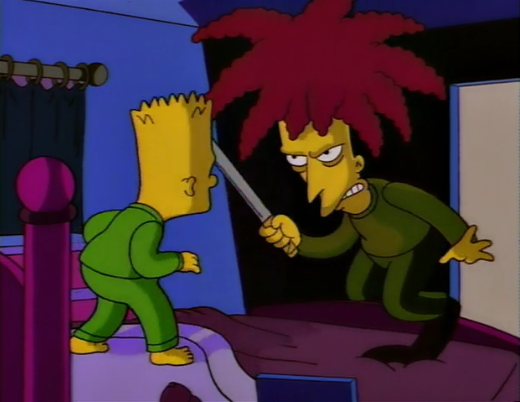
Bart has been receiving mysterious letters written in blood threatening his life, revealed to have been written by an incarcerated Sideshow Bob. The first act sets our dual tone perfectly, in one of the best sequences of the series, where characters appear to be menacing Bart, but end their sentences completely innocuously. Ned Flanders wields razor-tipped gloves and approaches Bart (“Say your prayers, Simpson… because the schools don’t force you like they should!”) We still feel Bart’s increasing paranoia, but we laugh at how ridiculous this human behavior is, that you can completely change tone in mid-sentence. The act break, along with so many other scenes in this show, is brilliantly animated, which shows real effort that they didn’t just phone this last episode of the run in. We also establish the Cape Fear theme riff from Alf Clausen is Bob’s signature music, which would stick from here on out. “Black Widower” established Bob to be a criminal mastermind and a real threat, but “Feare” shows that the man has a side of him that is truly deranged. His methodical planning and obsession over disemboweling a ten-year-old boy is really sick, but because that boy is Bart, we can sort of understand.

Before long, the Simpsons are put in the witness protection program and relocated on a house boat. This doesn’t stop Bob, though, who follows them to their new home in Terror Lake and has a final showdown with his would-be victim. The finale is truly spectacular, where Bart uses Bob’s pride and showmanship against him, stalling for time by requesting Bob perform “The H.M.S. Pinafore” before gutting him. Bob puts on a great performance, putting together props, costumes, and ending with the British flag unfurling behind him as Bart reads a Playbill printed from God knows where. It’s a ridiculous ending, but it works completely with the established tone. A story of an escaped convict’s mission to kill a child needs some wacky relief, making Bob’s quest almost like Wile E. Coyote going after the Road Runner. He always gets thwarted in the end, be it by marching elephants, cactus patches, rakes (classic scene), and ultimately himself. As overly cartoonish as this episode is, it never quite goes far enough to feel unlike The Simpsons. Maybe not the best Bob show, but truly worth its classic status.

Tidbits and Quotes
– The “Up Late with McBain” opening is a great TV bit, from the opening announcer (wearing a clearly visible Nazi armband) to Rainier Wolfcastle’s complete inability to deliver jokes or respond to a crowd without resorting to homophobia (“Maybe you are all homosexuals too!”)
– Lisa’s pen pal letter is a classic moment(“Dear Lisa, as I write this, I am very sad. Our president has been overthrown and [voiceover changes] replaced by the benevolent general Krull. All hail Krull and his glorious new regime! Sincerely, Little Girl.”) Hank Azaria’s read for Krull is great, but this is another joke that has fantastic implications. This oppressive dictator marched into this girl’s house and seemingly killed her mid-sentence, but he had the consideration to finish and send her letter, if only to self-aggrandize himself to a foreigner. Amazing.
– I love Bob’s overuse of writing in blood: he uses it for his grocery list, and later for his further letters, at least until he passes out (his cellmate Snake comments, “Use a pen, Sideshow Bob!”)
– Moe’s backdoor shenanigans is another joke with seedy implications. Was he trying to sell these pandas on the black market? What industry does this service?
– Bob’s court case is hilarious from beginning to end. Selma attests that Bob tried to kill her, but the Blue-Haired Lawyer rebuts in revealing most everyone in the court room also wants to kill her, including Patty (“She’s always leaving the toilet seat up.”) Bob attempts to play dumb regarding Bart, but quickly lowers his voice in menace over his role in sending him to this “urine-soaked hellhole.” A parole board member takes issue with this, having not used the more appropriate “pee-pee-soaked heck hole.” Bob concedes (“Cheerfully withdrawn!”) In the best one-two punch ever, Bob reveals his tattoo “DIE BART DIE” is actually German for “THE BART THE.” Another parole board member comments, “No one who speaks German could be an evil man!” Parole is instantly granted.
– The Cape Fear parody aside, I never quite got why Bob is laughing so uproariously at an Ernest film, considering his high-minded tastes. Perhaps he was already staking out Bart and knew they were behind him? Also, why didn’t Bart and Lisa recognize Bob’s hair instantly? Nitpicking!!
– Bob in the ice cream truck is absolutely ridiculous, but I absolutely love it. The pause right after the four Simpsons were announced, then the “That is all” kills me.
– The “Hello, Mr. Thompson” sequence is amazing. I love how exhausted and fed up the two agents look after the time lapse, and how they’ve simplified the response to a smile and nod after stepping on Homer’s foot, like they’ve slowly been reformatted the simple input-response, desperate to get it through Homer’s thick skull. Homer’s loud whisper, “I think he’s talking to you,” is the perfect ending.
– As random as the finale to this show is, it’s sort of referenced early on with the Simpsons listening to Gilbert & Sullivan on the way to Terror Lake.
– Great reimagined intro with “The Thompsons,” with a nice couch gag.
– The rake scene… I do think it goes on a bit too long, though I know it was only extended to get the show to air time. I like it though; the overarching theme of the show, and a lot of Bob episodes, is that Bob may be a culturally refined genius, but he is stuck in a world where fate treats him like the kicked-about sidekick from the job he loathed so much, so getting trampled by elephants and stepping on rakes is like life’s ongoing cruel joke to him.
– Sort of like the stuff with Marge and Flanders at the beginning, Homer bursting into Bart’s room with a butcher knife, only to be revealed as him offering his son a brownie, is hysterical. Homer claims to understand Bart’s paranoia, only to be followed by “BART YOU WANNA SEE MY NEW CHAINSAW AND HOCKEY MASK?!”
– Bart kind of got away by pure luck: he bought enough time to run ashore in Springfield, but as Chief Wiggum said, “It’s a good thing you drifted by this brothel!” But with Wiggum and the other cops in bathrobes, I wonder what the boys in blue were up to… We also get the great line, “Bake ’em away, toys!”
82. Homer’s Barbershop Quartet

(originally aired September 30, 1993)
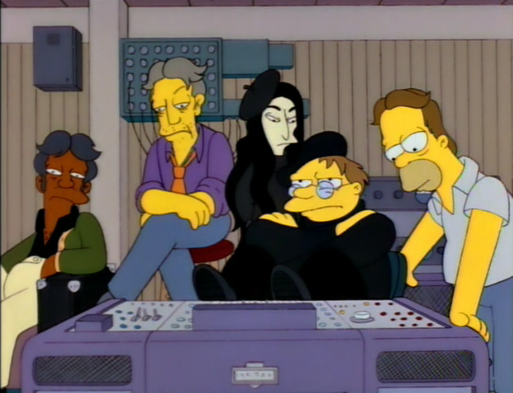
There aren’t many shows are multi-layered as The Simpsons. That’s why it manages to entertain all age groups. This is an episode that is basically one big Beatles parody, but as a kid, I was still able to enjoy it on a story and character level, with the references still being humorous because they weren’t overt and didn’t stand out from the flow of the plot. The idea of the barbershop quartet mirroring the career of the Fab Four is interesting, and the writers certainly took the ball and ran with it, but while a lesser show (or modern Simpsons) would blatantly hit you over the head with it, here it’s done with a bit more tact. Even when the winks and nods get very familiar, like Barney coming in with a Yoko Ono-type, they’re still funny. “Number 8” was funny to me then, and now it’s even funnier that I know of “Revolution No. 9.” The point is that even in a reference-heavy episode, classic Simpsons still has a resonance even if the culture is beyond your years.

At the local swap meet (home to a series of great gags), Bart and Lisa discover a record with their father’s face on it. Homer recounts the great tale of his past, when he, Apu, Skinner, and Chief Wiggum were part of a barbershop quartet. They were relatively small-time before an agent offers to represent them, in exchange for booting Wiggum out for Barney, who is revealed to have a gorgeous singing voice. Barbershop music seems like a peculiar choice, but it’s all part of the joke (Homer recounts: “Rock and roll had become stagnant, ‘Achy Breaky Heart’ was seven years away; something had to fill the void. That something was barbershop,”) and plus a vocal harmony group makes more sense than them playing instruments. It also gave us “Baby on Board,” one of the greatest songs of the entire series. It quickly becomes the band’s first #1 hit, and their launch to super stardom had begun, from winning a Grammy to meeting George Harrison (though Homer is more interested in the brownie he’s eating.)

Even throughout the music parodies, the episode still manages to sprinkle an emotional element in with Homer’s growing disconnect from his family whilst on a world tour. You even feel a little bad for Wiggum, the Pete Best of the group, in his desperate attempts to rejoin. The episode ends on a sweet note as the Be Sharps reunite on the rooftop of Moe’s where it all began to belt out “Baby on Board” one more time (George Harrison, acknowledging the reference, dismissively comments, “It’s been done.”) It’s a swell episode even with its reference-heavy, ridiculous plot. There’s a great scene where Bart and Lisa question the loose ends of the story, and Homer chuckles them off, saying he’ll save them for another episode… I mean, night. It expands the backstory of the show, its characters and its whole crazy world, and gave us one of the greatest Beatles TV parodies ever. That and the Powerpuff Girls episode “Meet the Beat-Alls,” an exercise to see how many Beatles references could be jammed in 11 minutes. But that’s for another blog.

Tidbits and Quotes
– The swap meet is yet another amazing Simpsons set piece full of great bits: Quimby’s utter contempt about being there (“Human roaches, feeding off each others’ garbage! The only thing you can’t buy here is dignity,”) Bart, Milhouse and Nelson’s enthusiasm about Ned’s religious trading cards (until they realize they’re learning), Skinner’s nostalgic reverie in finding his old Vietnam prison helmet, and Homer tossing off various valuable historical artifacts as junk (“Stradi-who-vious?”)
– The Dapper Dans, most famous for performing on Main Street at Disneyland, provide most of the vocals for the Be Sharps’s songs. Way back when I went on vacation to the West and went to Disneyland, I was hoping they’d be there and I could request they sing “Baby on Board.” Alas, they were nowhere to be found.
– I like Nigel changing Apu’s last name to “de Beaumarchais,” shortening it to fit on a marquee, when it’s really not much shorter than “Nahasapeemapetilion.” Also Apu’s response is classic (“That is a great dishonor to my ancestors and my god, but okay!”)
– I love just how quick the mob Wiggum gathers together ends up turning on him. A mere ten seconds into the band’s first number with Barney, they are immediately swayed, and apparently have prepared signs that praise Barney and defame Wiggum, as the chief sheepishly leaves the bar. We also get the first “Huh?!” from Moe, which is sorta kinda his catchphrase.
– I’m really surprised they could get away with showing a bong on TV, let alone Homer identifying it as such.
– I love Homer’s first attempt writing a big song involves just recalling things he saw on TV (“There was nothing in Al Capone’s vault, but it wasn’t Geraldo’s fault...“) I also love the quick line Marge gives regarding the ‘Baby on Board’ sign (“Now people will stop intentionally ramming our car!”) which is one of those great bits of dialogue that says a lot in a little.
– The press conference in New York is a trifecta of perfect jokes: Apu’s defense of accusations that he is Hindu, Skinner confirming he’s the funny one of the group, and Barney revealing he was found on the men’s room floor (complete with a single tear as the reporters laugh uproariously at his “joke.”)
– I never really got the continual Grammy bashing on this show. They ridicule most award shows for being superfluous, but the Grammys has gotten considerable scorn over the years. Maybe it’s because it’s one of the few awards the show hasn’t won.
– I love that ALF is on the cover of the latest TV Guide, and Skinner’s grim announcement that on the “What’s Hot and What’s Hot,” the Be Sharps are “not.”

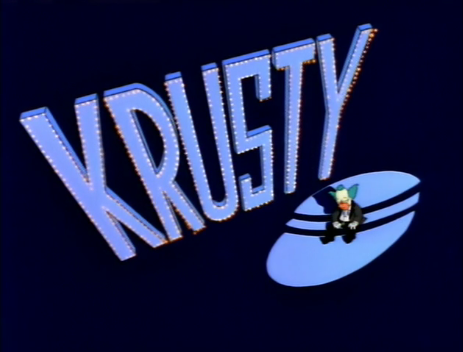
81. Krusty Gets Kancelled

(originally aired May 13, 1993)
So we reach the star-studded conclusion of our fourth season. Even with all of the guest stars this episode has, each one is highlighted and given a standout moment, contrasted with what wastes of time celebrity appearances would turn into. But before that, we’re introduced to the phenomenon that is Gabbo, the precocious ventriloquist dummy act that usurps Krusty’s spotlight. The massive media hype leading up to this electric new show is not let down at all when it finally airs: Gabbo is pretty damn impressive. He appears to be a traditional puppet, but has his own song-and-dance routine. There are also scenes where Gabbo and his handler Arthur Crandall exchange bits of dialogue while they’re not performing, implying that Arthur may have some kind of personality disorder. I’d like to watch a show that exclusively dealt with his personal mania.

Anyway, Krusty is unable to deal with the dummy’s wave of fame and his show ends up cancelled, and eventually he himself goes destitute. Bart and Lisa assist their hero in his time of need, and noticing framed photos of Krusty’s showbiz friends on his wall, they suggest he do a spectacular comeback show to reignite his star power. The glut of celebrity guest stars works as a mimicry of similar gala TV events, but also because each one is given their time to shine. Who could forget Bette Midler’s accosting cars of littering drivers on the freeway? Or Johnny Carson lifting a Buick over his head? Or Flea’s overenthusiastic “HEY MOE!!” As I mentioned, the episode dances around celebrity overload, but provides enough classic moments to keep it at bay. Also, once again, what kind of show is Krusty putting on? He’s a children’s performer who opens with an emotional rendition of “Send in the Clowns” (wonderful, by the way) and has Hugh Hefner and Playboy bunnies on his show. But whatever, it’s a big hit, and Krusty is restored to glory.

The episode’s rather trim storyline is helped with plenty of laughs. Itchy & Scratchy’s Eastern European replacement Worker & Parasite is absolutely amazing, a spot-on parody of bizarre foreign experimental animation. Krusty’s dumb-founded expression at its conclusion is hilarious. As is the appearance of Crazy Old Man (who now is Old Jewish Man, because I guess the joke was too subtle for modern Simpsons). His “Old Grey Mare” routine is a hilarious response to Krusty’s “Will Drop Pants For Food” sign, then comes back in a fantastic act break where he apparently got his own TV special in a matter of minutes. This is another one of those episodes where the story is nothing to write home about, but the fantastic use of gags and other funny bits makes it a memorable and classic outing.

Tidbits and Quotes
– The epic build-up for Gabbo is great manipulative marketing. Bart smells blood in the water once the mystery is uncovered (“That cute little character could take America by storm. All he needs is a hook.”) Gabbo proceeds to spout his catchphrase (“I’m a bad wittle boy”) and Bart responds with his own (“Aye carumba!”)
– Gabbo’s dancing during his musical number is wonderfully animated, again illustrating that this is one insanely sophisticated puppet. Who also does a tremendous imitation of Vin Scully. And travel back in time. I suppose that’s the doing of clever video editing… or is it?
– I love Krusty’s perverse joy in “slaughtering” the Special Olympics in the ratings.
– Krusty’s attempts to win back his audience are great: he tries his own ventriloquist act (with a giant prop mustache to disguise his poor lip sync), but the dummy is so shoddy, it very quickly falls apart and scars children for life. His next attempt also fails (“Every time you watch my show, I will send you forty dollars!” Followed by a quick voice-over, “Checks will not be honored.”)
– Quimby goes beyond sleazy to criminal in admitting to having his political enemies murdered, but gets away with it by parroting Gabbo’s precocious catchphrase. Next day’s paper has a sub-headline that more bodies surfaced in Springfield Harbor, but that’s not as important as Gabbo news.
– Gabbo’s crank call to Krusty is a great segment right off the bat (“Is this the callback for that porno film? Look, I was a little nervous that day, but I’m all man. I can assure you.”) Why anyone would want to see an old grotesque clown in porn is beyond me, but hey, people got all kinds of fetishes. I also love Krusty’s over-enthusiastically racist “WOAH! ME RIKEY VERY MUCH!” Sort of foreshadows his giant teeth and dickey bit from many seasons later.
– Gabbo is unstoppable, even after on-air calling children S.O.B.s. He’s saved by Kent Brockman doing the same, but he’s almost immediately fired for his blunder on his own show.
– I never really understood the Elizabeth Taylor segments. I suppose that’s some kind of inside joke about her turning down projects… I think? I guess the writers felt they couldn’t just blow their opportunity actually booking Taylor to have her say just one word in “Lisa’s First Word,” just like they re-used Barry White in the opening of this episode.
– I love Sideshow Mel’s quiet dignity in his fast food uniform at his cushy job at the Gulp-N-Blow. Mel is such an underrated character, similar to Sideshow Bob in that they’re clearly very intelligent thespians stuck in undermining jobs, but Mel seems more pleased with his position and handles himself with a modicum of respect. His reunion with Krusty at the start of his comeback special is unusually touching.

Season 4 Final Thoughts
I can’t say for certain until I rewatch next season, but season 4 feels like the bridge between 3 and 5. Dumb statement, of course it is, but I’ll explain. The Simpsons began as a traditional sitcom, very grounded and realistic to a point, but also very progressive in its content. The first three seasons never really pushed things too far in terms of wacky cartoonish content. My memories of season 5, and most of 6 too, are really off-the-wall. Latter classic Simpsons is a bit more unhinged and ridiculous, with lots of silly gags and concepts, but still made palatable by the foundations of the characters, and its fair share of emotional moments. Season 4 is the lead-up to this: we’ve seen in numerous instances with crazy stories (“Marge vs. the Monorail”) and other bizarre gags (the giant spider, Lisa’s acid trip) that the show is going to this weird place. But the balance isn’t there yet. Season 4 has a lot of fantastic episodes and great moments, but as a whole, doesn’t feel as cohesive as season 2 or 3. The show will continue to evolve, but into something just as astounding. I still salute you, season 4. Thanks for the funny. I’ll be back this weekend, roaring and ready to go for season 5.

The Best
“A Streetcar Named Marge,” “Itchy & Scratchy: The Movie,” “Lisa’s First Word,” “Homer’s Triple Bypass,” “I Love Lisa”

The Worst
“Marge Gets A Job” and “Brother From the Same Planet” stand out, only in that they don’t really stand out.

80. Marge in Chains

(originally aired May 6, 1993)
By the end of a long production season, the writers must be running on fumes and going a bit mental. I’ve noticed with other shows, and with my own work as well, when you’re at the tail end, you get a bit wackier and more impulsive, producing some unusual, but sometimes great stuff. “Marge in Chains” is a very silly episode. Not silly in the ways of “Marge vs. the Monorail,” but in a more grounded sense. Marge going to prison for petty shoplifting is a pretty easy summarization for this episode, but it doesn’t account for the ridiculousness that exists around that story, from the visible and vindictive flu clouds at the beginning to the really stupid, but hysterical ending.

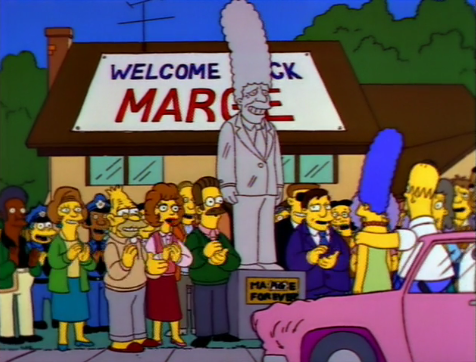
We open with another great infomercial tag team with Troy McClure and Dr. Nick, but an ill factory worker from Osaka, Japan causes a nasty flu that invades Springfield. Marge is seemingly immune, but has her hands full with the demands of her sick husband and kids. Run ragged, she leaves the Kwik-E-Mart accidentally not paying for a bottle of bourbon and an unusually vindictive Apu presses charges. I guess my only gripe with the episode is how petty Apu appears to be in persecuting Marge. At this point in the series, he wasn’t quite family friends with the Simpsons, but he at least acknowledged Homer as one of his best customers. However, hearing Apu say to Homer’s face that he’s going to “put this bitch on ice” is a pretty extraordinary moment. After a spectacular legal battle (one of Lionel Hutz’s best, if not the best), Marge is sentenced to thirty days in prison. The payoff of a Springfield-less Marge is absolutely ridiculous: without her lemon squares, a local bake-off is out an expected fifteen dollars. Unable to buy a statue of Lincoln, they settle on Jimmy Carter (with the amazing “Malaise Forever” placard,) leaving the town to violently riot.

As insane as the ending is, there’s a running theme of mob rule and the evils of gossip throughout the episode. A frantic, inattentive mob desperately looks to Dr. Hibbert for a cure for the flu, only to go mad and knock over a truck carrying boxes of bees (one even eats one: “I’m cured! I mean, ouch!”) In the main story, hearsay spreads through the town regarding Marge’s crime, from the highest rung of society in Mayor Quimby’s soapbox proclamation to town busybody Helen Lovejoy. Spectacle always seems to overshadow fact, and it’s sort of a subtle message to the episode, and gives some explanation for Marge’s conviction. The final mob scene responding to the Carter statue is one of the wildest in the series; they get so infuriated so quickly by the unveiling (the best line of the show is from one particularly irate crowd member: “He’s history’s greatest monster!”) The scene moves so quickly; in ten seconds, they’re using the statue to smash store windows, fires are started, and chaos ensues. It’s absolutely nuts, but hey, that’s Springfield for you. Truly an underrated episode.

Tidbits and Quotes
– I’ll be honest, not one of the best infomercials. I think they pushed it too far by only having the machine produce one droplet of juice from a bag of oranges; I don’t think even Homer could overlook something like that. But the add-on product is great: Sun-and-Run, the suntan lotion that doubles as a laxative. McClure, having just applied it to his face, dashes off-camera upon hearing this.
– The visible flu germs are pretty silly, almost like out of a Halloween show. I do like the POV shot of the germ pursuing Wiggum, who attempts to open fire at the illness, and then later the POV of Arnie Pye’s vomit falling from the sky onto an unfortunate suntanning Otto.
– “Germs of Endearment” is one of my favorite Itchy & Scratchys. Jumping out the window, Scratchy manages to cram his internal organs back in his body, in a reverse manner with the brick still tied to them. Of course, that makes things okay… until he lands on a cactus. The spikes piercing both his pupils is pretty gruesome.
– Great line from Grampa demanding Marge get him bourbon (“Stir it into my mush! Either way, just gimme gimme gimme!”)
I like that Apu felt the need to get Marge’s height (8 1/2 feet with her hair). What other woman is going to have a three-foot beehive of blue hair?
– Great Psycho parody of Maude peering in on Marge using her bathroom.
– Hutz’s genius is all over this one: the smoking monkey, his dread over Judge Snyder, his vision of a world without lawyers, his attempt to intercede the jury’s verdict with his own (“This verdict is written on a cocktail napkin! And it still says ‘guilty’! And ‘guilty’ is spelled wrong!”) The best scene is his attempting to discredit Apu’s memory by asking him what tie he’s wearing, and his lengthened stall as he attempts to remove it. His tie-less reveal shocks the jury, even though they must have seen Hutz removing it.
– Before being escorted to jail, we get a ridiculous fantasy of a crossdressing Bart seducing the warden to get his keys, and a sweet goodbye from Homer (“I’m going to miss you so much. And it’s not just the sex. It’s also the food preparation, your skill with stains of all kinds, but mostly I’ll miss how lucky I feel each and every morning.”)
– There’s a great winking line from Lisa commenting that she feels like she’s been wearing the same red dress forever. Homer recommends she check the attic, as he walks down with full wedding regalia, clearly Marge’s from the rips and tears to fit his frame. He even put on the garter, and daintily lifts his skirt as he walks down the stairs. It’s obvious that he just wanted to wear the dress.
– I kind of wish the Carter statue with Marge hair had become a staple item like the Olmec head, where it would pop up every now and again in the background. Alas, it’s never been seen again.

79. Whacking Day

(originally aired April 29, 1993)
Whacking Day is one of those classic, long-staying Simpsons hallmarks. Mention it to even a casual fan and they’ll be able to tell you all about the questionable Springfield holiday. This is because it’s a brilliant concept, this satire of out-dated, almost barbaric local events continued to present day for the sake of remembering one’s history (the similarly themed “Weird Al” Yankovic song “Weasel Stomping Day” nails it with the perfect lyric: It’s tradition, that makes it okay.) However, as great an idea as this is, it doesn’t quite fill a whole episode. The holiday isn’t even brought up until the second act, where we have our main story of Bart being expelled and later home-schooled. I find the best episodes are the ones that are extremely focused, where everything in the entire twenty-two minutes, even if it’s an outlandish gag, is still related to the one story. Episodes like these may not reach those ranks, but are still solid stories and hilarious enough to justify themselves.

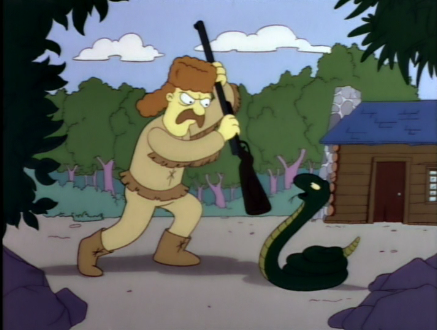
Our first act features the introduction of Superintendent Chalmers, a man even more no-nonsense than Skinner, who here is a scrambling wreck attempting to suck as much ass as he can to his superior and sweep all the troubled elements of his school under the rug, namely Bart and the other bullies. The interplay between Harry Shearer and Hank Azaria as these characters is stellar; we may not have “SKINNER!!” yet, but there’s no doubt that this is a fantastic relationship from scene one, seeing that Bart’s tormentor has one of his own. Speaking of, Bart wrecks everything, of course, and a livid Skinner expels him, leading him to become home schooled by Marge. This really takes up most of the second act, and around it are preparations for Whacking Day. We get a little bit of the history of the fabled event, and Lisa’s ever growing concerns about the ethical nature of pummeling innocent creatures to death en masse. There’s plenty of great material to be had, from Homer’s use of a long whacking stick to really excite his wife to Reverend Lovejoy bullshitting a Bible verse in a feeble attempt at justifying the holiday.

Despite my earlier criticisms, the two stories do come to a head in a manner that makes sense. Homeschooling makes Bart more studious, and through most of the second half he’s seen with his head in a book. Visiting Ye Olde Springfield, he questions the factual accuracy of Jebediah Springfield participating in the very first Whacking Day. At the climax, he manages to come up with a clever plan to lure the snakes to safety and reveals to an angry mob the sham the holiday truly is. Skinner is impressed by the applied knowledge and invites Bart back to school. It all works pretty well, and is a satisfying weaving of the two plots. They also have pretty great use of their special guest star, with Barry White’s deep bass saving the day. It turns into a bit of a music video, but hey, who can complain? Ohhhhhh baby.

Tidbits and Quotes
– The density of the deceived bullies is great, they just can’t comprehend that they’re not getting mountain bikes. Also, a small point, the shot of Skinner jumping down from high in the utility room and locking the boys in is pretty dynamic, sort of from down below but with a little skewed perspective. Classic Simpsons really had some interesting direction, something that has mostly evaporated nowadays.
– The Skinner/Chalmers scenes are just hilarious, with all of Skinner’s plans immediately backfiring. Highlighting the fawning banners, Chalmers dryly responds, “Nothing but transparent toadying.” Skinner backpedals without skipping a beat, “It was the children’s idea. I tried to stop them.” Also great is his much-too-prolonged laugh over Chalmers’s “not made of stone” quip and his cover of Ralph’s “What’s a battle?” (“So you hear ‘r’s as ‘b’s?”)
– I love positing about the lives of less-than-one-shot characters: what happened to the comely Scottish lass Willie assists? I’m sure he banged her. Then dumped her. Big Willie style.
– The tractor’s tempting of Bart, with the red tonal shift, is pretty neat, with the great chicken joke (“He’s insulting both of us!”) and a decent act break joke.
– Two great coming attractions for Eye on Springfield: The Munchkins from The Wizard of Oz, where are they now? (a cemetery) and a nudist colony… for animals!
– I love the delayed reaction by Homer to Bart being expelled, and his indigence over his son becoming a cockney boot black.
– Gotta show some love for the Evil Homer scene, but the flashback crown has got to go to Abe’s WWII story, in one of the greatest, most disturbing flashbacks in series history. I crack up at Hitler’s outrage every time (“Das is nicht eine booby!”)
– Great Itchy & Scratchy, guest directed by Oliver Stone, recreating the shooting of Lee Harvey Oswald. I love the dramatic music and “Oh God!” immediately juxtaposed by the bouncy I&S outro music.
– Fantastic animation of Homer’s Whacking Day training, as well as some more dynamic direction, particularly the close-up shot of his mouth screaming a war cry.
– Olde Springfield Towne has a lot of great bits, like the auditions for village idiot and the story behind Fort Sensible. Marge and Bart being escorted out by security is good, but was done better in “Homer Alone.”
– Again, Barry White is fantastic. With that voice, I could listen to him for days. I love his shocked reaction about hearing exactly what the hell he’s actually in Springfield for (“Oh God, no. You people make me sick!”)
– Miss Springfield’s “Gentlemen, start your whacking!” has got to be the second dirtiest joke of the entire series, following the sperm bank sign in “Selma’s Choice.” Prove me wrong, seasons 5+.
– I love the stereotypical Irishman, who’s popped up a few times since, who appears to be in good spirits about Whacking Day’s Irish-bashing origins (“‘Tis true. I took many a lump, but ’twas all in good fun!”)
– Quimby has a great running bit of having his aide prepare pre-whacked snakes, only to hold them in triumph immediately after the masses have turned their opinions. Quimby is outraged (“I’m sick of you people! You’re nothing but a pack of fickle mush heads!”) Surprisingly, the crowd agrees (“Give us hell, Quimby!”)